Merchant Payments: The Next Big Battlefield For Digital Transactions
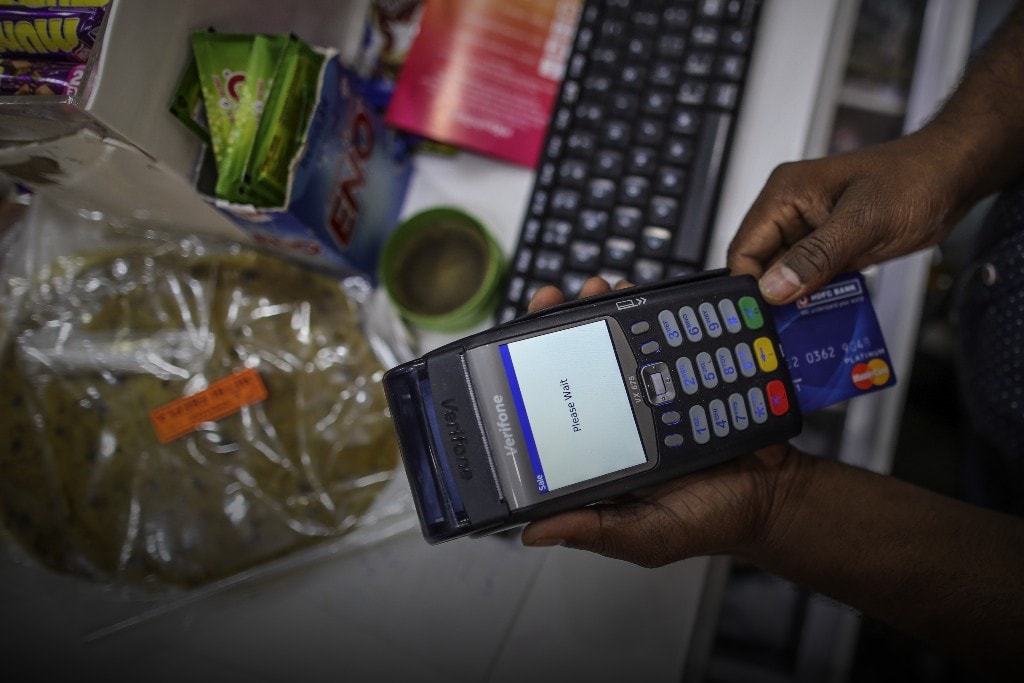
Digital payments between two people, known in industry parlance as ‘peer-to-peer' payments, have seen strong growth in the last few years. However, payments to merchants, for instance your local kirana store, are still heavily skewed in favour of cash.
It is this segment of ‘peer-to-merchant' payments that has become the next big focus for policymakers, who are hoping to reduce the use of cash in the Indian economy.
In May, the RBI, in a digital vision report, said that it aims to push up digital payments as a percentage of GDP to 15 percent by 2021 from about 10 percent in 2019. The roadmap to reach that goal included an increase in acceptance infrastructure for digital payments, particularly for merchants. A committee, headed by Nandan Nilekani, which submitted it report soon after, also focused on the problem of merchant payment by suggesting a lowering of cost of such transactions.
The key to having more merchants adopt digital payments, according to experts, lies in the technology that India chooses to push and the cost of that technology. While the current focus is on cards and the network of point-of-sale (PoS) machines, many believe that the QR-Code technology, successfully adopted in China, is an option that must also be encouraged. Each of these technologies currently have their own set of issues preventing large scale adoption.
The PoS Network
India has close to a billion debit cards and nearly 50 million credit cards but the number of PoS terminal where these cards can be used are far fewer. There were 3.7 million PoS machines active in the country by the end of March 2019, compared to 3 million in March 2018 and 2.5 million as of March 2017.
The RBI, in its digital vision report, had said that the spread of this card acceptance infrastructure must be increased.
But buying and deploying PoS machines remains an expensive proposition.
The price of a POS machine ranges from Rs 3000 to over Rs 50,000 depending on the features. While prices have dropped significantly over the last four years, the devices are still expensive as they have to be imported and then customised for the merchant, said Sunil Rongala, vice-president, strategy, innovation and analytics, at Worldline India.
The Nilekani-committee has recommended lowering of import duties on such machines but the proposal is yet to be accepted. An alternative is to use mobile PoS (M-PoS) machines, suggests the Nilekani committee.
However, Rongala says that M-PoS devices see a rate of failure and also face security and network issues. Instead Worldline is in the midst of introducing an Android-based PoS machine, with an in-built SIM card to address some of the problems they faced with M-PoS devices.
BloombergQuint could not speak to executives from Pine Labs and M-Swipe, two PoS manufacturers, despite several requests over the last two weeks.
Beyond the installation of devices, the cost of transactions also remains an issue.
As part of any card-based transaction, a merchant pays a fee to the payment processors, known as the merchant discount rate. The merchant's bank also pays a fee to the bank which has issued the card, known as the interchange rate.
Under the present regime, the majority of the interchange rate goes to the issuer banks (those that have issued cards) and not acquirer banks (who are processing the payment) and merchants, said Naveen Surya, chairman emeritus of the Payments Council of India. “The merchant bank would only receive around 30-40 basis points of the interchange rate.”
The Nilekani committee has recommended a reduction in the interchange rate, which may benefit the acquiring bank and merchants over time, Surya said. The committee has also suggested that the government consider subsidising the MDR in order to reduce the cost of digital transactions for merchants.
The QR-Code Alternative
An alternative to building out an extensive PoS network would be to focus on QR-Code based payments.
China, for instance, has relied heavily on this technology. Tencents Holdings' We Chat Pay and the Alibaba Group's Alipay have gained considerable traction by deploying QR-codes particularly in grocery stores and eateries, according to a recent report by the Wall Street Journal. Together, they account for close to 90 per cent of the market.
In India too, QR-code solutions built using the home-grown UPI or Unified Payment Interface could help increase the penetration of digital payments across small merchants, said Surya. “QR codes for UPI and Bharat-QR has helped acquire merchants at a lower cost and over time both payments systems will converge as the volume of transactions grow,” he said.
Merchants can start with these payment options and eventually graduate to the PoS network once the volume and value of transactions grow.
However, rapid adoption of QR-code technology will need a change in the manner in which this technology is currently being deployed.
At present, most private e-wallets or payment apps have rolled-out proprietary QR-codes, which means that money from a customer goes to the merchants' e-wallet and not their bank account, said a senior payment executive while speaking on condition of anonymity. What is needed is UPI-based QR-codes that are inter-operable, so that all apps can be used to transact rather than customers being forced to use a specific e-wallet application for different merchants.
To be sure, an inter-operable ‘Bharat QR' was launched under the aegis of the National Payment Corporation of India in 2017. Volumes, however, remain low and the Nilekani-commitee suggests that efforts be made to popularise this payment option.
The volumes of digital payments using Bharat QR are still very low.Multiple stake holders have indicated that the commercial models need to be looked at, and that the code be generated dynamically.The committee recommends that small merchants be on-boarded on to digital payments through light weight acceptance infrastructure such as QR-codes.Nandan Nilekani Committee On Digital Payments

-
Signature Play: The Classic Cocktail Is Dead. Or Is It?

Classic cocktails are disappearing from India's cocktail menus. But they're still being ordered, taught to bartenders and borrowed from. So, who's really having the last drink?
-
A New Samvat Wishlist: Inclusive Prosperity And Human Development
India has strengthened its economic foundations through infrastructure, digital access and enterprise. Its next growth chapter must deepen productivity, create better livelihoods and widen participation in prosperity.
-
Love, Sex Aur Dhokha: The Audacious Plot To Spy On Jensen Huang
A Taipei dinner, a Singapore chip buyer and a suspected Chinese asset: inside the alleged spy operation that got close to NVIDIA's Jensen Huang.
-
Ten Things I Learnt This Samvat
Patience can be a trap. Cheap stocks can stay cheap. Leverage can wipe you out. What did Samvat 2082 teach us? Niraj Shah writes on 10 lessons from the year gone by.
-
Talking Points This Week: Tech Nerves, FII Buying, And A Faraway Banking Shock
The global markets are not shining this Diwali. The exception in the large markets is, India.
-
Midterm Rally Lasted A Day. The Hard Reality Of A Divided US May Last Two Years | Opinion
Between a contested AI boom, a debt ceiling that arrives in 2027 and a president with every incentive to act alone, the next two years may prove more volatile than the first day's rally suggests.
-
Blue Wave Will Derail the AI Trade but Won't Dismantle the AI Era | Unhedged Position
The Democrats' sweep of the US Congress will see politics collide with economic forces both over the long and short term.
-
It's Time To Take The GST Council's Bet On Trust Global
Payment records can prove India's services exports, and clear, proportionate rules can bring foreign digital sellers into the tax net.
-
Opinion | India at 38: From Innovation Overperformer to Innovation Powerhouse
India now has 453 VC-backed deep science startups, 18 of them late-stage, after 117 percent growth since 2020. Laurus Labs, at USD 9.3 billion, is the most valuable deep science company in any middle-income economy outside China.









