PM Modi Backing RuPay Citing "Nationalism", Mastercard Complained: Report
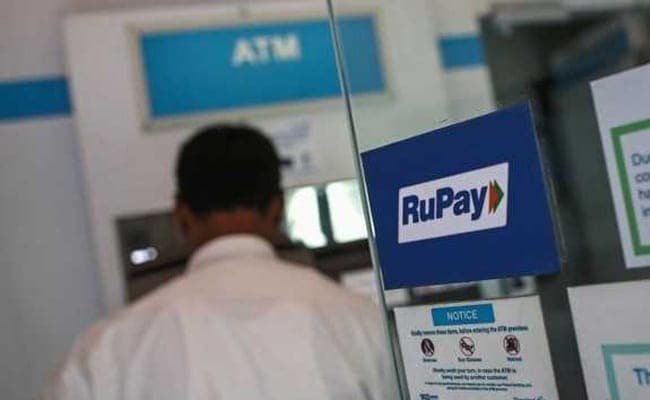
The world's second-largest payments processor Mastercard told the US government in June that Prime Minister Narendra Modi was using nationalism to promote the use of domestic payments network RuPay, and his government's "protectionist policies" were hurting foreign payment companies, a document seen by Reuters showed. PM Modi has in recent years backed homegrown payments network RuPay, whose rise has broken the dominance of US payment giants such as Mastercard and Visa. More than half of India's one billion debit and credit cards now go through the RuPay payment system, and that means companies such as Mastercard face an uphill task to expand rapidly in one of the world's biggest payments growth markets.
PM Modi has publicly endorsed the indigenous card payment network, saying using RuPay was like serving the country as its transaction fee stays within India and could help build roads, schools and hospitals.
In a written reference to PM Modi's stance, Mastercard told the Office of the United States Trade Representative (USTR) on June 21 that the Prime Minister "associated the use of RuPay cards with nationalism, claiming it serves as 'kind of national service'."
The note, which was sent by a Mastercard Vice President for Global Public Policy, Sahra English, said that, while PM Modi's digital payments push was "commendable", the government had adopted "a series of protectionist measures" to the detriment of global companies.
US companies in India have been increasingly battling PM Modi's policies they perceive to be protectionist. This year, US technology companies have protested against a law that would require them to store more data in India, raising their costs.
The previously unreported note, which was seen by Reuters, shows the extent to which PM Modi's support for RuPay frustrated the New York-based company.
"Increasing rhetoric from the prime minister and government mandates on promotion and preference for RuPay ... continues to create market access issues for US payments technology companies," Mastercard said in the note.
"The Indian government's preferential treatment of RuPay coupled with fallacies on pricing must be discontinued," the company said in the note to the US government.
In response to Reuters queries, Mastercard said in a statement it "fully supports" the Indian government's initiatives and is "deeply invested" in the country. The company did not comment on its USTR note and its executive Sahra English did not respond to questions.
The USTR did not respond to a request for comment and it was not clear whether the US agency raised Mastercard's concerns with the central government. Visa did not respond to Reuters' queries.
There was no response to requests for comment from the Prime Minister's Office.
Mastercard, whose president and chief executive is India-born Ajay Banga, has a planned investment outlay of $1 billion in its key Indian market for 2014-2019. With 2,000 people, India accounts for 14 per cent of the global Mastercard workforce, the largest outside the United States.
In November 2016, PM Modi started promoting the use of digital payments after replacing high-value currency notes in an attempt to crack down on the black economy.
That increased card usage: Indians in August clocked transactions worth $51 billion on debit and credit cards, nearly double the amount recorded in November 2016, according to data from the central bank, which does not provide separate usage statistics comparing Indian and foreign payment networks.
Foreign card companies have also had to contend with a growing use of mobile wallets and state-backed digital money transfer services, some of which PM Modi promoted.
RuPay received a major boost due to PM Modi's financial inclusion programme launched in 2014, which meant that all Indians opening a bank account for the first time were offered a RuPay card, not a Mastercard or Visa.
The Indian card network was developed by the National Payments Corporation of India (NPCI), a group largely owned by state banks but which also counts private and foreign banks among its shareholders. It also oversees the payments services in India.
In its note to the USTR, Mastercard said the government had mandated banks to support the NPCI directly and indirectly, making it the "sole beneficiary" of PM Modi's financial inclusion programme.
The NPCI acted both as "a quasi-regulator and a competing payment network", Mastercard said, adding that this was "compounded by the government's open preference for RuPay with misleading statements and inaccurate information on pricing, despite Mastercard being priced lower than RuPay".
Pricing refers to the fee paid by banks to payment processors such as Mastercard for card transactions. The company did not detail which specific statements it was referring to.
The chief executive of NPCI, Dilip Asbe, did not respond to a request for comment.
At one point, RuPay levied a transaction fee which was half of that charged by Mastercard and Visa, one industry source said, but the US card companies reduced charges in recent months. The pricing and charges are not publicly available.
PM Modi in June said foreign card companies take their transaction fees abroad and as "everyone cannot go to the border to protect the country, we can use RuPay card to serve the nation".
A month later, Mastercard issued a press statement which said the company gets only 15-20 per cent of debit card transaction fees, while the rest stays "within the Indian economy". It did not name RuPay.

-
Gold Is Rs 22,000 Cheaper Than A Month Ago. Should You Buy Amid The Wedding Season?

Gold's potential slide to $3,500 could save around Rs 4,700 per 10 grams, but a soft inflation print could just as easily push prices back up. One way to split the risk is to buy in parts, some now and the rest after the Fed's Dec. 9 decision.
-
AI Agents Are Gaining Power. Who Governs Them?
Artificial intelligence agents promise to transform productivity by moving machines from assisting decisions to executing them. But as organisations delegate greater authority to these AI-agents, they must first establish who controls that authority and who remains accountable when things go wrong.
-
Why Swapping Your Old Gold Can Trigger A Rs 5 Lakh Tax Bill, And How You Can Avoid It Legally
Swapping old gold for new is taxed as a sale and a fresh purchase. Getting your own gold remade can cut most of that bill, though it has its own costs.
-
The AI Trade is Done. The Real Opportunity for Investors Starts in 2027 | Unhedged Position
As pureplay AI stocks plunge and circular, capex-led financing unwinds, 2027 is set to be a year of reckoning for AI companies. Yet the bust clears the way for a better opportunity for investors in 2027 -- shifting the spotlight from AI builders to the companies using AI.
-
Leadership As Mission: Why The Age Of AI Demands More Human Leadership
Debjani Ghosh examines how AI is changing leadership, arguing that its success must be measured by its impact on people and the accountability of those guiding its use.
-
We May Need Another Tukaram Mundhe To Fight Air Pollution | The Reason Why
Developers may install basic measures such as sprinklers and green nets, resume work, and continue violating rules when this equipment stops working.
-
Extracting Value From Battery Scrap Could Be Challenging For India | The Reason Why
A discarded lithium-ion battery still contains valuable materials such as lithium, nickel and cobalt. These can be recovered and reused. When such batteries are crushed and shredded, they produce a dark powder called black mass.
-
One El Nino, India Can Handle. Two Could Break The Granary
India's grain stocks can absorb one bad year, but a second El Nino could drain the buffer in two to three years, economists say.
-
India's Troika Of Good Luck | Joining The Dots
As Jensen Huang's exit drags Nvidia down, a cooling AI trade and resilient earnings have revived investor interest in India. A likely RBI rate hike looms.
-
Talking Points This Week: Leadership Shock At Nvidia, Earnings Strength, And The Fog Over Hormuz
The Anthropic IPO pricing and first trading day, Nvidia's upcoming earnings, and any fresh signals from Iran will set the tone for the following week.









