Maruti To Put Diesel Vehicles On Backburner Over Stricter Emission Norms
Maruti Suzuki India (MSI) has ruled out getting back into the diesel segment as it believes sale of such vehicles would further come down with the onset of the next phase of emission norms in 2023, according to a senior company official.
The country's largest carmaker believes the next phase of emission norms would jack up the cost of diesel vehicles, thus further impacting their sales in the market which for the last few years has seen a gradual shift towards petrol cars.
"We are not going to be in the diesel space. We had indicated earlier that we will study it and if there is customer demand we can make a comeback. But going forward, we will not be participating in the diesel space," MSI chief technical officer C V Raman said.
He cited the upcoming stricter emission norms as a primary reason to avoid diesel-powered cars.
"In 2023 the new phase of emission norms will come which is likely to drive up the cost. So we believe that diesel percentages may further come down. We do not know about the competition but as MSI we do not have any intention to participate in the diesel space," Mr Raman noted.
As per industry estimates, the share of diesel vehicles is currently less than 17 per cent of the overall passenger vehicle (PV) sales. It is a massive reduction from 2013-14 when diesel cars used to account for 60 per cent of the overall sales.
Already many of the automakers in the country have junked diesel trims of their respective portfolios with the onset of the BS-VI emission regime from April 1, 2020.
MSI had discontinued diesel models from its portfolio with the onset of the stricter BS-VI emission norms.
The company's entire model range is currently powered by BS-VI compliant 1 litre, 1.2 litre and 1.5 litre gasoline engines. It also offers CNG trims across seven of its models.
Mr Raman said the company would focus on improving its existing petrol powertrains in terms of fuel efficiency and going ahead, may also look at a new family of engines to power its product portfolio.
"We have said that we will improve our existing powertrains which is already happening. The new K10-C engine in Celerio is one improvement. Similarly, the 1.2 litre engine has undergone some change. So from a fuel efficiency perspective, we will improve our internal combustion engine technology," he stated.
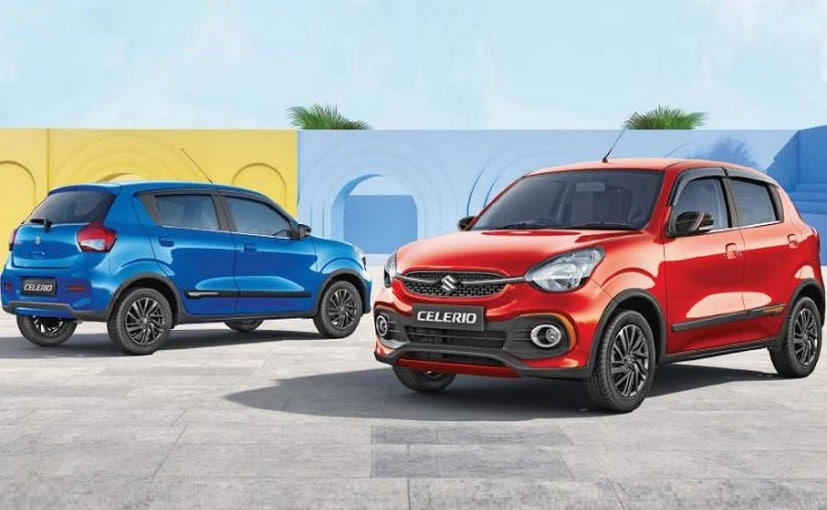
As per the company, its recently introduced all-new version of Celerio returns a fuel efficiency of 26.68 km per litre, which it claims is the highest for any petrol-powered car in India.
Mr Raman said the company would also enhance electrification aspects in its cars like start-stop technology.
"We already have the mild hybrid technology at the higher end. Besides, we are propagating more CNG because of the low running cost. Seven out of 15 models already have the CNG trims. In future, more brands will come with the technology," he added.
There would be hybrid technologies and electric vehicles (EVs) going ahead, so there is going to be a lot of change from powertrain perspective, Mr Raman noted.

-
Talking Points This Week: Leadership Shock At Nvidia, Earnings Strength, And The Fog Over Hormuz

The Anthropic IPO pricing and first trading day, Nvidia's upcoming earnings, and any fresh signals from Iran will set the tone for the following week.
-
Signature Play: The Classic Cocktail Is Dead. Or Is It?
Classic cocktails are disappearing from India's cocktail menus. But they're still being ordered, taught to bartenders and borrowed from. So, who's really having the last drink?
-
A New Samvat Wishlist: Inclusive Prosperity And Human Development
India has strengthened its economic foundations through infrastructure, digital access and enterprise. Its next growth chapter must deepen productivity, create better livelihoods and widen participation in prosperity.
-
Love, Sex Aur Dhokha: The Audacious Plot To Spy On Jensen Huang
A Taipei dinner, a Singapore chip buyer and a suspected Chinese asset: inside the alleged spy operation that got close to NVIDIA's Jensen Huang.
-
Ten Things I Learnt This Samvat
Patience can be a trap. Cheap stocks can stay cheap. Leverage can wipe you out. What did Samvat 2082 teach us? Niraj Shah writes on 10 lessons from the year gone by.
-
Talking Points This Week: Tech Nerves, FII Buying, And A Faraway Banking Shock
The global markets are not shining this Diwali. The exception in the large markets is, India.
-
Midterm Rally Lasted A Day. The Hard Reality Of A Divided US May Last Two Years | Opinion
Between a contested AI boom, a debt ceiling that arrives in 2027 and a president with every incentive to act alone, the next two years may prove more volatile than the first day's rally suggests.
-
Blue Wave Will Derail the AI Trade but Won't Dismantle the AI Era | Unhedged Position
The Democrats' sweep of the US Congress will see politics collide with economic forces both over the long and short term.
-
It's Time To Take The GST Council's Bet On Trust Global
Payment records can prove India's services exports, and clear, proportionate rules can bring foreign digital sellers into the tax net.
-
Opinion | India at 38: From Innovation Overperformer to Innovation Powerhouse
India now has 453 VC-backed deep science startups, 18 of them late-stage, after 117 percent growth since 2020. Laurus Labs, at USD 9.3 billion, is the most valuable deep science company in any middle-income economy outside China.









