Maruti Aims Big With Ciaz, But Analysts Cautious
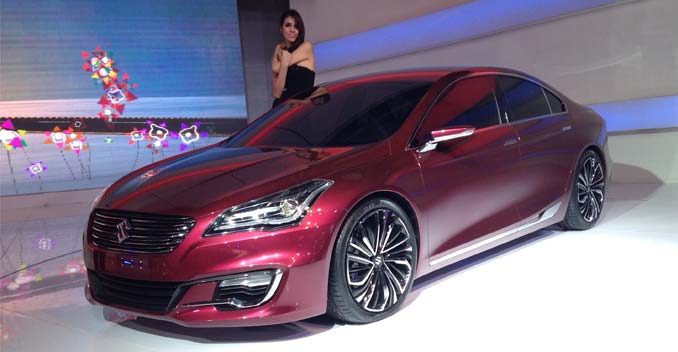
Maruti Suzuki has high hopes from Ciaz, the company's first new sedan in seven years. India's biggest car maker aims to sell between 5,000 and 7,000 Ciaz units per month, Maruti Suzuki Chief Executive Kenichi Ayukawa said yesterday. (Read the story here)
The Ciaz is likely to be a big success if one looks at the number of bookings it has received in the run up to the launch. Maruti said it received 10,000 bookings for Ciaz even though prices for the sedan were revealed only yesterday.
Analysts say the Ciaz has an edge over its competitors in the following areas,
1) The Ciaz is aggressively priced with the petrol model starting at Rs 6.99 lakh and the diesel model starting at Rs 8.04 lakh. Compare that to segment leader Honda City, which costs Rs 7.2 lakh (petrol) and Rs 8.38 lakh (diesel). (Ex-showroom prices)
2) The Ciaz also scores on fuel efficiency, which plays a key role in influencing buying decisions of Indian customers. Maruti Suzuki claims that the Ciaz (diesel) returns 26.21 km per litre, a little more than its rival Honda City's (diesel) 26 kmpl.
3) The Ciaz also scores over its rival in terms of size and ground clearance. In terms of quality, it is Maruti's best sedan offering so far, analysts say. The Ciaz is classier and roomier that its replacement (SX4).
However, the biggest drawback of the Ciaz is its under-powered engine, Mahantesh Sabarad, Deputy Head of Research at SBI Capital Securities told NDTV. (Watch the full interview)
Ciaz's 1.4L petrol engine has the lowest power rating in the segment, while its diesel engine has noticeable lag as compared to its competitors. (Read the review here)
According to Mr Sabarad, the Ciaz is a good attempt to reach out to premium customers, but it will not be a volume spinner for Maruti. The Ciaz may end up selling 3,000-4,000 units per month, he added.
Mr Sabarad also pointed that the Ciaz has been launched at an "invitation pricing" and prices will be revised upwards in 2015.
Anil Sharma, a senior analyst at IHS Automotive told Reuters that the Ciaz is a competent model, but estimated its full-year sales at about 26,000 units (2,000-2,500 units per month).
In comparison, segment leader Honda City sold over 7,000 units per month consistently post its launch, before sales took a hit because of production issues.
In a report, analysts at Maybank say, "Our FY15F volume of 1.3 million cars for Maruti Suzuki does not factor in any major upside from Ciaz." The brokerage retained its "hold" rating on Maruti shares (target Rs 3,000).
Sales of mid-size sedan cars in India, the world's sixth largest passenger vehicle market, fell nearly 23 per cent to 1.55 lakh units in 2013-14 fiscal year from 200,176 units a year ago. However, analysts expect sales to pick up this year after three consecutive years of sluggish growth.
Maruti Suzuki shares closed 1 per cent lower at Rs 2,938.70 on the BSE. The stock underperformed the broader auto sub-index of the BSE, which closed 0.83 per cent lower. (Track stock)
(With inputs from Reuters)

-
Gold Is Rs 22,000 Cheaper Than A Month Ago. Should You Buy Amid The Wedding Season?

Gold's potential slide to $3,500 could save around Rs 4,700 per 10 grams, but a soft inflation print could just as easily push prices back up. One way to split the risk is to buy in parts, some now and the rest after the Fed's Dec. 9 decision.
-
AI Agents Are Gaining Power. Who Governs Them?
Artificial intelligence agents promise to transform productivity by moving machines from assisting decisions to executing them. But as organisations delegate greater authority to these AI-agents, they must first establish who controls that authority and who remains accountable when things go wrong.
-
Why Swapping Your Old Gold Can Trigger A Rs 5 Lakh Tax Bill, And How You Can Avoid It Legally
Swapping old gold for new is taxed as a sale and a fresh purchase. Getting your own gold remade can cut most of that bill, though it has its own costs.
-
The AI Trade is Done. The Real Opportunity for Investors Starts in 2027 | Unhedged Position
As pureplay AI stocks plunge and circular, capex-led financing unwinds, 2027 is set to be a year of reckoning for AI companies. Yet the bust clears the way for a better opportunity for investors in 2027 -- shifting the spotlight from AI builders to the companies using AI.
-
Leadership As Mission: Why The Age Of AI Demands More Human Leadership
Debjani Ghosh examines how AI is changing leadership, arguing that its success must be measured by its impact on people and the accountability of those guiding its use.
-
We May Need Another Tukaram Mundhe To Fight Air Pollution | The Reason Why
Developers may install basic measures such as sprinklers and green nets, resume work, and continue violating rules when this equipment stops working.
-
Extracting Value From Battery Scrap Could Be Challenging For India | The Reason Why
A discarded lithium-ion battery still contains valuable materials such as lithium, nickel and cobalt. These can be recovered and reused. When such batteries are crushed and shredded, they produce a dark powder called black mass.
-
One El Nino, India Can Handle. Two Could Break The Granary
India's grain stocks can absorb one bad year, but a second El Nino could drain the buffer in two to three years, economists say.
-
India's Troika Of Good Luck | Joining The Dots
As Jensen Huang's exit drags Nvidia down, a cooling AI trade and resilient earnings have revived investor interest in India. A likely RBI rate hike looms.
-
Talking Points This Week: Leadership Shock At Nvidia, Earnings Strength, And The Fog Over Hormuz
The Anthropic IPO pricing and first trading day, Nvidia's upcoming earnings, and any fresh signals from Iran will set the tone for the following week.









