Market Bears Smell Blood As China Scrambles To Plug Capital Outflows
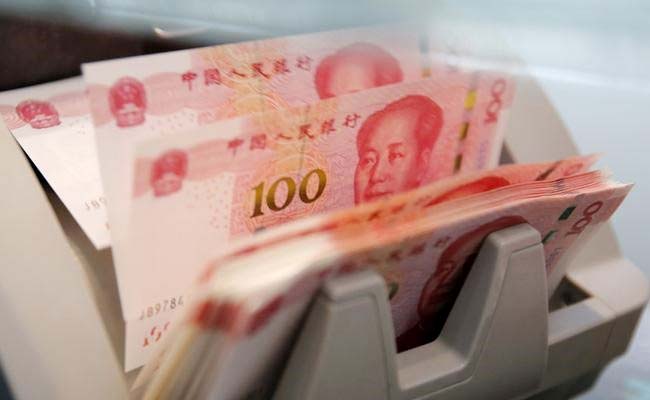
Singapore/New York: China's increasingly aggressive measures to clampdown on capital outflows will not have gone unnoticed by U.S. hedge-fund manager Kyle Bass.
Bass is famed for his successful bet against the U.S. housing market in the global financial crisis, so markets monitor his comments closely. He has long argued the yuan, or renminbi (RMB), is set to fall 30 percent against the dollar and he sees capital outflows as backing his view.
"China's capital outflows are worse than they appear, which is why the government has allowed the RMB to depreciate over the last two months," Bass told Reuters.
"We believe this pressure will continue with the prospect for higher interest rates in the U.S."
China is trying to tighten its grip on capital outflows after a slide in the yuan this year of almost 6 percent, which has pushed the currency down to levels last seen more than eight years ago and revived memories of a wave of capital flight late last year and in January.
China's Vice Finance Minister Zhu Guangyao was quoted on Saturday as saying policymakers were watching capital outflows closely.
Bank of China, the country's biggest currency trading bank, has begun to sharply limit corporate customers' ability to purchase foreign exchange in Shanghai, sources said on Friday. Customers who insist on buying foreign currency are being restricted to $1 million, compared with no caps previously.
Among other moves, the State Administration of Foreign Exchange (SAFE) is vetting transfers abroad of $5 million or more, down from $50 million previously, and is stepping up scrutiny of major outbound deals, sources said.
The yuan slumped to more than 6.92 per dollar in late November before suspected state-directed intervention gave the currency a lift.
It was trading just under 6.90 on Friday.
The slide has sparked a flurry of bets against the currency. A Reuters poll shows those bets increased to their most since January - the tail end of China's 2015 financial crisis.
Wall Street bank Goldman Sachs says buying the dollar against the yuan is its number two recommended trade for 2017, after bets against sterling and the euro. Since the yuan is closely controlled onshore, it suggests buying the dollar against the yuan in 12-month forward contracts offshore.
The one-year non-deliverable forward contract currently prices the yuan at 7.1 per dollar.
Hong Kong-based Luke Spajic, head of portfolio management for emerging Asia at bond fund PIMCO, sees a steady fall in the yuan.
"It's reasonable to expect a depreciation of between 5 to 7 percent per year as a rough guide," Spajic said.
Most speculative trade in the yuan takes place offshore given China's capital controls. Aside from derivatives markets and ETFs, speculators invest in assets of economies with heavy trade exposure to the country, like the Australian or Taiwan dollars and Hong Kong listings of Chinese mainland companies.
RISKY CYCLE
Illicit capital outflows have increased as a concern for the government this year as it attempted to put the economy back on track and keep the currency stable without unduly draining its massive currency reserves of more than $3 trillion.
Chinese regulations grant individuals an annual foreign exchange quota of $50,000 a year, a factor on the radar of markets as 2017 looms. A survey by the Hurun report, a monthly magazine best known for its "China's Rich List", showed 60 percent of wealthy Chinese planned to buy property overseas in the next three years.
Many individuals move larger sums offshore by tapping relatives' quotas and companies also sneak huge amounts of cash offshore through fake invoicing.
In October, foreign exchange reserves slumped more than $45 billion - the most since January or the tail end of China's stock market crisis. November data is due on Wednesday.
Although the fall in reserves in October was mainly seen as reflective of the yuan's declining value, a researcher at China's central bank warned the slide and capital flight could feed off of one another.
"Depreciation triggers capital flight, and capital flight exerts even bigger pressure on the yuan," Wang Zhenying, head of the Statistics and Research Department of the People's Bank of China's (PBOC) Shanghai Head Office, said in an interview.
"Therefore, it's necessary to break this feedback loop," he said.
Analysts say there are fundamental reasons suggesting the yuan should fall. While economic growth has steadied this year at around 6.7 percent, it is seen sliding next year. The International Monetary Fund forecasts growth of 6.2 percent in 2017.
Still, the yuan is falling alongside other emerging market currencies in the face of a dollar that is surging on expectations of higher interest rates as Trump tries to lift the U.S. economy.
But China's relationship with the United States is highly uncertain. Trump has promised to name China a currency manipulator on his first day in office in January and to slap 45 percent import tariffs on Chinese goods.
He prompted protests from China this weekend by speaking by phone on Friday with Taiwan's president, something no previous U.S. president had done since the United States switched its diplomatic recognition to China from Taiwan in 1979.
SCEPTICAL CHINESE
Investors said the pressure on the yuan is nowhere near as extensive as it was late last year when a stock market slump and surprise devaluation of the yuan raised fears that the economy was in worse health than Beijing had let on.
Concerns about China's debt mountain have also eased this year and the government has underpinned economic growth with a massive stimulus effort.
It has also kept the yuan largely stable in trade-weighted terms, although analysts said that may be lost on many Chinese who tend to focus more on the dollar rate.
"When you know your currency is going to be weaker, there is going to be a desire to try to take advantage of that or to try to hedge, so the desire to get dollars will still be there. It is natural to see these kinds of capital outflows," PIMCO's Spajic said.
(This story has not been edited by NDTV staff and is auto-generated from a syndicated feed.)

-
Indians Stay With Family, Not In Hotels | The Reason Why

India still lacks enough clean, reliable and affordable hotels for budget-conscious travellers.
-
The Economic Imperative: Analysing The Material Driving Force Behind India-Canada Strategic Reset
This economic complementarity is further reinforced by deep institutional investment ties and talent mobility, which form the bedrock of the bilateral framework.
-
Medicine Pricing: Where Must Profit Stop?
India must confront excessive margins, hidden incentives and regulatory gaps that threaten the integrity of medicine.
-
Why Amazon And Flipkart Are Struggling To Beat Meesho In India's Smaller Cities
With 274 million users and lowest-cost logistics, Meesho is defending its value commerce crown against giants like Amazon and Flipkart.
-
High US Salaries, No Green Card Certainty: The Financial Calculation Facing Indian H-1B Families
The suspension of PERM processing at eight technology employers does not cancel existing H-1B visas. What it does is force a question many Indian families have been avoiding: is the US salary worth tying your career and family plans to one employer?
-
Swiggy vs Eternal: Food Delivery's Two Rivals Are No Longer In The Same Race
Eternal is building a private AI assistant, dark.ai. Swiggy is still working out how to make Instamart pay, with an operating loss of Rs 895 crore in the July-September quarter while Blinkit stayed profitable.
-
Where You Live Shapes How You Get To Work | The Reason Why
Two-wheelers are the most popular way to get to work in India, accounting for nearly 43% of workplace commutes.
-
Unhedged Position: Can India See An Indonesia-Style Time Correction?
The Nifty is trading below levels it first clocked in 2024. Is there, then, as I have suggested in the headline, potential that the current time correction drags on painfully for the next three-five, even ten years?
-
Navigating Friction And Energy Realities: An Analysis Of Marco Rubio's October Visit To India
Occurring at a critical juncture marked by stalled trade negotiations and escalating geopolitical pressures over global energy supplies, the visit offers a profound window into modern US-India relations.
-
India Exports Capital. Why Not Export Trusteeship?
The big question, then, is whether India can build an institution that global borrowers, investors, banks, and lawyers can trust, even without an Indian connection.










