Malaysia's Election Earthquake Is Rich With Irony
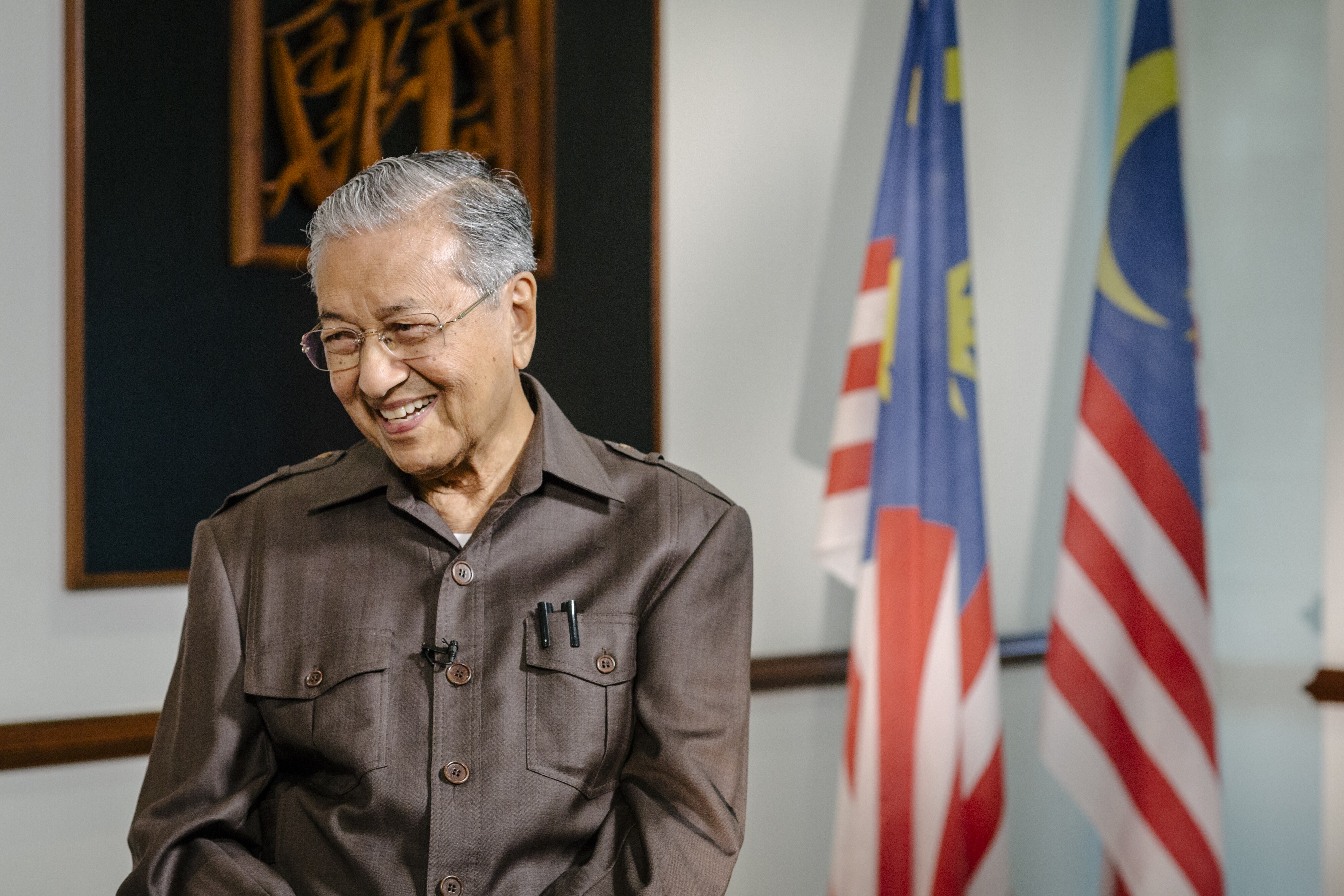
(Bloomberg) -- After six decades of uninterrupted rule by one political bloc, Malaysia's democracy showed it can work — ousting that bloc and the nation's incumbent leader in a seismic shift. The irony is that it took a onetime scourge of democracy to come back from retirement to topple the party that ruled since independence from Great Britain in 1957 — the same party he led as prime minister for 22 years.
That man, Mahathir Mohamad, declared in his 90s that his new mission in life was to oust Prime Minister Najib Razak and the ruling Barisan Nasional coalition. They had become corrupt and too addicted to power, he claimed. Never mind that as prime minister Mahathir did much to centralize power. Never mind that Najib's career was nurtured by none other than Mahathir.
Najib claimed the opposition, now on the cusp of taking control of government, is a motley collection of parties. True enough. That's how parliaments work.
How would the opposition rule? Like Mahathir last time around or more freewheeling? How would leadership issues within the opposition resolve themselves, chiefly the relationship between Mahathir and Anwar Ibrahim, now languishing in prison? (Put there the first time by Mahathir.) What will be the administrative priorities of an opposition that probably doubted it could ever win?
It almost doesn't matter for now, because first the nation and the world can savor that this system, constructed on theoretical possibilities, has been shown to work. Gerrymandering and crackdowns on the press can't suppress political and economic tides indefinitely. Ironies abound. Nobody in the media in the 1990s, when I worked in Malaysia, would have considered Mahathir a friend of a free and vibrant press.
Barisan Nasional had struggled in recent years and, as a result, had become more dictatorial and more dependent on xenophobic appeals to rural Malays and political Islam. How the opposition functions in government and what the role of smaller parties looks like is anyone's guess. And all this assumes, of course, that the government allows the opposition to take office. There's never been a change of power in Malaysia, since independence. The party was the government and the government was the party.
Not to get completely swept up in the moment: Over the longer run, Malaysia's economic and political direction will be governed by interest rates and fiscal and regulatory policy, just like most countries. Mahathir himself isn't exactly a political novice. And there are broader macroeconomic forces also at work, including China's relative economic strength, what happens with global trade and developments in technology.
The economic and social distortions caused by the existing regime's preferences for powerful Malays, members of the majority ethnic group, may not go away soon. They were cemented during Mahathir's previous tour of duty.
Malaysia faces its share of challenges in this new era. And with a former prime minister returning to power, it's fair to wonder how much will really change. There's also no getting away from the fact that the once-unstoppable Barisan Nasional has lost the election. That's already a huge change.
To contact the editor responsible for this story: Philip Gray at philipgray@bloomberg.net.
©2018 Bloomberg L.P.

-
Gold Is Rs 22,000 Cheaper Than A Month Ago. Should You Buy Amid The Wedding Season?

Gold's potential slide to $3,500 could save around Rs 4,700 per 10 grams, but a soft inflation print could just as easily push prices back up. One way to split the risk is to buy in parts, some now and the rest after the Fed's Dec. 9 decision.
-
AI Agents Are Gaining Power. Who Governs Them?
Artificial intelligence agents promise to transform productivity by moving machines from assisting decisions to executing them. But as organisations delegate greater authority to these AI-agents, they must first establish who controls that authority and who remains accountable when things go wrong.
-
Why Swapping Your Old Gold Can Trigger A Rs 5 Lakh Tax Bill, And How You Can Avoid It Legally
Swapping old gold for new is taxed as a sale and a fresh purchase. Getting your own gold remade can cut most of that bill, though it has its own costs.
-
The AI Trade is Done. The Real Opportunity for Investors Starts in 2027 | Unhedged Position
As pureplay AI stocks plunge and circular, capex-led financing unwinds, 2027 is set to be a year of reckoning for AI companies. Yet the bust clears the way for a better opportunity for investors in 2027 -- shifting the spotlight from AI builders to the companies using AI.
-
Leadership As Mission: Why The Age Of AI Demands More Human Leadership
Debjani Ghosh examines how AI is changing leadership, arguing that its success must be measured by its impact on people and the accountability of those guiding its use.
-
We May Need Another Tukaram Mundhe To Fight Air Pollution | The Reason Why
Developers may install basic measures such as sprinklers and green nets, resume work, and continue violating rules when this equipment stops working.
-
Extracting Value From Battery Scrap Could Be Challenging For India | The Reason Why
A discarded lithium-ion battery still contains valuable materials such as lithium, nickel and cobalt. These can be recovered and reused. When such batteries are crushed and shredded, they produce a dark powder called black mass.
-
One El Nino, India Can Handle. Two Could Break The Granary
India's grain stocks can absorb one bad year, but a second El Nino could drain the buffer in two to three years, economists say.
-
India's Troika Of Good Luck | Joining The Dots
As Jensen Huang's exit drags Nvidia down, a cooling AI trade and resilient earnings have revived investor interest in India. A likely RBI rate hike looms.
-
Talking Points This Week: Leadership Shock At Nvidia, Earnings Strength, And The Fog Over Hormuz
The Anthropic IPO pricing and first trading day, Nvidia's upcoming earnings, and any fresh signals from Iran will set the tone for the following week.









