Paying Cash Over The Limit At Hospitals, Banquet Halls, Can Land You In Trouble
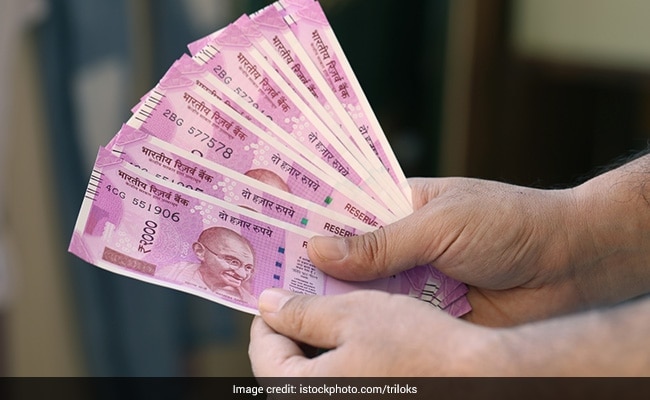
To prevent tax evasion, the income tax department has decided to keep an eye on cash transactions in hospitals, banquet halls, and businesses.
As per the Income Tax Department, cash transactions are sometimes not legal and can get you in trouble. Accepting Rs 20,000 or more in cash for a loan or deposit is prohibited, and such transactions must be done through banking channels.
A person is also not allowed to receive an amount of Rs 2 lakh or more in cash in aggregate from another person. Donations made in cash to a registered trust or political party are not allowed as deductions.
To enforce these rules, the IT department monitors cash transactions in some businesses and professions, including hospitals. The Times of India reports that certain professionals are also under the radar of the department.
The law mandates that the healthcare institutes, upon admission, must collect PAN cards of patients.
However, according to officials from the department, the report added that health facilities, in several instances, had disregarded the rule.
The Income Tax department is now planning action against such hospitals. The report added that it would use the data from health service providers and track patients who have paid large sums to private medical facilities.
For a detailed list read this: Income Tax-leaflet-Say No to Cash Transaction
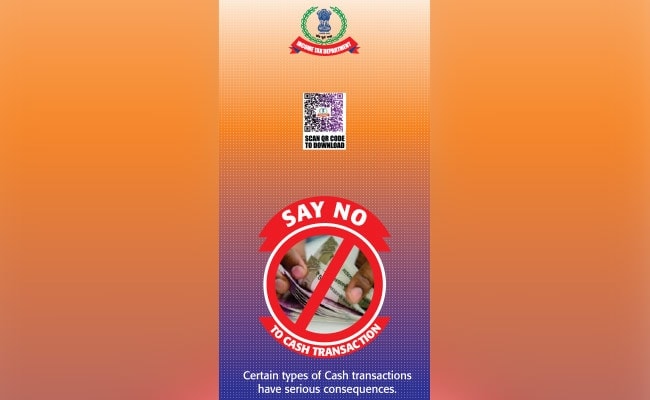
Income Tax Department: Say No To Cash Transactions
The report said that the tax department is utilising detailed data such as the Annual Information Statement to detect any discrepancy in the returns filed.
How To Check And Submit Correct Income Details:
Along with attaching the required documents, taxpayers must also ensure to submit the correct information as per their details in the Annual Infomation Statement (AIS) and Taxpayer Information Summary (TIS).
Any discrepancy in the information submitted in the tax return and details of AIS and TIS may invite a notice from the Income Tax Department.
Launched in 2021, AIS is a comprehensive statement containing all the details of an individual financial transaction in the past year.
It contains information mandated in the Income Tax Act, including interest earned on savings account/fixed deposits, TDS, earnings as dividends, mutual funds or other such investments.
Taxpayers can download their AIS for the year by logging into their accounts on the Income Tax Department portal.
AIS is available for download under the "Services" tab on the e-filing portal. On the other hand, TIS is part of the AIS and contains an information summary for a taxpayer aggregated by category.
Each category displays the processed value produced due to information deduplication based on pre-established rules and derived values.
TIS displays details including Information Category, Processed Value and Derived Value. The information is used for prefilling returns wherever required.
Taxpayer Information Summary, like AIS, can be downloaded from the e-filing portal of the Income Tax Department. To access your TIS, click on AIS under the services tab of the I-T portal.
Click "Taxpayer Information Statement" on the next page to download it in a password-protected PDF. To access the TIS, enter the PAN in the lower case along with the birth date in the case of an individual taxpayer.

-
Getting To Work Costs Women More | The Reason Why

It is not just about women paying more than men. It is about women paying much more in cities than in villages.
-
AI Bias In Investing Cannot Be Eliminated, But It Can Be Governed
Framing is a particularly important example as identical financial information presented in terms of gains rather than losses can lead an LLM to reach a different assessment.
-
Joining The Dots | Dark Skies, Steady Diya: Why Hope Holds This Diwali
With war, a weak rupee and foreign outflows weighing on sentiment, policymakers at the NDTV World Summit and market veterans at NDTV Profit Ignite: Diwali Edition offered the same advice: stay invested and filter out the noise.
-
The Curious Case of Equitas Small Finance Bank And A CEO Who Quit For Stock
PN Vasudevan believes persistent investor concerns over a perceived conflict of interest had become a governance overhang on Equitas Small Finance Bank's stock, even as the lender improved profitability and asset quality.
-
Talking Points This Week: AI Cash Burn, A Tiger Comeback And An India That Still Finds Its Own Path
India is not immune to higher oil or tighter global liquidity, yet its earnings base is broader, its domestic policy levers are still available.
-
Foreign Investors Own Half Of HDFC Bank and ICICI Bank. An LTCG Cut Could Matter Most Here
Foreign portfolio investors have US$115 billion parked in HDFC Bank, ICICI Bank. If the government cuts long-term capital gains tax, Jefferies says returning foreign money could land here first.
-
'Never Seen This Level Of Negativity': Sandeep Tandon Says The Next Rally May Be Closer Than You Think
Veteran investor Sandeep Tandon says foreign selling is easing, large-caps are due a comeback and mid-caps are crowded, while he turns positive on gold, power and pharma this Diwali.
-
Indians Stay With Family, Not In Hotels | The Reason Why
India still lacks enough clean, reliable and affordable hotels for budget-conscious travellers.
-
The Economic Imperative: Analysing The Material Driving Force Behind India-Canada Strategic Reset
This economic complementarity is further reinforced by deep institutional investment ties and talent mobility, which form the bedrock of the bilateral framework.
-
Medicine Pricing: Where Must Profit Stop?
India must confront excessive margins, hidden incentives and regulatory gaps that threaten the integrity of medicine.










