Madam, Don't Send Us to Insolvency Court, India Firms Tell Bank
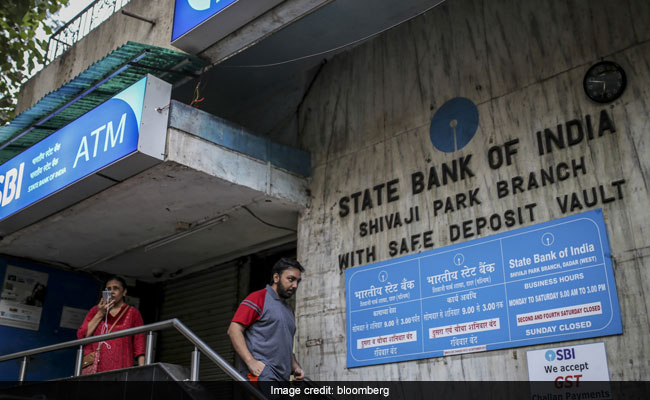
Country's largest lender is finding fear can be a potent weapon in recovering loans.
With 1.8 lakh crore rupees ($25 billion) in bad corporate debt to clean up, State Bank of India is having an easier time negotiating with founders keen to avoid the nation's two-year-old bankruptcy law, according to Anshula Kant, a managing director overseeing stressed assets at the lender. That's because a crackdown by policy makers has convinced business owners that they risk losing their companies once the courts become involved.
"The first thing they say when they come to us is 'Madam please don't send us to NCLT,'" she said, referring to the National Company Law Tribunal, which oversees bankruptcy cases. If the founder is "genuine we don't want him to lose the company."
Recent bankruptcy proceedings that wrested prominent companies from their owners were a wake up call for country's business community, previously used to walking away from debts without major consequences. At the same time, the regulator has pressured banks to take defaulters to court, giving lenders just 180 days to recast loans once a payment is missed.
The crackdown helped reduce the bad-debt ratio at country's banks to 10.8 per cent in September from 11.5 per cent six month earlier, though it remains among the worst for a major economy. For SBI, it stands at a one-year low of 9.95 per cent.
SBI is working with the founders of several mid-sized companies to restructure loans and escape bankruptcy proceedings, said Mr Kant, who joined SBI in 1983 and was previously the lender's chief financial officer. One-time settlements are a "preferred choice" if founders have funding, with the bank willing to take a haircut of as much as 40 per cent, she said.
The bankruptcy process itself is better suited for accounts where several lenders are involved, making it hard to get everyone to agree to a restructuring, according to Mr Kant.
Consensus building isn't the only difficulty with the fledgling law. Legal challenges from founders, losing bidders and operational creditors have forced courts to extend the 270-day deadline for debt resolution that was enshrined in the law.
SBI recently sought bids for $2.2 billion of loans to Essar Steel India Ltd. after the company's founders challenged the mill's sale. Essar was among the first 12 companies forced before the nation's bankruptcy court by the regulator in 2017.
Lost Income
Lenders lost out on 4,000 crore rupees in additional income due to delays in the resolution process beyond the time mandated by law, according to rating company ICRA. The number of cases of corporate debtors admitted before the courts that are yet to be resolved stood at 816 in September, it said.
SBI is also working to increase the amount of money it sets aside for soured corporate loans. The lender plans to raise its provisioning to about 70 per cent by March 2020 from about 57 per cent currently, Mr Kant said.
"We want a cleaner balance sheet," she said. "It will be our endeavor that all corporate non-performing loans will be provided up to 70 percent by end of the next fiscal."

-
Signature Play: The Classic Cocktail Is Dead. Or Is It?

Classic cocktails are disappearing from India's cocktail menus. But they're still being ordered, taught to bartenders and borrowed from. So, who's really having the last drink?
-
A New Samvat Wishlist: Inclusive Prosperity And Human Development
India has strengthened its economic foundations through infrastructure, digital access and enterprise. Its next growth chapter must deepen productivity, create better livelihoods and widen participation in prosperity.
-
Love, Sex Aur Dhokha: The Audacious Plot To Spy On Jensen Huang
A Taipei dinner, a Singapore chip buyer and a suspected Chinese asset: inside the alleged spy operation that got close to NVIDIA's Jensen Huang.
-
Ten Things I Learnt This Samvat
Patience can be a trap. Cheap stocks can stay cheap. Leverage can wipe you out. What did Samvat 2082 teach us? Niraj Shah writes on 10 lessons from the year gone by.
-
Talking Points This Week: Tech Nerves, FII Buying, And A Faraway Banking Shock
The global markets are not shining this Diwali. The exception in the large markets is, India.
-
Midterm Rally Lasted A Day. The Hard Reality Of A Divided US May Last Two Years | Opinion
Between a contested AI boom, a debt ceiling that arrives in 2027 and a president with every incentive to act alone, the next two years may prove more volatile than the first day's rally suggests.
-
Blue Wave Will Derail the AI Trade but Won't Dismantle the AI Era | Unhedged Position
The Democrats' sweep of the US Congress will see politics collide with economic forces both over the long and short term.
-
It's Time To Take The GST Council's Bet On Trust Global
Payment records can prove India's services exports, and clear, proportionate rules can bring foreign digital sellers into the tax net.
-
Opinion | India at 38: From Innovation Overperformer to Innovation Powerhouse
India now has 453 VC-backed deep science startups, 18 of them late-stage, after 117 percent growth since 2020. Laurus Labs, at USD 9.3 billion, is the most valuable deep science company in any middle-income economy outside China.









