Lui Che Woo, Casino Tycoon Who Hit Jackpot In Macau, Dies At 95
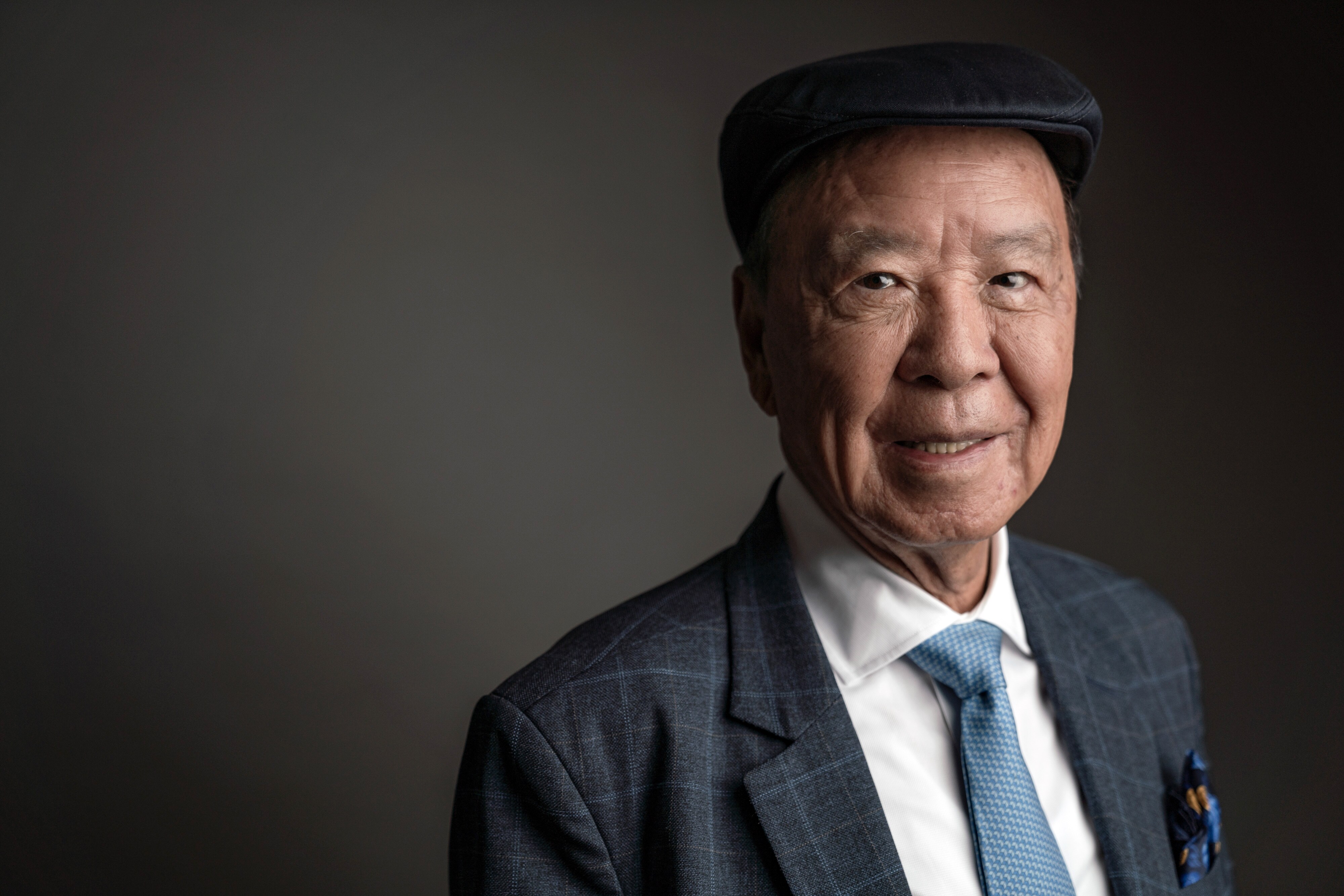
(Bloomberg) --Lui Che Woo, the Hong Kong tycoon whose fortune grew alongside neighboring Macau's casino industry, has died. He was 95.
He died on Nov. 7, according to a statement released by Galaxy Entertainment Group Ltd., where he was founder and chairman. “His vision, tremendous leadership and guidance were the foundations for the group's development and continued success,” the company's board said in the statement.
Lui had an estimated net worth of $14.5 billion, according to the Bloomberg Billionaires Index, making him one of the richest people in Hong Kong.
He built his empire in what became the world's biggest gambling hub from scratch, competing with industry veterans including Steve Wynn and Sheldon Adelson. He won a gaming license in 2002 when the former Portuguese colony's government ended a 40-year monopoly held by Stanley Ho, the so-called King of Gambling, who died in 2020.
Lui started his first resort, StarWorld Macau, in 2006 before opening the Galaxy Macau in the Cotai area, Asia's version of the Las Vegas Strip, in 2011. “Don't just think, ‘Oh, he's got so rich!' You don't know how many obstacles he's had to go through,” Lui said in an interview that year with Hong Kong's Phoenix Television.
First Fortune
Lui was born on Aug. 9, 1929, in the city of Jiangmen in China's Guangdong province, just north of Hong Kong. In 1934, the family crossed into the then-British colony to flee the war-torn mainland. Relatively well-off at the time, the family lost its fortune after the Japanese military invaded Hong Kong in 1941.
Lui graduated from a primary school in the Yau Ma Tei area of Kowloon but dropped out in the first year of secondary school because he didn't want to study Japanese, he said in a 2019 interview with the public broadcaster Radio Television Hong Kong. At 13, he started to help support the family, which grew to include five sisters, by selling Chinese baked goods.
He made his first fortune after World War II buying surplus US construction equipment in Okinawa and importing it to Hong Kong, which was undergoing a building boom as people fled the turbulent mainland. In 1955, he founded K. Wah Group, quarrying construction materials.
He invested the profits he made from construction into residential property development and, later, hotels in Hong Kong. In 1979, he began building his first, originally a Holiday Inn and later rebranded as the InterContinental Grand Stanford. The InterContinental was built for HK$300 million ($38 million); by the 1990s, the hotel was valued at more than HK$1 billion and became the group's flagship.
Casino Magnate
In 2002, Lui ventured into the gaming industry in collaboration with Adelson's Las Vegas Sands Corp. Within a year, however, they split the gaming license and went separate ways after falling out over strategy: Adelson wanted to recreate Las Vegas in China, while Lui wanted to cater more to Asian tastes. That meant, among other things, Chinese restaurants and clear signs for exits and entrances. His son, Francis, said in a 2006 interview with Next Magazine that his father compared American casinos to mazes.
The spectacular growth in Macau casinos was fueled by rising interest from mainland Chinese gamblers. Macau casino revenue hit $44.7 billion in 2013 — almost seven times that of the Las Vegas Strip. Revenue dropped off significantly, however, during the Covid-19 pandemic, when China's travel restrictions kept tourists away.
Galaxy bought shares in Wynn Resorts Ltd. after Steve Wynn stepped down as chairman.
K. Wah Group operates across mainland China, Hong Kong, Macau, Southeast Asia and the US. The group had a stake in San Francisco-based Stanford Hotels, which owned a group of Hiltons, Sheratons and Marriotts in the US.
Giving Back
Lui, who was almost always seen wearing a flat cap, was a bigger fan of golf and Chinese calligraphy as hobbies than of gambling — except perhaps when it came to playing mah-jong.
Stepping into the shoes of Alfred Nobel, in 2015 he unveiled a “prize for world civilization” with a cash payout of HK$20 million — roughly double the amount of a Nobel Prize.
“To some extent, it is a bit similar to the Nobel Peace Prize but the concept of our prize is broader,” Lui said in a 2018 interview with Bloomberg News. It awards contributions related to sustainable development, improvement in human welfare and promotion of positive attitudes. Laureates include The Nature Conservancy, the International Paralympic Committee and former US President Jimmy Carter.
Lui said his philanthropic vein stemmed from his childhood, when he was denied a formal education during the Japanese invasion. He was a big donor to Peking University, where he was an honorary trustee after pledging $18 million.
“I saw so many poor and suffering people in Japan-invaded Hong Kong. I bear that deeply in my mind,” Lui said in tears in the 2019 RTHK interview.
Family Man
In 1952, Lui married Lui Chiu Kam-ping, who kept a low profile. They had five children.
Lui installed family members across his business empire, bringing further comparisons with Stanley Ho.
His eldest son Francis Lui Yiu Tung joined the group in 1979 and became an executive director 10 years later. Another son, Lawrence Lui, went to run Stanford Hotels in the US, while the youngest, Alexander Lui Yiu Wah, and his sister, Paddy Tang Lui Wai Yu, were put in charge of K. Wah's Hong Kong properties.
The younger daughter, Eileen Lui Wai Ling, was in charge of group administration.

-
One Battle After Another: India's Corporate Dynasties Battle For Control

2026 could go down as Corporate India's year of succession wars, governance battles and family fault lines.
-
Rs 50-Lakh Gold In Bank Locker, Rs 3 Lakh Of Protection: The Gap Most Families Don't Know About
The RBI ties a bank's liability to the annual locker rent and families who want to insure their jewellery face a separate question about how to prove what was inside.
-
The More Food Turns Into Fuel, The Harder It Is To Read Agricultural Markets | The Reason Why
A policy designed to reduce dependence on imported fuel can create new pressures elsewhere in the food economy.
-
Your iPhone Costs 12 Grams Of Gold, A Car About 100. What Does Your Life Weigh?
Measured in rupees, almost everything looks more expensive than it did a generation ago. Measured in grams of gold, a lot of it has become cheaper.
-
Gold Is Rs 22,000 Cheaper Than A Month Ago. Should You Buy Amid The Wedding Season?
Gold's potential slide to $3,500 could save around Rs 4,700 per 10 grams, but a soft inflation print could just as easily push prices back up. One way to split the risk is to buy in parts, some now and the rest after the Fed's Dec. 9 decision.
-
AI Agents Are Gaining Power. Who Governs Them?
Artificial intelligence agents promise to transform productivity by moving machines from assisting decisions to executing them. But as organisations delegate greater authority to these AI-agents, they must first establish who controls that authority and who remains accountable when things go wrong.
-
Why Swapping Your Old Gold Can Trigger A Rs 5 Lakh Tax Bill, And How You Can Avoid It Legally
Swapping old gold for new is taxed as a sale and a fresh purchase. Getting your own gold remade can cut most of that bill, though it has its own costs.
-
The AI Trade is Done. The Real Opportunity for Investors Starts in 2027 | Unhedged Position
As pureplay AI stocks plunge and circular, capex-led financing unwinds, 2027 is set to be a year of reckoning for AI companies. Yet the bust clears the way for a better opportunity for investors in 2027 -- shifting the spotlight from AI builders to the companies using AI.
-
Leadership As Mission: Why The Age Of AI Demands More Human Leadership
Debjani Ghosh examines how AI is changing leadership, arguing that its success must be measured by its impact on people and the accountability of those guiding its use.
-
We May Need Another Tukaram Mundhe To Fight Air Pollution | The Reason Why
Developers may install basic measures such as sprinklers and green nets, resume work, and continue violating rules when this equipment stops working.









