Trouble For Household Budgets: Cooking Gas Price Hiked Again
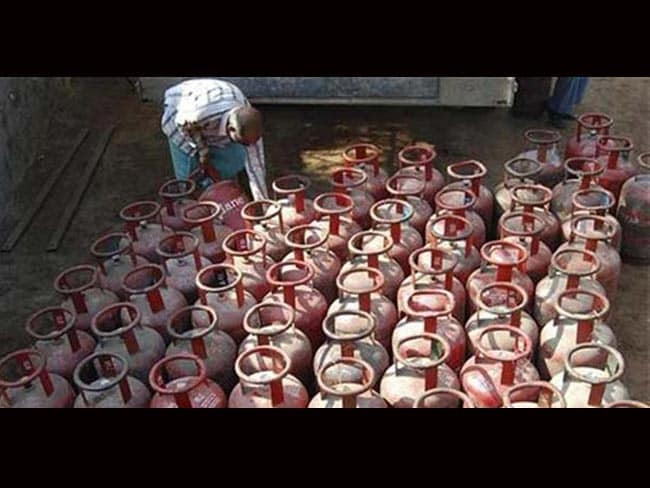
Cooking gas LPG price on Wednesday was hiked by Rs 50 per cylinder, the eighth increase in rates in the last one year that took the cumulative rise to Rs 244.
Non-subsidised LPG now costs Rs 1,053 per 14.2-kg cylinder in the national capital, up from Rs 1,003 previously, according to a price notification of state-owned fuel retailers.
Firming international energy prices have led to non-subsidised cooking gas (LPG) prices being increased on eight occasions in the past year. In all, rates have gone up by Rs 244 per cylinder or 30 per cent.
Common households pay non-subsidised rates for the cooking gas they buy after the government restricted subsidy to just poor beneficiaries who got connections under the Ujjwala scheme.
This is the fourth increase in the LPG rate since the Ukraine war. The price was hiked by Rs 50 per cylinder on March 22 and again by the same quantum on May 7. Rates went up by Rs 3.50 per cylinder on May 19.
Of the Rs 244 per cylinder hike in the past year, Rs 153.50 increase happened since March 2022.
Opposition Congress termed the increase "anti-people" decision and asked if this is the "cost" of toppling the Maharashtra government.
In a tweet in Hindi, Congress general secretary Priyanka Gandhi Vadra said the BJP spoke of the welfare of the poor at its national executive meeting while imposing a 5 per cent "Gabbar Singh Tax (GST)" on flour, cereals, curd and paneer, and then broke the back of the poor and middle class by increasing the price of domestic cooking gas by Rs 50.
Petrol and diesel prices, however, continue to be on freeze for the third straight month. The pause followed rates being hiked by a record Rs 10 per litre in a matter of 16 days beginning March 22.
In May, the government cut excise duty on petrol by Rs 8 per litre and diesel by Rs 6 per litre to cool soaring inflation.
At that time, the government also stated that Rs 200 per cylinder subsidy on cooking gas will be limited to only 9 crore poor women and other beneficiaries who got free connections under the Ujjwala scheme and the remaining users including households will pay the market price (also known as non-subsidised rate).
Originally, non-subsidised cooking gas was the one that consumers used to buy after exhausting their quota of 12 cylinders at subsidised or below-market rates. However, the government stopped paying subsidy on LPG to households in mid-2020.
Non-subsidised LPG costs Rs 1,052.50 per 14.2-kg cylinder in Mumbai, while it is priced at Rs 1,079 a bottle in Chennai and Rs 1,068.50 in Kolkata.
Rates differ from state to state depending on the incidence of local taxes such as VAT. Prices are higher in states with higher taxes.
Alongside, oil firms also reduced the price of commercial LPG cylinders -- the ones used by establishments like hotels and restaurants. It now costs Rs 2,012.50 per 19-kg cylinder in the national capital, down from Rs 2,021 per cylinder.
Industry sources said that commercial LPG prices were almost aligned with cost while the cooking gas used in the household kitchens was being sold at a discount.
The reduction in commercial LPG rates reflects softening in Saudi CPP prices while domestic LPG rates are being adjusted upwards to align them closer to cost.
Domestic LPG rates are about Rs 300 short of their actual cost.
International oil prices have been on the rise this year. They jumped to a 13-year high of $140 per barrel in March before shedding some of the gains. Brent was trading at $103.92 per barrel on Wednesday.
To compound things, the Indian rupee tumbled to Rs 79.24 to a dollar, making imports costlier.
India relies on overseas purchases to meet about 85 per cent of its oil requirement, making it one of the most vulnerable in Asia to higher oil prices.
While India has surplus oil refining capacity, it does not manufacture enough LPG to meet domestic demand and imports significant quantities from nations such as Saudi Arabia.

-
Signature Play: The Classic Cocktail Is Dead. Or Is It?

Classic cocktails are disappearing from India's cocktail menus. But they're still being ordered, taught to bartenders and borrowed from. So, who's really having the last drink?
-
A New Samvat Wishlist: Inclusive Prosperity And Human Development
India has strengthened its economic foundations through infrastructure, digital access and enterprise. Its next growth chapter must deepen productivity, create better livelihoods and widen participation in prosperity.
-
Love, Sex Aur Dhokha: The Audacious Plot To Spy On Jensen Huang
A Taipei dinner, a Singapore chip buyer and a suspected Chinese asset: inside the alleged spy operation that got close to NVIDIA's Jensen Huang.
-
Ten Things I Learnt This Samvat
Patience can be a trap. Cheap stocks can stay cheap. Leverage can wipe you out. What did Samvat 2082 teach us? Niraj Shah writes on 10 lessons from the year gone by.
-
Talking Points This Week: Tech Nerves, FII Buying, And A Faraway Banking Shock
The global markets are not shining this Diwali. The exception in the large markets is, India.
-
Midterm Rally Lasted A Day. The Hard Reality Of A Divided US May Last Two Years | Opinion
Between a contested AI boom, a debt ceiling that arrives in 2027 and a president with every incentive to act alone, the next two years may prove more volatile than the first day's rally suggests.
-
Blue Wave Will Derail the AI Trade but Won't Dismantle the AI Era | Unhedged Position
The Democrats' sweep of the US Congress will see politics collide with economic forces both over the long and short term.
-
It's Time To Take The GST Council's Bet On Trust Global
Payment records can prove India's services exports, and clear, proportionate rules can bring foreign digital sellers into the tax net.
-
Opinion | India at 38: From Innovation Overperformer to Innovation Powerhouse
India now has 453 VC-backed deep science startups, 18 of them late-stage, after 117 percent growth since 2020. Laurus Labs, at USD 9.3 billion, is the most valuable deep science company in any middle-income economy outside China.









