Low Oil Prices Favoured Indian Economy: Jaitley
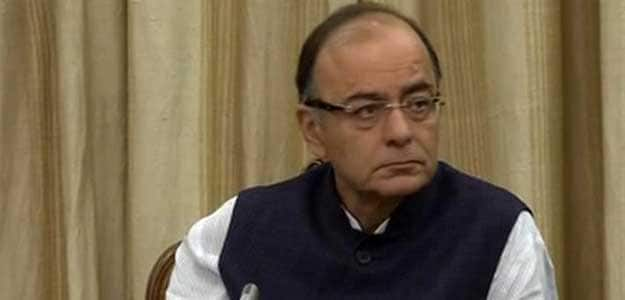
Dubai: Low oil prices have created a favourable environment for the Indian economy as it helped to absorb the loss faced by oil companies and kept inflation under control, Finance Minister Arun Jaitley said today.
Jaitley said that low oil prices also enabled the government to rationalise subsidies.
"It has enabled us to absorb the loss that our own oil companies were facing because of future purchases. It has also kept inflation under control, which, in turn, has helped the Reserve Bank to ease up the rates.
"It has also enabled us to increase the cess around fuel which has been diverted for infrastructure creation," he told reporters during a press briefing.
Oil prices, at the levels they have been during the last few months, created a favourable environment for the Indian economy, he said.
He also said that low oil prices also means effectively transfer of wealth from the producing nations to the consuming nations.
The Finance Minister arrived here yesterday on a two-day visit to United Arab Emirates (UAE) to impress investors on various attractive investment opportunities that India provides.
As far as investment opportunities are concerned, the Minister said, "It is one thing to say that the investment must come but it doesn't merely come in by enlarging the door for entry."
"Investment comes in when investors feel confident about the state of the economy and when they feel confident that their investment is safe and will bring adequate returns," he said.
On another question regarding investment he said he has a meeting lined up with the Abu Dhabi Investment Authority (ADIA) at the highest levels.
"We are certainly going to be looking at the investment from here coming into various sectors. The obvious area of attraction for us is going to be the India Infrastructure Investment Fund, which has a sovereign participation," he said.
Jaitley said that the environment for investment is more conducive now because the decision making is quicker, infrastructural investments are picking up and Indian economy is growing faster than most other economies in the world.
"Prudent investors will hence make a conscious choice as the circumstances are very favourable to us," he said.
Earlier addressing a gathering of Indian businessmen here, Jaitley said that economic crises earlier would leave an impact once in 10-15 years but now they are far more frequent.
"Under these circumstances India has to find it's own level," he said, adding "Despite adverse global circumstances, India is still managing to keep ahead. We have our agenda full in terms of reforms and investment into key areas."
"One aspect of India, which is adversely affected, is our exports because of shrinking global economy. The headwinds are against us. We have also had bad monsoon for two years," he said.
Jaitley said that an interesting change is taking place in India with the expansion of aspirational class.
"We are in a situation which is opposite to many parts of the world. We have a surplus human resource which is creating huge Indian diaspora around the world," he said.
"They are becoming good residents of these countries and are also happy at India's growth. The assertion and visibility of Indians is on the rise and will continue to be so," he said.
Opening the inaugural edition of the UAE-India Economic Forum, Jaitley said, "Over the last four decades, the great relationship between the UAE and India has evolved greatly in various directions of human life and civilisation supported by the two nations' strength of human resource, culture, geography and economy."
Outlining three key challenges facing India's economic growth, Jaitley stated that world economy is under great stress with almost every forecast indicating a negative trend in terms of growth statistics.
"The global slowdown impacts the world market, which in turn poses challenges for large economies like India. Second, 55 percent of our population is still dependent on agriculture and with the unpredictability of monsoons, their purchasing power has been reduced significantly. Third, while public and foreign investment in India has grown by 30 per cent and 40 per cent respectively, the rate of growth in terms of private investments is still sluggish."
To address these challenges, Jaitley highlighted the structural changes brought about by the Indian government on the back of country's consistent drive for growth.
Mohammed Ahmed bin Abdulaziz Alshehhi, Under-Secretary at the UAE Ministry of Economy, said, "India and the UAE share a very special bond of friendship and partnership and we welcome the improvement in legislation and laws in India to promote business in the country.
"There are many success stories of UAE investment in India. The Indian community in the UAE is quite active and we welcome their contributions in the growth of the UAE economy. We look forward to more investments and increased trade opportunities between the two countries."
Speaking on the occasion, Dr Jyotsna Suri, President, Federation of Indian Chambers of Commerce and Industry (FICCI), said, "Prime Minister Narendra Modi's visit to the UAE brought a transformation in the India-UAE relationship. We are looking at each other with renewed understanding and focus and are committed to leveraging the opportunities for mutual prosperity."

-
AI Bias In Investing Cannot Be Eliminated, But It Can Be Governed

Framing is a particularly important example as identical financial information presented in terms of gains rather than losses can lead an LLM to reach a different assessment.
-
Joining The Dots | Dark Skies, Steady Diya: Why Hope Holds This Diwali
With war, a weak rupee and foreign outflows weighing on sentiment, policymakers at the NDTV World Summit and market veterans at NDTV Profit Ignite: Diwali Edition offered the same advice: stay invested and filter out the noise.
-
The Curious Case of Equitas Small Finance Bank And A CEO Who Quit For Stock
PN Vasudevan believes persistent investor concerns over a perceived conflict of interest had become a governance overhang on Equitas Small Finance Bank's stock, even as the lender improved profitability and asset quality.
-
Talking Points This Week: AI Cash Burn, A Tiger Comeback And An India That Still Finds Its Own Path
India is not immune to higher oil or tighter global liquidity, yet its earnings base is broader, its domestic policy levers are still available.
-
Foreign Investors Own Half Of HDFC Bank and ICICI Bank. An LTCG Cut Could Matter Most Here
Foreign portfolio investors have US$115 billion parked in HDFC Bank, ICICI Bank. If the government cuts long-term capital gains tax, Jefferies says returning foreign money could land here first.
-
'Never Seen This Level Of Negativity': Sandeep Tandon Says The Next Rally May Be Closer Than You Think
Veteran investor Sandeep Tandon says foreign selling is easing, large-caps are due a comeback and mid-caps are crowded, while he turns positive on gold, power and pharma this Diwali.
-
Indians Stay With Family, Not In Hotels | The Reason Why
India still lacks enough clean, reliable and affordable hotels for budget-conscious travellers.
-
The Economic Imperative: Analysing The Material Driving Force Behind India-Canada Strategic Reset
This economic complementarity is further reinforced by deep institutional investment ties and talent mobility, which form the bedrock of the bilateral framework.
-
Medicine Pricing: Where Must Profit Stop?
India must confront excessive margins, hidden incentives and regulatory gaps that threaten the integrity of medicine.
-
Why Amazon And Flipkart Are Struggling To Beat Meesho In India's Smaller Cities
With 274 million users and lowest-cost logistics, Meesho is defending its value commerce crown against giants like Amazon and Flipkart.










