New Face-Off Between RBI Governor and Government Over Rate Cut
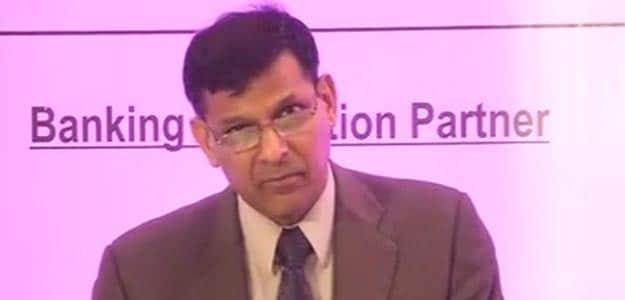
Interest rate cuts should only be delivered after sustained low inflation, and not as "goodies" doled out after public pleading, Reserve Bank of India Governor Raghuram Rajan said on Monday.
"Rate cuts should not be seen as goodies that the RBI gives out stingily after much public pleading," Mr Rajan said in a speech to a banking event. "Instead, what is important is sustained low inflation," he added. "And rate cuts are a natural consequence that the RBI has no hesitancy in delivering."
The comments come as Finance Minister Arun Jaitley is stepping up pressure on the RBI to cut rates as the economy struggles and price rises slow, with some bureaucrats working behind the scenes to argue for an immediate cut of as much as 50 basis points or 0.50 per cent.
The RBI kept its policy rate on hold at 7.25 per cent at its last policy review earlier this month while leaving the door open to ease further, depending on the inflation outlook and how swiftly banks lower their lending rates.
After another weak quarter of corporate earnings and July inflation that undershot the Reserve Bank's medium-term target, the Finance Minister has made direct, public calls for faster easing, clashing with far more cautious comments Mr Rajan.
The public stand-off between the Finance ministry and the RBI comes at a time when the two sides are already at odds over key changes to the way India takes monetary policy decisions and the government's say in such matters.
"Hopefully, the impact of inflation being under control is a factor which ... the central bank, with all its wisdom, will take note of," Mr Jaitley told a gathering of bankers and executives in Mumbai earlier this week.
While India's economic growth is outpacing China's on paper, the picture is different on the ground, where government spending has been sluggish, consumption is weak and corporate executives fret a recovery is unlikely before 2016-17.
The government is also emerging from a bruising monsoon session in parliament, which delayed tax and land reforms seen as critical to accelerating growth.
It now worries that growth could slip below its target of 8 to 8.5 per cent for the year to March, and sees the RBI's caution as worsening the situation. Moody's earlier this week lowered its growth forecast to 7 per cent, from 7.5 per cent.
The RBI, however, has remained far more cautious, specifically on the outlook for the monsoon season, which has roughly another month to run and has a huge influence on food prices in the country.
Mr Rajan's tight rein on inflation has benefited the government; rising prices are a major concern for Indian voters, and inflation was in double digits when the former International Monetary Fund chief economist took over in 2013.
But that is now irking a government whose officials complain they do not get sufficient insight into the dashboard of data that contribute to RBI decision-making.
Though lauded by the government, July's inflation below 4 per cent has yet to satisfy the bank, which, sources with knowledge of RBI policy making say, frets that core inflation, which excludes food and fuel, remains too high.
The bank is even more nervous about food prices. Onions, the mainstay of many Indian dishes, have more than tripled in price since June 1 to almost two-year highs.

-
Indians Are Travelling, But Not Every Journey Is A Holiday | The Week In Whys

Pilgrims, patients and working women are the real travellers, and the system hasn't quite caught up with them.
-
Getting To Work Costs Women More | The Reason Why
It is not just about women paying more than men. It is about women paying much more in cities than in villages.
-
AI Bias In Investing Cannot Be Eliminated, But It Can Be Governed
Framing is a particularly important example as identical financial information presented in terms of gains rather than losses can lead an LLM to reach a different assessment.
-
Joining The Dots | Dark Skies, Steady Diya: Why Hope Holds This Diwali
With war, a weak rupee and foreign outflows weighing on sentiment, policymakers at the NDTV World Summit and market veterans at NDTV Profit Ignite: Diwali Edition offered the same advice: stay invested and filter out the noise.
-
The Curious Case of Equitas Small Finance Bank And A CEO Who Quit For Stock
PN Vasudevan believes persistent investor concerns over a perceived conflict of interest had become a governance overhang on Equitas Small Finance Bank's stock, even as the lender improved profitability and asset quality.
-
Talking Points This Week: AI Cash Burn, A Tiger Comeback And An India That Still Finds Its Own Path
India is not immune to higher oil or tighter global liquidity, yet its earnings base is broader, its domestic policy levers are still available.
-
Foreign Investors Own Half Of HDFC Bank and ICICI Bank. An LTCG Cut Could Matter Most Here
Foreign portfolio investors have US$115 billion parked in HDFC Bank, ICICI Bank. If the government cuts long-term capital gains tax, Jefferies says returning foreign money could land here first.
-
'Never Seen This Level Of Negativity': Sandeep Tandon Says The Next Rally May Be Closer Than You Think
Veteran investor Sandeep Tandon says foreign selling is easing, large-caps are due a comeback and mid-caps are crowded, while he turns positive on gold, power and pharma this Diwali.
-
Indians Stay With Family, Not In Hotels | The Reason Why
India still lacks enough clean, reliable and affordable hotels for budget-conscious travellers.
-
The Economic Imperative: Analysing The Material Driving Force Behind India-Canada Strategic Reset
This economic complementarity is further reinforced by deep institutional investment ties and talent mobility, which form the bedrock of the bilateral framework.










