L’Oreal Bets On Online Sales To Grow Beyond Metros

Samarpita Mukherjee-Sharma, a freelance editor and writer, doesn't find her choice of cosmetics easily in Bhopal. She orders everything from face creams to kaajal online.
“Deliveries are quick and hassle-free, and let's not forget the wonderful discounts online shopping gives,” Mukherjee-Sharma, 37, said. And she has much more to choose from.
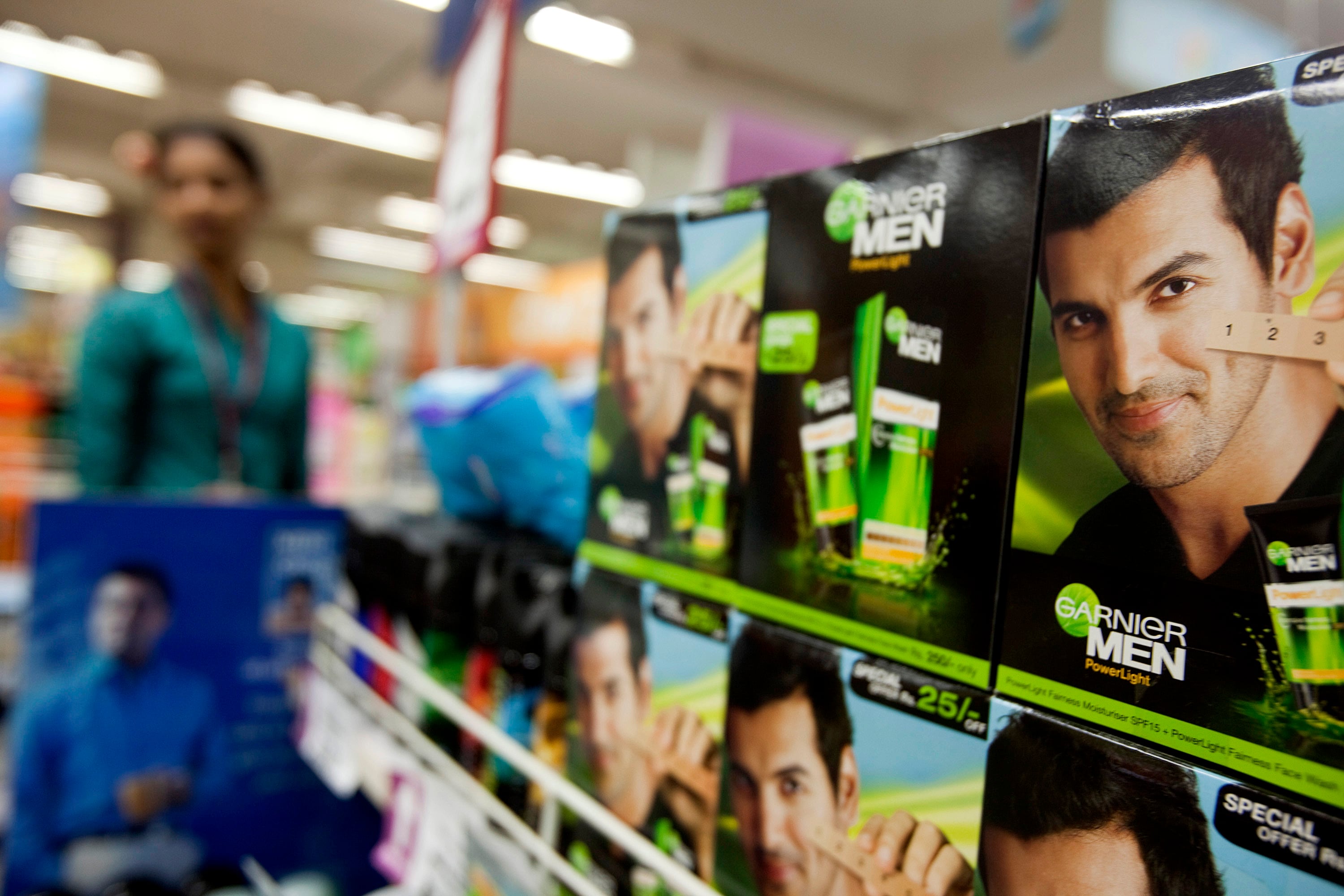
L'Oreal, the maker of Maybelline eyeliner and Garnier shampoo, is betting on consumers like Sharma who buy online to expand its reach in India, the second most populous nation with two-thirds of its people below 35 years in age. While online retail is booming in Asia's third-largest economy, women still prefer to buy lotions and cosmetics from brick-and-mortar stores that contribute 94 percent of sales, according Euromonitor. Online retail contributes a mere 1.2 percent. L'Oreal has managed to pace ahead of the market with 10 percent of its Rs 2,800-crore revenue coming from the e-commerce channel.
India is still at a nascent stage. The consumption of beauty is going up, making it one of the fastest-growing markets in the world. And mobile is becoming a store.Jean-Christophe Letellier, Managing Director, L'Oreal India
Barring a small percentage in metros, for most Indian women makeup doesn't go beyond nail enamels, kaajal and lipsticks. An Indian buys beauty and personal care products worth $7 a year, said a June report by Indian Beauty & Hygiene Association. That compares with $33 in China, $237 in the U.S. and the global average of $54. Rising literacy and incomes, and easy availability online mean women in smaller cities have now started experimenting with everything from eyeshadows and mascaras to concealers and foundations. The beauty and personal care market comprising lotions to cosmetics is expected to grow 25 percent to $10 billion by 2021.
India's beauty market is growing at 12 percent, Letellier said. That's thrice the global pace. He expects India to jump from being the twelfth-largest beauty market in the world to feature among the top six by 2025.
L'Oreal India, which entered the domestic market over two decades ago, is ranked fourth in the beauty and personal care market led by Hindustan Unilever Ltd. with brands like Lakme, Elle, Dove and Tresemme, according to Euromonitor International. L'Oreal is ranked second in skin care, the research firm said. It drives more than two-thirds of its sales directly from consumers and about a quarter from salons.
The French major is banking on online sales as bigger brands are still not that easily available outside metros and large cities. The company recently started offering products on Nykka.com, an online retailer of beauty and wellness products. It also sells through Flipkart, Amazon, and Paytm.
“In 2012, online revenue was zero; in 2017, it's 10 percent, and for some categories above 20 percent. We grew more than 100 percent,” Letellier said. “It's going to be exponential.”
Aspirations among the young in smaller cities are high and brands like MAC and Sephora have still not reached these markets, said Pradeep Srinivasan, research analyst at Euromonitor International. As a result, he said, beauty and personal care industry witnesses strong online sales from these markets.
L'Oreal India's advertising spends are the highest compared with rivals, according to CLSA. It targets a $1 billion revenue by 2020, the brokerage said in a report titled “Wish you were listed: L'Oréal India.” Five years ago, L'Oreal India didn't spend on digital marketing. That now accounts for 20 percent of its marketing expenditure.
Yet, L'Oreal India is up against HUL. While India's largest consumer products maker sells online as well through multiple online channels, it has a deep distribution network across the country including supermarkets, pharmacies to kirana stores. HUL didn't respond to BloombergQuint's emailed queries on its online sales citing silent period ahead of earnings.
“Internet retailing in India is still quite niche for beauty and personal care products,” said Srinivasan. A few categories that sell more online are lotions, deodorants, fragrances and male grooming products.
For Sharma, cosmetics fall in that group. “It's difficult to find everything under one roof in a physical store,” she said.

-
Indians Stay With Family, Not In Hotels | The Reason Why

India still lacks enough clean, reliable and affordable hotels for budget-conscious travellers.
-
The Economic Imperative: Analysing The Material Driving Force Behind India-Canada Strategic Reset
This economic complementarity is further reinforced by deep institutional investment ties and talent mobility, which form the bedrock of the bilateral framework.
-
Medicine Pricing: Where Must Profit Stop?
India must confront excessive margins, hidden incentives and regulatory gaps that threaten the integrity of medicine.
-
Why Amazon And Flipkart Are Struggling To Beat Meesho In India's Smaller Cities
With 274 million users and lowest-cost logistics, Meesho is defending its value commerce crown against giants like Amazon and Flipkart.
-
High US Salaries, No Green Card Certainty: The Financial Calculation Facing Indian H-1B Families
The suspension of PERM processing at eight technology employers does not cancel existing H-1B visas. What it does is force a question many Indian families have been avoiding: is the US salary worth tying your career and family plans to one employer?
-
Swiggy vs Eternal: Food Delivery's Two Rivals Are No Longer In The Same Race
Eternal is building a private AI assistant, dark.ai. Swiggy is still working out how to make Instamart pay, with an operating loss of Rs 895 crore in the July-September quarter while Blinkit stayed profitable.
-
Where You Live Shapes How You Get To Work | The Reason Why
Two-wheelers are the most popular way to get to work in India, accounting for nearly 43% of workplace commutes.
-
Unhedged Position: Can India See An Indonesia-Style Time Correction?
The Nifty is trading below levels it first clocked in 2024. Is there, then, as I have suggested in the headline, potential that the current time correction drags on painfully for the next three-five, even ten years?
-
Navigating Friction And Energy Realities: An Analysis Of Marco Rubio's October Visit To India
Occurring at a critical juncture marked by stalled trade negotiations and escalating geopolitical pressures over global energy supplies, the visit offers a profound window into modern US-India relations.
-
India Exports Capital. Why Not Export Trusteeship?
The big question, then, is whether India can build an institution that global borrowers, investors, banks, and lawyers can trust, even without an Indian connection.










