London Metal Exchange Is Changing How It Does Business In India
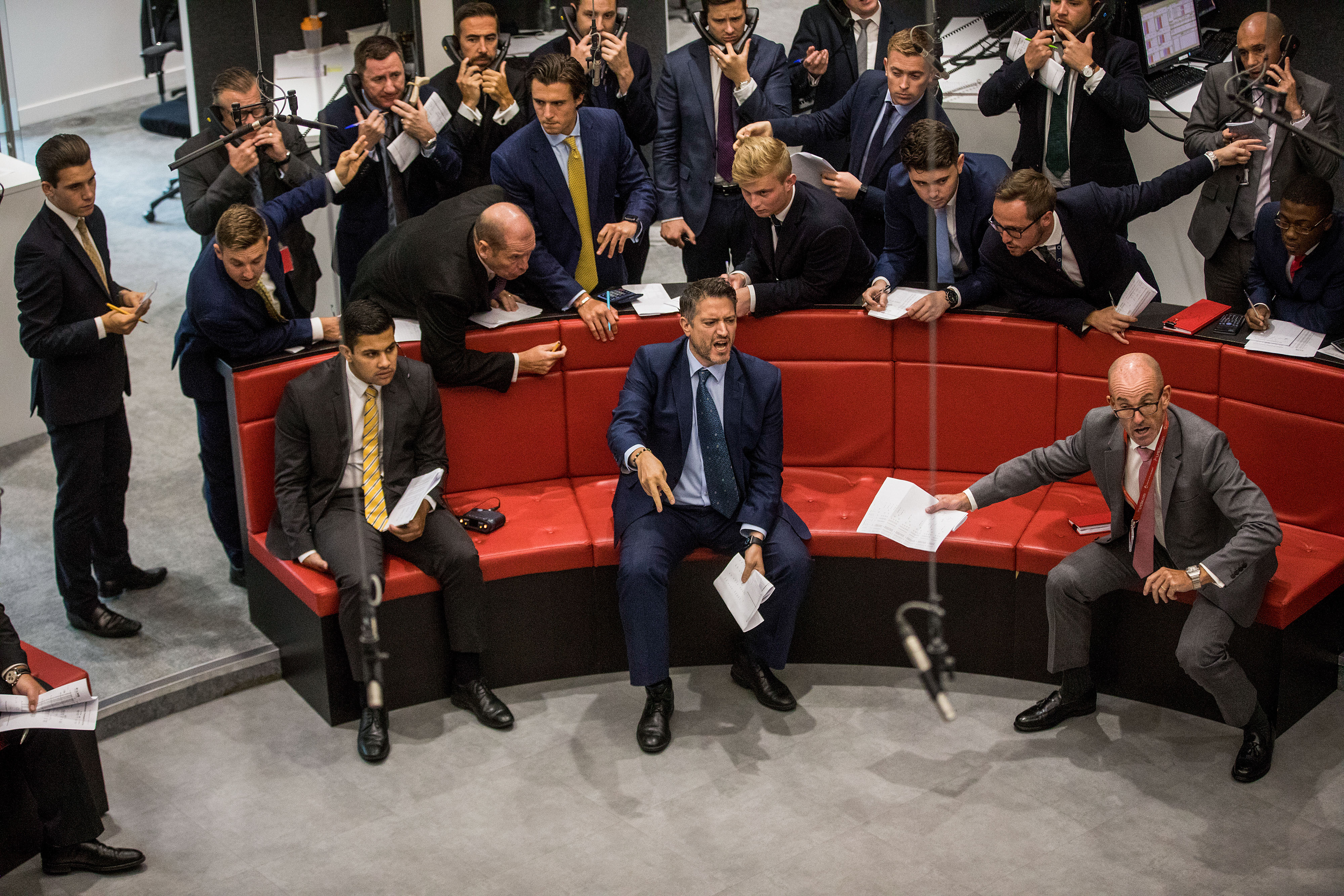
The world's largest setter of metal prices is in talks with Indian companies to set up warehouses in the country as the market regulator seeks a phased transition towards physical settlement of all commodity derivatives.
The regulator's move has created an opportunity for exchanges to launch physical delivery of contracts in India, Matthew Chamberlain, chief executive officer of the London Metal Exchange Ltd., which provides reference rates for trading base metal futures, told BloombergQuint in an interview. “If they did that, our prices won't be needed.”
As of now, cash settlement of commodity contracts is based on LME prices. But once delivery becomes mandatory, they will be based on local prices and also factor in taxes, and freight and warehousing costs.
The Securities and Exchange Board of India, which so far allowed delivery-based contracts for gold options, indicated that it will soon look to allow delivery in commodity futures, Deepak Mohanty, whole-time director at SEBI, said at MCX's India Commodity Day on Nov. 16 in Mumbai.
That comes after the regulator allowed unified exchanges to boost commodity trading. SEBI is also opening the commodities derivatives market to foreign entities having direct exposure in India. It wants these “eligible foreign entities” to hedge their exposure in the country.
There would be a need to provide these entities comfort of warehousing and the LME is looking to provide that comfort, Chamberlain said. “Physical delivery can have many forms in India—it could be discovery of premium price or any other form. If the contract is based on LME pricing, we can give that comfort to eligible foreign entities as it's based on our global delivery network and price.”
Watch Matthew Chamberlain's interaction with BloombergQuint here:
LME has more than 500 warehouses in the U.S., Europe and Asia. These are not owned and operated by LME but provide services by storing LME-approved metals.
In India, it has an exclusive agreement with MCX Ltd.—the nation's largest commodity bourse—to provide reference rates for all metals, except copper. It recently signed an agreement with BSE Ltd. and NSE to provide reference rate for copper as the two bourses launched the futures contracts in the metal after SEBI allowed unified exchanges from Oct. 1
SEBI has been in discussions with the universal exchanges to expand the scope of physical deliverable contracts, and timelines have been agreed, Mrugank Paranjape, managing director and chief executive officer of MCX. “It would be fair to assume that in the next one year, or so, we would see physical deliverable contracts across all products, especially in base metals.”
But for physical delivery to succeed, Indian commodity markets require depth. It doesn't have much depth in terms of participation by institutions, Paranjape told BloombergQuint. “It is important to get the Indian corporates to participate in the Indian commodity derivatives markets.” At present, 22 Indian companies prefer to trade on LME.
Watch Mrugank Paranjape's interaction with BloombergQuint here:

-
AI Bias In Investing Cannot Be Eliminated, But It Can Be Governed

Framing is a particularly important example as identical financial information presented in terms of gains rather than losses can lead an LLM to reach a different assessment.
-
Joining The Dots | Dark Skies, Steady Diya: Why Hope Holds This Diwali
With war, a weak rupee and foreign outflows weighing on sentiment, policymakers at the NDTV World Summit and market veterans at NDTV Profit Ignite: Diwali Edition offered the same advice: stay invested and filter out the noise.
-
The Curious Case of Equitas Small Finance Bank And A CEO Who Quit For Stock
PN Vasudevan believes persistent investor concerns over a perceived conflict of interest had become a governance overhang on Equitas Small Finance Bank's stock, even as the lender improved profitability and asset quality.
-
Talking Points This Week: AI Cash Burn, A Tiger Comeback And An India That Still Finds Its Own Path
India is not immune to higher oil or tighter global liquidity, yet its earnings base is broader, its domestic policy levers are still available.
-
Foreign Investors Own Half Of HDFC Bank and ICICI Bank. An LTCG Cut Could Matter Most Here
Foreign portfolio investors have US$115 billion parked in HDFC Bank, ICICI Bank. If the government cuts long-term capital gains tax, Jefferies says returning foreign money could land here first.
-
'Never Seen This Level Of Negativity': Sandeep Tandon Says The Next Rally May Be Closer Than You Think
Veteran investor Sandeep Tandon says foreign selling is easing, large-caps are due a comeback and mid-caps are crowded, while he turns positive on gold, power and pharma this Diwali.
-
Indians Stay With Family, Not In Hotels | The Reason Why
India still lacks enough clean, reliable and affordable hotels for budget-conscious travellers.
-
The Economic Imperative: Analysing The Material Driving Force Behind India-Canada Strategic Reset
This economic complementarity is further reinforced by deep institutional investment ties and talent mobility, which form the bedrock of the bilateral framework.
-
Medicine Pricing: Where Must Profit Stop?
India must confront excessive margins, hidden incentives and regulatory gaps that threaten the integrity of medicine.
-
Why Amazon And Flipkart Are Struggling To Beat Meesho In India's Smaller Cities
With 274 million users and lowest-cost logistics, Meesho is defending its value commerce crown against giants like Amazon and Flipkart.










