HSBC Shares Hit 25-Year Low on China Fears, Alleged Suspicious Transfers
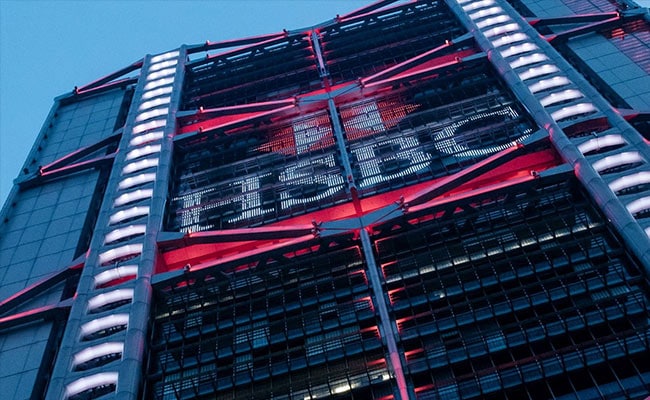
HSBC Holdings Plc slumped below its financial crisis low set more than a decade ago as pressures mount on several fronts, including a potential threat to its China expansion plans and increased scrutiny of money laundering controls.
The London-based bank's Hong Kong shares on Monday slid below their closing low for March 2009, hitting as low as HK$29.60. They have plunged 51 per cent this year, reaching the lowest since 1995. In London, HSBC fell 3.3 per cent as of 8:05 a.m. local time, compared with the 1.7 per cent decline in the benchmark FTSE 100 Index.
Europe's largest bank is a possible candidate for China's "unreliable entity list" that aims to punish firms, organizations or individuals that damage national security, the Communist Party's Global Times newspaper reported Saturday. A day later, HSBC was among global banks named in a report by the International Consortium of Investigative Journalists on lenders that "kept profiting from powerful and dangerous players" in the past two decades even after the U.S. imposed penalties on the institutions.
"If the company is listed as a unreliable company by China, which looks certain since it's a Global Times article, the bank will be facing lots of difficulties to do business in China," Banny Lam, head of research at CEB International Investment Corp., said by phone Monday. "They may have trouble expanding the mainland business, after investing so much there over the past few years."
The bank has rankled China over its participation in the American investigation of Huawei Technologies Co. Penalties include restrictions on trade, investments and visas on companies, countries, groups or persons that appear on the list.
HSBC declined to comment on the Global Times article. In a statement Monday in response to the ICIJ report it said that "starting in 2012, HSBC embarked on a multi-year journey to overhaul its ability to combat financial crime across more than 60 jurisdictions. HSBC is a much safer institution than it was in 2012."

Standard Chartered Plc, which was also mentioned in the ICIJ report, declined as much as 5.9 per cent in Hong Kong and 5.1 per cent in London. "We take our responsibility to fight financial crime extremely seriously and have invested substantially in our compliance programs," the bank said Monday in a statement.
HSBC now risks being caught in deepening turmoil after a swirl of trouble over the past year amid political unrest and an economic slump in its biggest market, Hong Kong. It also faces difficulties in navigating low interest rates and surging loan losses sparked by the global pandemic.
HSBC Chief Executive Officer Noel Quinn, who took over as the bank's permanent head in March, last month issued a stark warning about tough times ahead while reporting that first-half profit halved and predicting loan losses could swell to $13 billion this year. Mr Quinn said the bank would attempt to hasten a shakeup of its global operations, accelerating a further pivot into Asia as its European operations lose money.
Struggling to boost returns, the lender has come under fire both in the West and in China as it attempts to steer through political tension. HSBC was lambasted in the U.S. and the U.K. over its support for China's new security legislation on Hong Kong.
A jump in income from its markets business has failed to make up for broader shortcomings, unlike at some Wall Street and European competitors. HSBC stock has fallen more steeply than most big rivals this year, with Citigroup Inc. and JPMorgan Chase & Co. posting declines of 44 per cent and 29 per cent, respectively.
To make matters worse, HSBC sparked anger in Hong Kong earlier this year, alienating some of its most loyal investors, after scrapping its dividend in response to the pandemic. The bank is the worst performer on the benchmark Hang Seng index so far this year.

-
We May Need Another Tukaram Mundhe To Fight Air Pollution | The Reason Why

Developers may install basic measures such as sprinklers and green nets, resume work, and continue violating rules when this equipment stops working.
-
Extracting Value From Battery Scrap Could Be Challenging For India | The Reason Why
A discarded lithium-ion battery still contains valuable materials such as lithium, nickel and cobalt. These can be recovered and reused. When such batteries are crushed and shredded, they produce a dark powder called black mass.
-
One El Nino, India Can Handle. Two Could Break The Granary
India's grain stocks can absorb one bad year, but a second El Nino could drain the buffer in two to three years, economists say.
-
India's Troika Of Good Luck | Joining The Dots
As Jensen Huang's exit drags Nvidia down, a cooling AI trade and resilient earnings have revived investor interest in India. A likely RBI rate hike looms.
-
Talking Points This Week: Leadership Shock At Nvidia, Earnings Strength, And The Fog Over Hormuz
The Anthropic IPO pricing and first trading day, Nvidia's upcoming earnings, and any fresh signals from Iran will set the tone for the following week.
-
Signature Play: The Classic Cocktail Is Dead. Or Is It?
Classic cocktails are disappearing from India's cocktail menus. But they're still being ordered, taught to bartenders and borrowed from. So, who's really having the last drink?
-
A New Samvat Wishlist: Inclusive Prosperity And Human Development
India has strengthened its economic foundations through infrastructure, digital access and enterprise. Its next growth chapter must deepen productivity, create better livelihoods and widen participation in prosperity.
-
Love, Sex Aur Dhokha: The Audacious Plot To Spy On Jensen Huang
A Taipei dinner, a Singapore chip buyer and a suspected Chinese asset: inside the alleged spy operation that got close to NVIDIA's Jensen Huang.
-
Ten Things I Learnt This Samvat
Patience can be a trap. Cheap stocks can stay cheap. Leverage can wipe you out. What did Samvat 2082 teach us? Niraj Shah writes on 10 lessons from the year gone by.
-
Talking Points This Week: Tech Nerves, FII Buying, And A Faraway Banking Shock
The global markets are not shining this Diwali. The exception in the large markets is, India.









