Lockdown Effect: Banks Lend More To Essential Sectors, Unsecured Loans Fall Out Of Favour
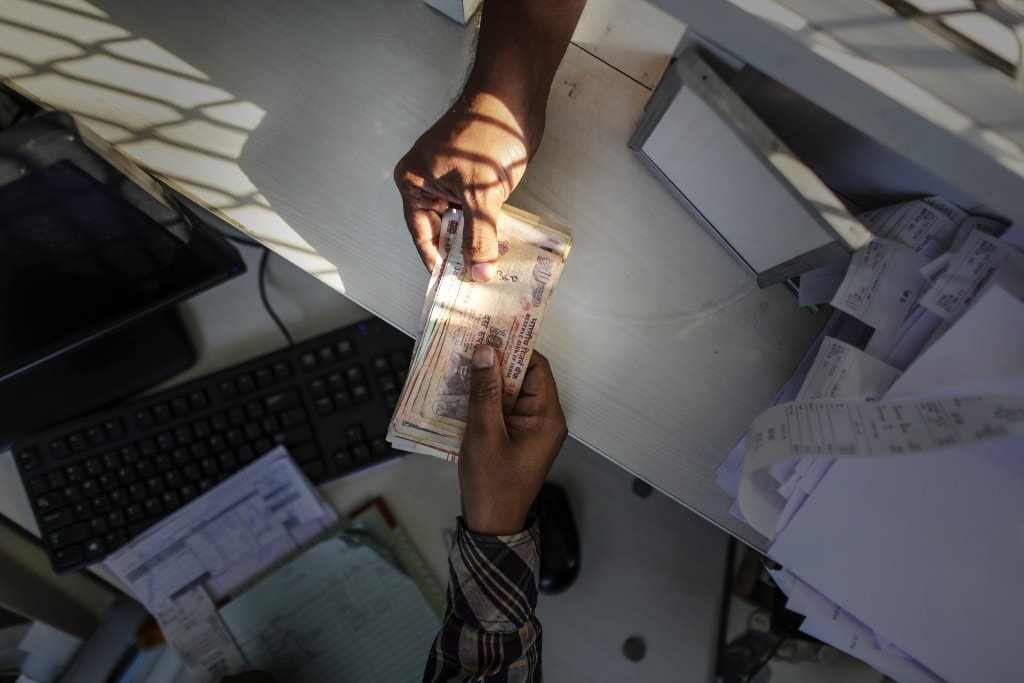
India's banking sector went back to basics during the nationwide lockdown, focusing on lending to essential sectors, while avoiding riskier bets.
According to the latest monthly lending data released by Reserve Bank of India, the banking sector saw outstanding non-food credit between March 27 and April 24 fall 1.2%, as compared with a drop of 1.8% in the same period a year ago. As on April 24, non-food credit stood at Rs 91 lakh crore, as compared with Rs 85 lakh crore a year ago.
On a year-on-year basis, non-food bank credit growth decelerated to 7.3% in April 2020 from 11.9% in April 2019.
Among major segments such as industry, services, retail and priority sector, only large industries reported a positive credit growth of 0.6% between March and April 2020.
In case of sub-sectors such as transport operators, retail trade, non-banking finance companies, low cost housing and priority sector export credit; during the lockdown period, banks saw growth ranging from 2-3 percent year-on-year.
This is the highest credit growth these sectors have seen in the same one-month period over the last five years.
NBFCs See Better Credit Flow
Non-bank lenders saw an improvement in credit flow during the first month of the current financial year. Outstanding bank loans to the NBFC sector rose 0.6 percent between March 27 and April 24 to Rs 8.12 lakh crore, the first positive growth reported in this period over the last three years.
Large banks have been extending emergency credit lines so that non-bank lenders may meet their liquidity needs during the lockdown, rather than deferring their repayments under the RBI approved moratorium. Banks have shied away from openly offering the moratorium to NBFCs, citing a possible contagion effect in the financial sector. Lenders led by State Bank of India have adopted a case-to-case basis approach to providing NBFCs with the moratorium, where they first assess the financial records and liabilities profile of these companies.
While addressing reporters over a conference call last week, Sanjiv Chadha, MD & CEO, Bank of Baroda said that it may not be an adequate solution to offer a loan moratorium to NBFCs when a significant portion of their borrowings come from the bond market, where no such deferral is available.
Bets-Off On Risky Lending
Unsecured retail loan segments such as credit card loans, consumer durable loans, personal loans and microcredit have all shown negative growth in the first 30 days of the current financial year as banks became more risk averse in the middle of a global pandemic. With job losses and salary cuts across companies in India, unsecured lending to the salaried class has become a difficult proposition for banks.
Outstanding credit card loans fell the most during the first month of the fiscal, down 10.3 percent between March 27 and April 24 to Rs 96,978 crore. This is the steepest fall in outstanding credit card loans during the comparative period since April 2016 at least. Credit card outstandings are the amounts that are not repaid in the 30-day payment cycle.
Outstanding personal loans fell 4 percent between March and April 2020 to Rs 7 lakh crore.
Microcredit, which had reported a 13.4 percent growth in the the 30 days between March and April 2019, saw an 8.1 percent drop in the current year. This is the sharpest fall in these small value unsecured loans reported in the comparative period since April 2016 at least. As on April 24, outstanding microcredit loans extended by banks stood at Rs 35,154 crore.

-
Signature Play: The Classic Cocktail Is Dead. Or Is It?

Classic cocktails are disappearing from India's cocktail menus. But they're still being ordered, taught to bartenders and borrowed from. So, who's really having the last drink?
-
A New Samvat Wishlist: Inclusive Prosperity And Human Development
India has strengthened its economic foundations through infrastructure, digital access and enterprise. Its next growth chapter must deepen productivity, create better livelihoods and widen participation in prosperity.
-
Love, Sex Aur Dhokha: The Audacious Plot To Spy On Jensen Huang
A Taipei dinner, a Singapore chip buyer and a suspected Chinese asset: inside the alleged spy operation that got close to NVIDIA's Jensen Huang.
-
Ten Things I Learnt This Samvat
Patience can be a trap. Cheap stocks can stay cheap. Leverage can wipe you out. What did Samvat 2082 teach us? Niraj Shah writes on 10 lessons from the year gone by.
-
Talking Points This Week: Tech Nerves, FII Buying, And A Faraway Banking Shock
The global markets are not shining this Diwali. The exception in the large markets is, India.
-
Midterm Rally Lasted A Day. The Hard Reality Of A Divided US May Last Two Years | Opinion
Between a contested AI boom, a debt ceiling that arrives in 2027 and a president with every incentive to act alone, the next two years may prove more volatile than the first day's rally suggests.
-
Blue Wave Will Derail the AI Trade but Won't Dismantle the AI Era | Unhedged Position
The Democrats' sweep of the US Congress will see politics collide with economic forces both over the long and short term.
-
It's Time To Take The GST Council's Bet On Trust Global
Payment records can prove India's services exports, and clear, proportionate rules can bring foreign digital sellers into the tax net.
-
Opinion | India at 38: From Innovation Overperformer to Innovation Powerhouse
India now has 453 VC-backed deep science startups, 18 of them late-stage, after 117 percent growth since 2020. Laurus Labs, at USD 9.3 billion, is the most valuable deep science company in any middle-income economy outside China.









