Delay Not In Interest Of Common Man: Top Court As Centre Seeks 1 Month To Implement Interest Waiver Plan
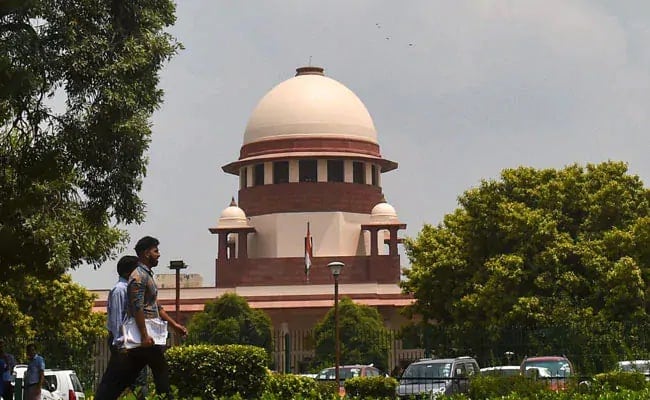
The Supreme Court today said any delay in implementing a waiver on "interest on interest" on loans up to Rs 2 crore, frozen during a six-month moratorium granted because of the coronavirus crisis, is not in the interest of the common man. "Common people are worried... We are concerned about people with loans up to Rs 2 crore," the Supreme Court bench said, as the government sought time until November 15 to complete certain formalities to implement the relief on loans to help the borrowers tide over the coronavirus crisis. The top court was hearing petitions on whether banks should levy compound interest on borrowers choosing to defer their loan repayments during the coronavirus pandemic.
"Common man's Diwali is now in the government's hands," the bench - comprising Justices Ashok Bhushan, R Subhash Reddy and MR Shah - said in a lighter vein and expressed hope that orders will be out before the next hearing, listed for November 2.
Asking why does the government needs one month to complete the modalities to implement the relief to borrowers, the bench said, "We don't agree that the government needs so much time for this decision."
The government's counsel said the Centre is "taking a huge burden" to waive interest on loans up to Rs 2 crore "but we are not mentioning the figure".
Banks, which are among a large group of petitioners representing different sectors in the case, said the action on concerned loans will be taken "whenever the relief given by government will be implemented".
"see the plight of common man. We are not passing orders. Consider the plight of common man... It is a welcome decision to give relief for small people. But some concrete results (are) needed," the bench said.
The outcome of the case could have far-reaching consequences not only for millions of borrowers, but also for banks. The court had earlier told the government that its affidavit "fails to deal with several issues raised by petitioners", asking the RBI and Centre to rework their plan to help the borrowers.
The government has already told the court it would waive the compound interest on loans up to Rs 2 crore under a COVID-19 support plan, in a move that will bring relief to millions of borrowers.
It has also said it would not be possible to further supplement the already-announced relief packages, requesting the court not to permit any further judicial review by the petitioners.
Meanwhile, the Reserve Bank of India clarified on Wednesday that loans which have remained standard - or those without any defaults - as of March 1, 2020 will be eligible for restructuring under the COVID-19-related resolution framework. In other words, loan accounts that was due for more than 30 days as on March 1 but subsequently got regularised will also be eligible for resolution.
Last week, the RBI had appealed to the top court to let banks classify loans as non-performing assets - or bad loans - saying a ban imposed to help borrowers in the COVID-19 pandemic could greatly harm the country's financial system. It warned that failure to immediately lift an interim stay on banks classifying any loan as a non-performing asset would also undermine the central bank's regulatory mandate.
In its October 5 order, the Supreme Court had asked the government to consider the concerns of real estate companies and power producers in a fresh plan on interest waiver.
According to the government's filing to the top court earlier this month, the interest waiver will apply for loans taken by micro, small and medium enterprises (MSMEs) for educational, housing, consumer goods and auto loans, and for credit card dues.
For the categories specified by the government, the waiver on interest will be irrespective of whether the borrower availed of the moratorium.
The government's decision marked a shift from its earlier stance of denying any interest waiver as it would affect banks.
The RBI had granted borrowers an option to delay their EMIs for six months, till August 31, as the coronavirus pandemic-related restrictions pushed the economy into a record 23.9 per cent crash. The central bank and the government have already told the top court that the moratorium can be extended by up to two years.

-
Gold Is Rs 22,000 Cheaper Than A Month Ago. Should You Buy Amid The Wedding Season?

Gold's potential slide to $3,500 could save around Rs 4,700 per 10 grams, but a soft inflation print could just as easily push prices back up. One way to split the risk is to buy in parts, some now and the rest after the Fed's Dec. 9 decision.
-
AI Agents Are Gaining Power. Who Governs Them?
Artificial intelligence agents promise to transform productivity by moving machines from assisting decisions to executing them. But as organisations delegate greater authority to these AI-agents, they must first establish who controls that authority and who remains accountable when things go wrong.
-
Why Swapping Your Old Gold Can Trigger A Rs 5 Lakh Tax Bill, And How You Can Avoid It Legally
Swapping old gold for new is taxed as a sale and a fresh purchase. Getting your own gold remade can cut most of that bill, though it has its own costs.
-
The AI Trade is Done. The Real Opportunity for Investors Starts in 2027 | Unhedged Position
As pureplay AI stocks plunge and circular, capex-led financing unwinds, 2027 is set to be a year of reckoning for AI companies. Yet the bust clears the way for a better opportunity for investors in 2027 -- shifting the spotlight from AI builders to the companies using AI.
-
Leadership As Mission: Why The Age Of AI Demands More Human Leadership
Debjani Ghosh examines how AI is changing leadership, arguing that its success must be measured by its impact on people and the accountability of those guiding its use.
-
We May Need Another Tukaram Mundhe To Fight Air Pollution | The Reason Why
Developers may install basic measures such as sprinklers and green nets, resume work, and continue violating rules when this equipment stops working.
-
Extracting Value From Battery Scrap Could Be Challenging For India | The Reason Why
A discarded lithium-ion battery still contains valuable materials such as lithium, nickel and cobalt. These can be recovered and reused. When such batteries are crushed and shredded, they produce a dark powder called black mass.
-
One El Nino, India Can Handle. Two Could Break The Granary
India's grain stocks can absorb one bad year, but a second El Nino could drain the buffer in two to three years, economists say.
-
India's Troika Of Good Luck | Joining The Dots
As Jensen Huang's exit drags Nvidia down, a cooling AI trade and resilient earnings have revived investor interest in India. A likely RBI rate hike looms.
-
Talking Points This Week: Leadership Shock At Nvidia, Earnings Strength, And The Fog Over Hormuz
The Anthropic IPO pricing and first trading day, Nvidia's upcoming earnings, and any fresh signals from Iran will set the tone for the following week.









