Will The Flood Of Deposits Bring Down Lending Rates?

In the first eight days after the withdrawal of Rs 500 and Rs 1000 notes from the system, banks have seen Rs 5.44 lakh crore in deposits flow into their coffers. About Rs 1.33 lakh crore has moved out in the form of withdrawals and in exchange for old currency notes.
That still leaves banks sitting on a huge pile of Rs 4.11 lakh crore in unanticipated deposits. This means a near doubling of the deposit base of scheduled commercial banks, which, as of November 11 had deposits of Rs 4.1 lakh crore.
Flush with funds, banks are paring rates on fixed deposits to slow down the inflow of money. This, however, may not necessarily translate into lower lending rates immediately, caution analysts who say that a chunk of these deposits will move out of the banking system as soon as restrictions on withdrawal of funds is lifted.
Wait And Watch
According to analysts, banks will wait and watch to see what proportion of the deposits stay within the banking sector. While the marginal cost of funds will come down for banks in the third quarter as low cost deposits surge, the drop in rates may not last for long if cash supply and withdrawals pick up.
Intuitively, MCLR (marginal cost of funds lending rate) will come down. They (banks) will want to look at what portion of deposits will be sticky. They would want to assess post-December sticky portion of deposits. Some of the banks might want to wait before they transfer the whole benefit on the lending site.Abhishek Bhattacharya, Director - Bank & FI Rating Vertical, India Ratings
Banks, post April 1, have started pegging their loans to the marginal cost of funds lending rate, or MCLR, as mandated by the Reserve Bank of India. This rate is reviewed on a monthly basis.
Since November 9, when the demonetisation decision was announced, several banks have cut deposit rates across tenors in the range of 10 basis points to a full percentage point. A basis point is one hundredth of a percentage point.
Large private players like ICICI Bank and HDFC Bank cut rates by 25 basis points while state-owned Union Bank of India cut its rates by up to 1 per cent for short term deposits. The country's largest lender State Bank of India cut its deposit rate by 15 basis points on one year fixed deposits to 6.90 percent, according to the bank's website.
Read: Banks Collect Rs 5.44 Lakh Crore So Far In Cash Clean-Up Exercise
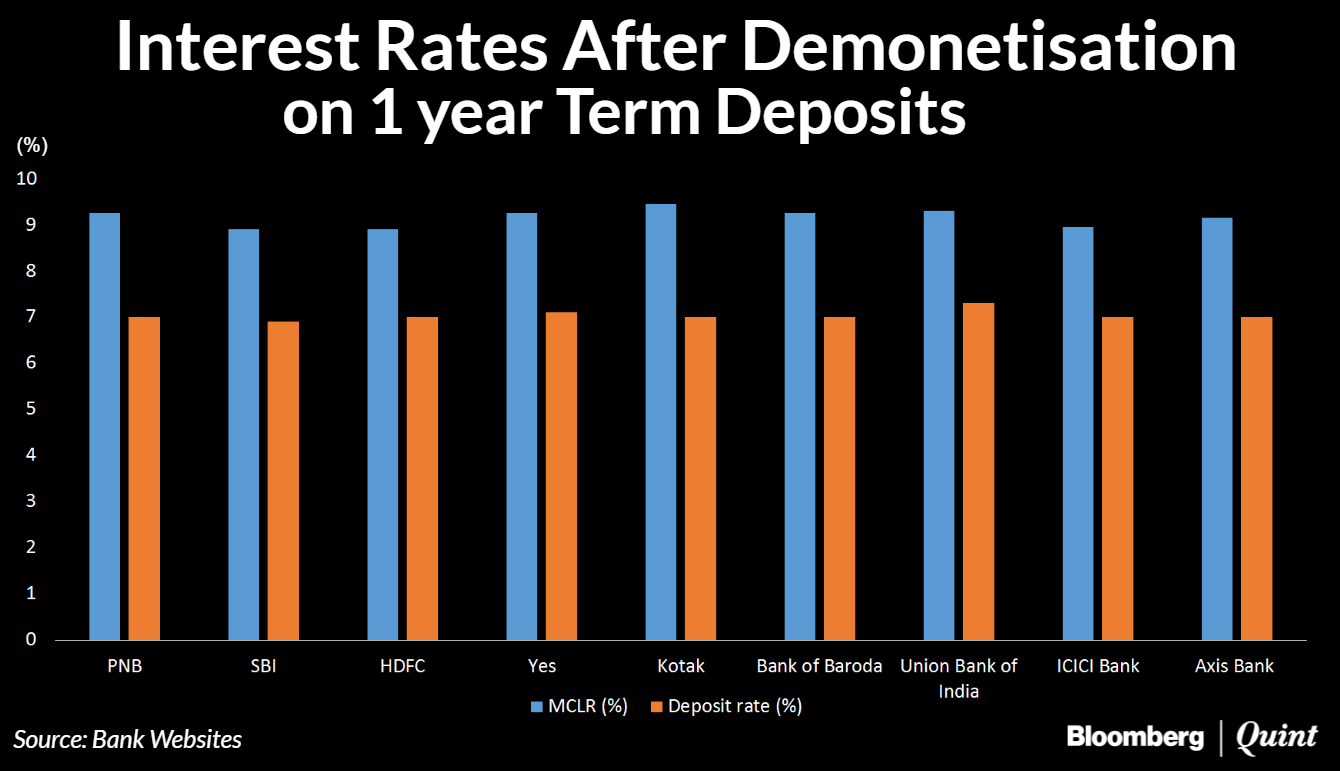
This means that the cost of borrowing for banks will reduce, leading to the expectation that there will be a cut in lending rates as well.
“The flow that is coming to banks is purely in the form of current and savings, and some through loan repayments. What we've seen is that there have so far been some reductions in deposit rates in different buckets. This makes us believe that surely MCLR will go down from here. With this kind of flows coming in, your incremental cost of borrowing is coming down,” said Darpin Shah, associate vice president at HDFC Securities.
But, banks do not necessarily have to pass on the entire benefit in the next monthly review, Shah said.
Another factor that may delay lending rate cuts is the RBI's monetary policy review in the first week of December, where the central bank may cut its policy rate. Banks may choose to wait until after the review to decide on rates.
Shah says that rates should come down in the first quarter of calendar year 2017 once the volatility in deposit flows dies down.
This view is not unanimous.
Some analysts, like Jignesh Shial, vice president of research at Quant Broking said that lending rates could drop sooner than that. This is because credit growth is sluggish and banks will have to deploy the additional deposits.
MCLR should be declining. Considering the improvement in CASA and inflows the banks have seen. This is low cost money which has come up and the banks really need to deploy it. Once the dust settles down in 15-20 days, there will probably a sharper cut, at least for the large public and private banks.Jignesh Shial, Vice President - Research, Quant Broking
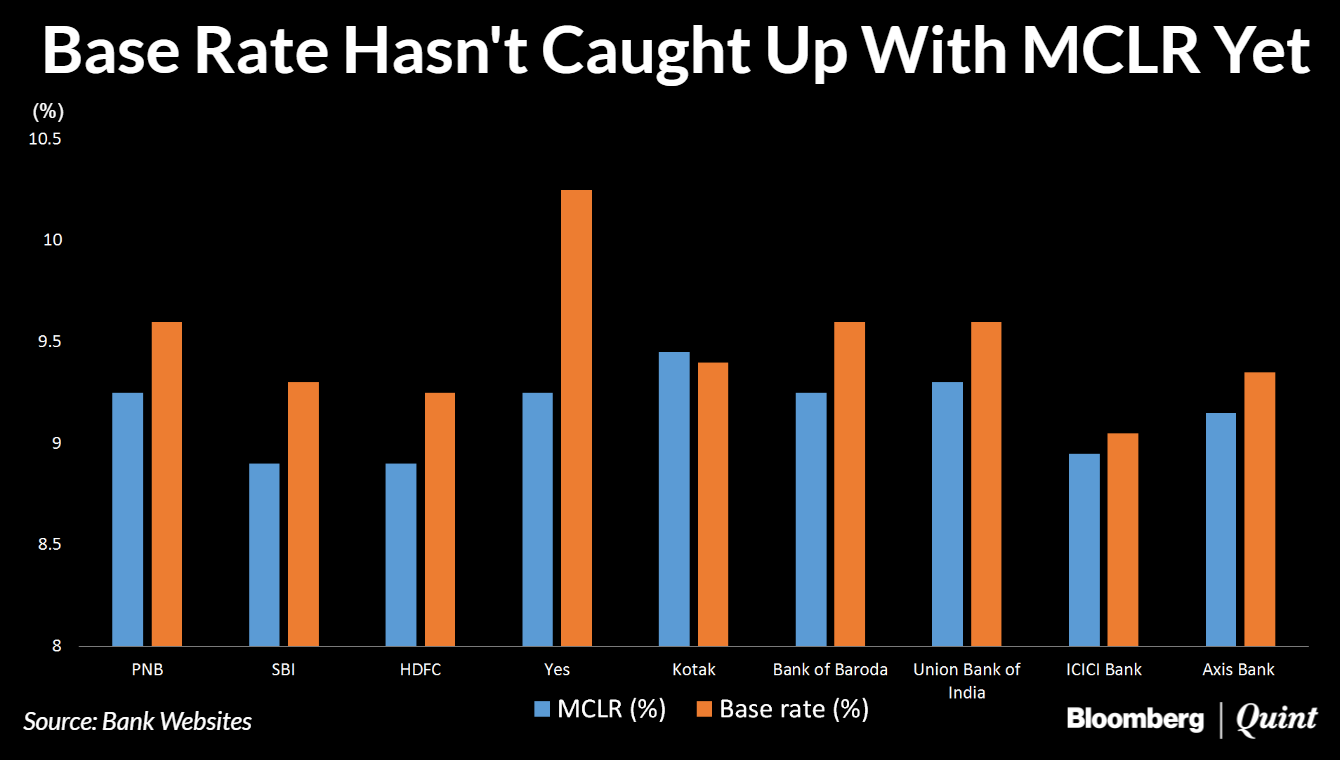
“The cut in MCLR in the next review meeting of banks is likely to be sharper than what we've witnessed so far. Already a couple of banks have announced cuts,” said Nitin Aggarwal, an analyst at brokerage firm Antique Stock Broking.
Read: For Banks, A Slow Crawl Back To Normalcy
Impact On Margins
The cost of demonetisation for the banking system has not yet been estimated. Banks say it is too early to make projections, but the impact may be sizable.
While the logistics cost involved in exchanging the old currency with the new cannot be estimated, analysts expect that the huge inflow of money will have a bearing on spreads.
The major worry for banks would be the large amount of deposits coming in. Their only option is to put it in government securities or the RBI's reverse repo windows. As a result, the spreads will get affected which will put pressure on margins in the short term.Jignesh Shial, Vice President - Research, Quant Broking
As a result, though there will definitely be a reduction in the cost of borrowing in terms of interest rate cuts, the overall cost of borrowing is going up very quickly leading to an asset-liability mismatch, said Shial.

-
Talking Points This Week: Leadership Shock At Nvidia, Earnings Strength, And The Fog Over Hormuz

The Anthropic IPO pricing and first trading day, Nvidia's upcoming earnings, and any fresh signals from Iran will set the tone for the following week.
-
Signature Play: The Classic Cocktail Is Dead. Or Is It?
Classic cocktails are disappearing from India's cocktail menus. But they're still being ordered, taught to bartenders and borrowed from. So, who's really having the last drink?
-
A New Samvat Wishlist: Inclusive Prosperity And Human Development
India has strengthened its economic foundations through infrastructure, digital access and enterprise. Its next growth chapter must deepen productivity, create better livelihoods and widen participation in prosperity.
-
Love, Sex Aur Dhokha: The Audacious Plot To Spy On Jensen Huang
A Taipei dinner, a Singapore chip buyer and a suspected Chinese asset: inside the alleged spy operation that got close to NVIDIA's Jensen Huang.
-
Ten Things I Learnt This Samvat
Patience can be a trap. Cheap stocks can stay cheap. Leverage can wipe you out. What did Samvat 2082 teach us? Niraj Shah writes on 10 lessons from the year gone by.
-
Talking Points This Week: Tech Nerves, FII Buying, And A Faraway Banking Shock
The global markets are not shining this Diwali. The exception in the large markets is, India.
-
Midterm Rally Lasted A Day. The Hard Reality Of A Divided US May Last Two Years | Opinion
Between a contested AI boom, a debt ceiling that arrives in 2027 and a president with every incentive to act alone, the next two years may prove more volatile than the first day's rally suggests.
-
Blue Wave Will Derail the AI Trade but Won't Dismantle the AI Era | Unhedged Position
The Democrats' sweep of the US Congress will see politics collide with economic forces both over the long and short term.
-
It's Time To Take The GST Council's Bet On Trust Global
Payment records can prove India's services exports, and clear, proportionate rules can bring foreign digital sellers into the tax net.
-
Opinion | India at 38: From Innovation Overperformer to Innovation Powerhouse
India now has 453 VC-backed deep science startups, 18 of them late-stage, after 117 percent growth since 2020. Laurus Labs, at USD 9.3 billion, is the most valuable deep science company in any middle-income economy outside China.









