Lenders Give Zee Promoters A Lifeline, Stop Fire Sale Of Shares
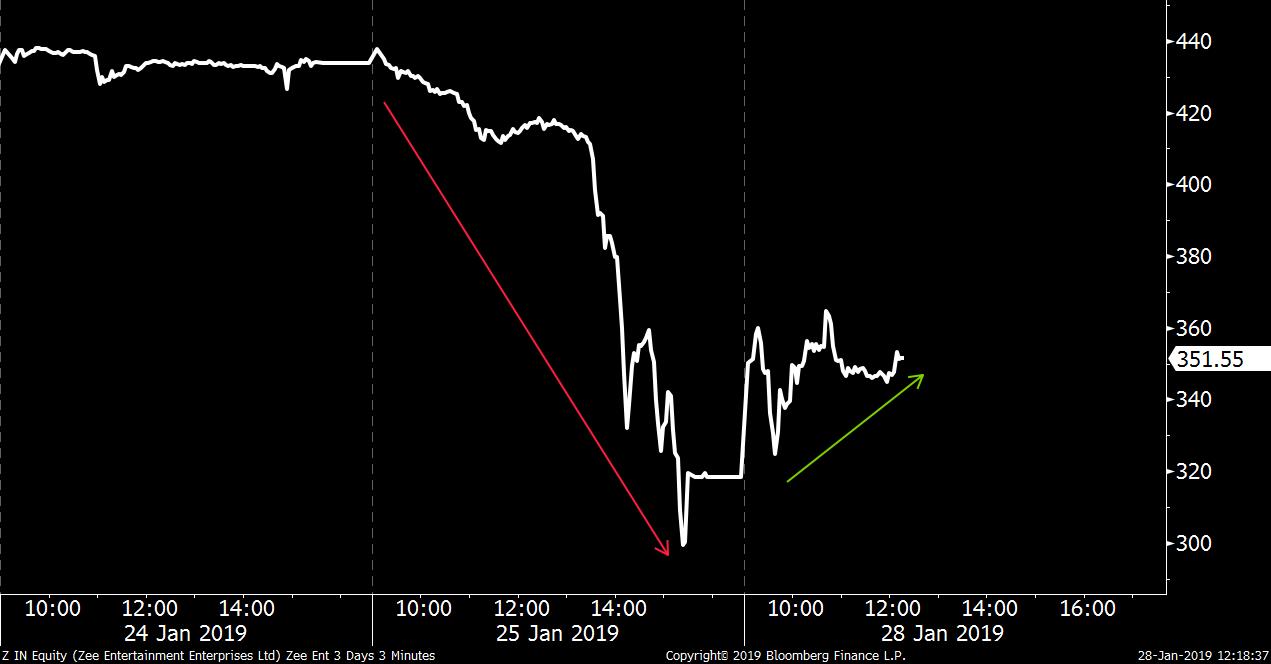
Subhash Chandra's Essel Group said that lenders having a pledge on the Zee Group promoters' shares have granted time until April to repay dues after they sold 0.6 percent stake in the group's flagship on Friday.
The controlling shareholder of the broadcaster arrived at an understanding with lenders on Sunday, the management had said in a statement and reiterated it in a conference call on Monday morning.
Essel Group met executives of mutual funds, non-bank lenders and banks to allay concerns over the debt held by them in its infrastructure companies after shares of group entities tumbled, eroding Rs 14,000 crore of market value. That came after a report said the Essel Group's name emerged in a probe linked to large deposits made after demonetisation—the company denied any links.
But it triggered at least a 19 percent plunge in shares of group companies, after which lenders sold pledged shares on Friday. After the sale, the promoters' stake in Zee Entertainment dropped to 41 percent from 41.6 percent, the management said in a conference call on Monday. The company will disclose it on the stock exchange shortly, it said.
The company said it's in advanced stages of discussion with the strategic partner on the sale of 50 percent promoters' stake in Zee Entertainment. The strategic partner, according to the management, asked for a resolution with the lenders on the ongoing issue. The management also confirmed that it has entered into an informal agreement with the lenders wherein there won't be any more top up of pledged shares and the lenders will not resort to sale of any pledged shares.
Promoters of Zee Entertainment had pledged 59.37 percent of their holdings as of December, while promoters of Dish TV India Ltd. have 82.05 percent of their holding pledged.
Shares of Zee Entertainment gained nearly 20 percent intra-day—the most in 18 years—after the promoters got more time to repay dues. The stock is also the top performer on the NSE Nifty 50 Index. Essel Propack Ltd and Dish TV rose as much as 13.1 percent and 11 percent, respectively.
MF Exposure In Zee
Mutual funds have a total exposure of around Rs 7,500 crore to Essel Group's NCDs, which has Zee Group's shares pledged as collateral.
The total amount of loans against pledged shares stood at Rs 13,500 crore, an executive at a mutual fund house, who was part of the discussion, told BloombergQuint requesting anonymity.
The mutual fund industry alone has an exposure of Rs 7,569 crore as of December, according to Bloomberg data. Aditya Birla Sun Life Mutual Fund has the largest exposure to the Essel Group companies, followed by HDFC Mutual Fund, Franklin Templeton Mutual Fund and ICICI Prudential Mutual Fund.
Other Highlights From The Concall
- Trying to get all lenders, funds on board.
- Combination of asset sale, stake sale in Zee Entertainment will help promoters cut debt.
- Will disclose names of potential strategic partners at the right time.
96-97 percent of lenders have agreed to revised terms.
Lenders believe that promoters can run the stake sale process much efficiently and get the best value out. - Will pursue legal action against The Wire.
- Proceeds from promoter stake sale will go first to lenders.

-
The More Food Turns Into Fuel, The Harder It Is To Read Agricultural Markets | The Reason Why

A policy designed to reduce dependence on imported fuel can create new pressures elsewhere in the food economy.
-
Your iPhone Costs 12 Grams Of Gold, A Car About 100. What Does Your Life Weigh?
Measured in rupees, almost everything looks more expensive than it did a generation ago. Measured in grams of gold, a lot of it has become cheaper.
-
Gold Is Rs 22,000 Cheaper Than A Month Ago. Should You Buy Amid The Wedding Season?
Gold's potential slide to $3,500 could save around Rs 4,700 per 10 grams, but a soft inflation print could just as easily push prices back up. One way to split the risk is to buy in parts, some now and the rest after the Fed's Dec. 9 decision.
-
AI Agents Are Gaining Power. Who Governs Them?
Artificial intelligence agents promise to transform productivity by moving machines from assisting decisions to executing them. But as organisations delegate greater authority to these AI-agents, they must first establish who controls that authority and who remains accountable when things go wrong.
-
Why Swapping Your Old Gold Can Trigger A Rs 5 Lakh Tax Bill, And How You Can Avoid It Legally
Swapping old gold for new is taxed as a sale and a fresh purchase. Getting your own gold remade can cut most of that bill, though it has its own costs.
-
The AI Trade is Done. The Real Opportunity for Investors Starts in 2027 | Unhedged Position
As pureplay AI stocks plunge and circular, capex-led financing unwinds, 2027 is set to be a year of reckoning for AI companies. Yet the bust clears the way for a better opportunity for investors in 2027 -- shifting the spotlight from AI builders to the companies using AI.
-
Leadership As Mission: Why The Age Of AI Demands More Human Leadership
Debjani Ghosh examines how AI is changing leadership, arguing that its success must be measured by its impact on people and the accountability of those guiding its use.
-
We May Need Another Tukaram Mundhe To Fight Air Pollution | The Reason Why
Developers may install basic measures such as sprinklers and green nets, resume work, and continue violating rules when this equipment stops working.
-
Extracting Value From Battery Scrap Could Be Challenging For India | The Reason Why
A discarded lithium-ion battery still contains valuable materials such as lithium, nickel and cobalt. These can be recovered and reused. When such batteries are crushed and shredded, they produce a dark powder called black mass.
-
One El Nino, India Can Handle. Two Could Break The Granary
India's grain stocks can absorb one bad year, but a second El Nino could drain the buffer in two to three years, economists say.









