Latest Salvo On Inflation — A Move Even The Government Knows Won’t Work
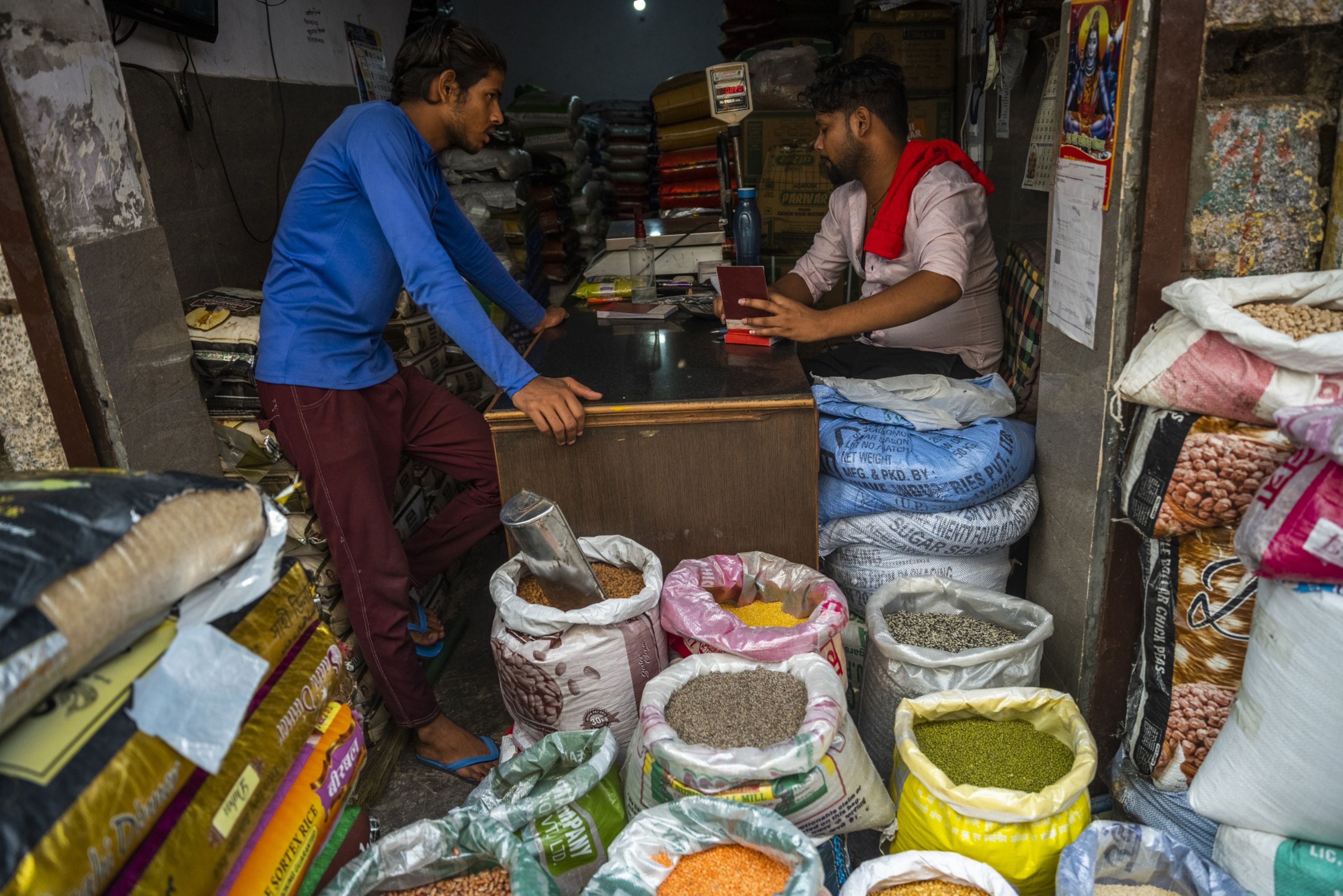
Rising food inflation has prompted the government to intervene — from supply-side measures intended to bring down prices of pulses and oilseeds to excise duty cuts to import duty cuts on edible oils.
These steps have now been followed up with a temporary ban on futures trading on a number of agricultural commodities.
On Monday, the Securities and Exchange Board of India suspended trading in seven agricultural commodities. These include paddy, wheat, chana, mustard seeds and its derivatives, soya bean and its derivatives, crude palm oil and moong. The directions, implemented with immediate effect and applicable for one year, also don't allow new positions but permit squaring up of running contracts.
But, will it work?
What Research Says
In 2007, the government had appointed a committee under Abhijit Sen, a former member of the Planning Commission, to study the impact, if any, of futures trading on agricultural commodity prices.
The study found that there was no clear evidence of either reduced or increased volatility in spot prices due to futures trading.
Other research, too, has thrown up similar results.
According to a 2008 paper by the Reserve Bank of India, the evidence of pass-through of price changes or volatility between spot prices of agricultural commodities and futures trading “is mixed and inconclusive".
Even today, evidence remains mixed and there is no conclusive proof, Sen told BloombergQuint. Often these decisions are taken due to political compulsions rather than any economic logic. "Inflation in these commodities has been high and they might want to be seen doing something."
Sen said the issue can be viewed from another end too. Since trading in these commodities is not doing any good either, barring futures trading may have no real impact. “One of the purposes of trading in the future markets was for price discovery but prices of most agricultural commodities are anyway determined by government policies and are government controlled. The opposition to banning them is anyway limited,“ he said.
In theory, though, agricultural futures markets can provide useful information to farmers for taking more informed planting decisions.
A paper by economists Ashok Gulati, Tirtha Chatterjee and Siraj Hussain found that a principal reason behind the lacklustre performance of agricultural futures markets was the unpredictable and perhaps excessive regulatory interventions in some commodities that are important to the common consumption basket.
Traders Caught In The Middle
Meanwhile, abrupt suspension of futures trading in these contracts leaves traders dealing with uncertainty.
There have been several instances of suspension of trading in agricultural commodities, said Gnanasekar Thiagarajan, co-founder and CEO of CommTrendz, a commodity futures advisory and trading firm
"If the government does believe that futures trading harms consumers, why grant permission or introduce it in the first place," he said. The frequent flip-flops tend to have financial implications on those who are holding a position in these commodities, he added.
Earlier, these contracts were settled at the previous day's closing price, Thiagarajan explained. Now, the authorities give a certain number of days to settle the contract but everyone is on the sell side and that triggers a cascading effect, he said.
Anuj Gupta, vice president for commodity and currency research at IIFL Securities, also said corporates, traders, importers or exporters use the futures market to hedge against the price fluctuations. “Such flip-flops may deter an importer or exporter from being able to take a decision on whether they still want to trade in that commodity. It may force them to raise their margin instead by increasing prices,” he said.
Prices of several agri commodities have seen a sharp rise. For instance, while spot prices of soya beans have risen by almost 50% over the last two years, the prices of pulses rose by almost 20-30% in the same duration. But the rise in prices is a global phenomenon and not restricted to India alone, said Gupta. “Prices are determined by demand and supply and the futures market might have very little to do with the price rise.”

-
Getting To Work Costs Women More | The Reason Why

It is not just about women paying more than men. It is about women paying much more in cities than in villages.
-
AI Bias In Investing Cannot Be Eliminated, But It Can Be Governed
Framing is a particularly important example as identical financial information presented in terms of gains rather than losses can lead an LLM to reach a different assessment.
-
Joining The Dots | Dark Skies, Steady Diya: Why Hope Holds This Diwali
With war, a weak rupee and foreign outflows weighing on sentiment, policymakers at the NDTV World Summit and market veterans at NDTV Profit Ignite: Diwali Edition offered the same advice: stay invested and filter out the noise.
-
The Curious Case of Equitas Small Finance Bank And A CEO Who Quit For Stock
PN Vasudevan believes persistent investor concerns over a perceived conflict of interest had become a governance overhang on Equitas Small Finance Bank's stock, even as the lender improved profitability and asset quality.
-
Talking Points This Week: AI Cash Burn, A Tiger Comeback And An India That Still Finds Its Own Path
India is not immune to higher oil or tighter global liquidity, yet its earnings base is broader, its domestic policy levers are still available.
-
Foreign Investors Own Half Of HDFC Bank and ICICI Bank. An LTCG Cut Could Matter Most Here
Foreign portfolio investors have US$115 billion parked in HDFC Bank, ICICI Bank. If the government cuts long-term capital gains tax, Jefferies says returning foreign money could land here first.
-
'Never Seen This Level Of Negativity': Sandeep Tandon Says The Next Rally May Be Closer Than You Think
Veteran investor Sandeep Tandon says foreign selling is easing, large-caps are due a comeback and mid-caps are crowded, while he turns positive on gold, power and pharma this Diwali.
-
Indians Stay With Family, Not In Hotels | The Reason Why
India still lacks enough clean, reliable and affordable hotels for budget-conscious travellers.
-
The Economic Imperative: Analysing The Material Driving Force Behind India-Canada Strategic Reset
This economic complementarity is further reinforced by deep institutional investment ties and talent mobility, which form the bedrock of the bilateral framework.
-
Medicine Pricing: Where Must Profit Stop?
India must confront excessive margins, hidden incentives and regulatory gaps that threaten the integrity of medicine.










