Private Equity Firm KKR Is Lending More In Real Estate, Thanks To RERA
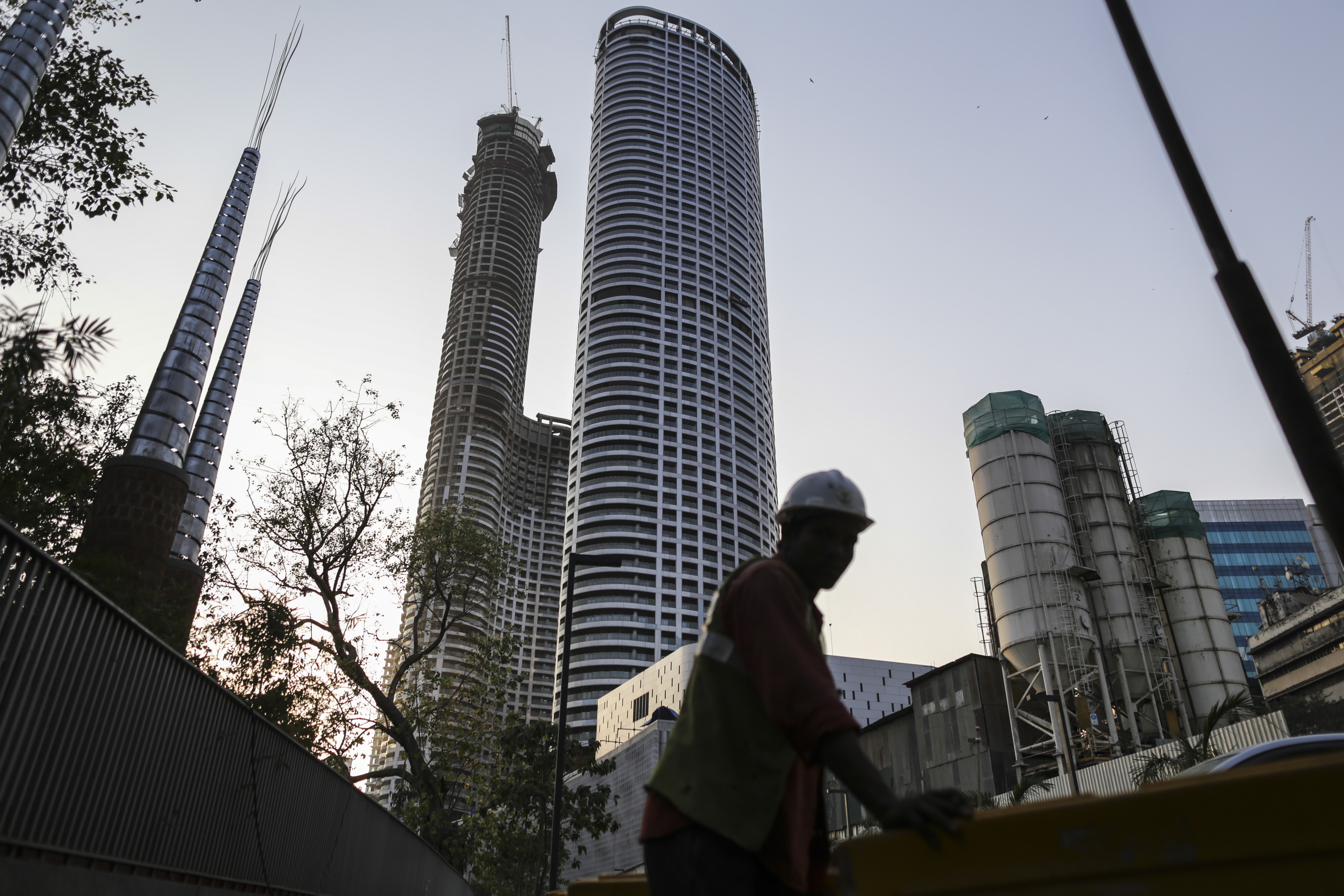
India's new housing regulation which aims to improve transparency and accountability in the cash-driven real estate sector has prompted private equity firm KKR to increase lending in the real estate sector.
“We have done more (real estate lending) this year already, than we did in the entire last year,” KKR's Chief Executive Officer Sanjay Nayar told BloombergQuint. Under the Real Estate Regulatory Authority Act, developers require more working capital, he explained.
Nayar said that KKR is “getting more comfortable” with the real estate sector since the new law was brought in that restricts developers from diverting more than 30 percent of the funds raised from one project on another.
Developers just can't take sales money and skim the profit first and go buy the next piece of land. They have to deliver on that piece of land first.Sanjay Nayar, CEO, KKR & Co India
Here are edited excerpts of the interview.
Conversations seem to suggest that the pocket which will do well is low-cost housing or housing in that bucket. Is that a reasonable estimate?
We are not a big real estate private equity guys, we are more into real estate lending. With the RERA coming in and with GST and demonetisation, I think we are getting more comfortable with the real estate sector. It was always a part of the informal economy becoming much more formal. GST and demonetisation will lead to formalisation. One sector which will benefit is the real estate where developers just can't take sales money and skim the profit first and go buy the next piece of land. They have to deliver on that piece of land first.
What about the intermediate pain?
That's okay. We have, in fact, increased our lending in the real estate sector and not reduced it. Because they need more working capital following RERA. We have done more this year already than we did the entire last year. So, formalisation is helping. We do mostly middle to low-middle to affordable and our lending has gone up. For affordable, if you get the right parcels, and the centre and state governments work together to get quick approvals going, then not only could it be the forced multiplier which is one of the multipliers for GDP but developers will start treating this like manufacturing. You buy a piece of land, make homes, you get the working capital from NBFCs and banks and you sell the homes rather than hoard the units. That is how it is done worldwide.
Do you reckon that the operational metrics for real estate companies will come off the margins?
It will come down.
Also Read: KKR Ready With Long-Term Funds To Buy Bad Assets, Says Sanjay Nayar
Can we get the story of Gland Pharma?
We cannot comment on it. We had an incredible partner in Dr. Ravi Penmetsa and his father. It's a unique asset. Technologically, it is not very extraordinary but it is just that the company is built on a certain set of culture and values of quality. What sets them apart from the rest is that they have got minimal U.S. FDA observations which makes it a very valuable asset in the trade. We had a great journey for two years. It was a rather long process to get into it and get out of it.
How long did it take you to get into it and out of it?
We took as much time outside the company as we took inside the company. The deal got announced on October 3 and it's all closed now. The management and the promoters will own 26 percent and they are going to be in charge of the company for three years and we exit.
Do you believe that the pharma exporters will see a turnaround after multiple years of pain?
We are still doing a lot of conversions. We get API from China and the other markets and then we convert and sell. We need to innovate a lot more here and it's not happening. It's like you live on the cyclical numbers and you feel good about life quarter-on-quarter and life goes on, but structurally you have missed out on the change and innovation that is going on in the world. And you are seeing multiples come off.
Also Read: India Stuck At 5-6% Growth Sans Structural Reforms, Says KKR's Sanjay Nayar
Is anybody dipping into core sectors and not consumer sectors?
Derivatives of core, yes, like we did cement a long time ago. People are doing logistics now which will benefit a lot due to GST and seamless movements of goods. So, you will see derivatives of core for sure. As fas as core is concerned, this private equity pool of capital is not the right pool. Infra funds are not yet allocating to India. It will take a few years of government spending which they are doing, success of a few projects, inviting in a few sovereigns like come for this project and somebody make 4-5 percent dollars and go home and then this thing will catch on just as the portfolio of roads, portfolio of ports, portfolio of bridges that are being made.
Let the government seed them, let them take off the balance sheets of the government and let some foreigners who have big funds come in and make 6 percent on a predictable basis rather than what happened in the previous government where a lot of things went backward. You will be amazed at the amount of money that is available in the world to come to this part of the world. We have to demonstrate that we are done the assets, matured and you have constant policy on tolling. Right now, the government is still building that portfolio because they are spending a lot on their own and after that they should invite the foreigners including Indian savings because by then if you get the fiscal down then Indians can buy the same thing at 6 percent, inflation adjusted.
Watch the full interview with Sanjay Nayar here.

-
The Economic Imperative: Analysing The Material Driving Force Behind India-Canada Strategic Reset

This economic complementarity is further reinforced by deep institutional investment ties and talent mobility, which form the bedrock of the bilateral framework.
-
Medicine Pricing: Where Must Profit Stop?
India must confront excessive margins, hidden incentives and regulatory gaps that threaten the integrity of medicine.
-
Why Amazon And Flipkart Are Struggling To Beat Meesho In India's Smaller Cities
With 274 million users and lowest-cost logistics, Meesho is defending its value commerce crown against giants like Amazon and Flipkart.
-
High US Salaries, No Green Card Certainty: The Financial Calculation Facing Indian H-1B Families
The suspension of PERM processing at eight technology employers does not cancel existing H-1B visas. What it does is force a question many Indian families have been avoiding: is the US salary worth tying your career and family plans to one employer?
-
Swiggy vs Eternal: Food Delivery's Two Rivals Are No Longer In The Same Race
Eternal is building a private AI assistant, dark.ai. Swiggy is still working out how to make Instamart pay, with an operating loss of Rs 895 crore in the July-September quarter while Blinkit stayed profitable.
-
Where You Live Shapes How You Get To Work | The Reason Why
Two-wheelers are the most popular way to get to work in India, accounting for nearly 43% of workplace commutes.
-
Unhedged Position: Can India See An Indonesia-Style Time Correction?
The Nifty is trading below levels it first clocked in 2024. Is there, then, as I have suggested in the headline, potential that the current time correction drags on painfully for the next three-five, even ten years?
-
Navigating Friction And Energy Realities: An Analysis Of Marco Rubio's October Visit To India
Occurring at a critical juncture marked by stalled trade negotiations and escalating geopolitical pressures over global energy supplies, the visit offers a profound window into modern US-India relations.
-
India Exports Capital. Why Not Export Trusteeship?
The big question, then, is whether India can build an institution that global borrowers, investors, banks, and lawyers can trust, even without an Indian connection.
-
France's Economy & Politics Are In Crisis | The Reason Why
Let's look at how the French economy and politics evolved under Nicolas Sarkozy, Franois Hollande and Emmanuel Macron.










