King Dollar Reigns Supreme; Likely To Keep Strength On Aggressive Fed
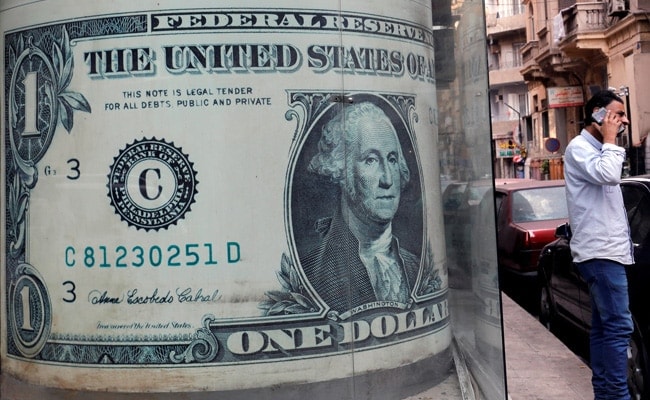
The dollar was up over 1.5 per cent against a basket of currencies on Friday, driving higher after a volatile trading session during which it jumped to a five-year high against the yen on expectations of aggressive Federal Reserve rate hikes after a spike in the US inflation to its fastest in 40 years.
Data on Thursday showed that US consumer prices surged 7.9 per cent year-over-year in February, the largest annual increase in 40 years, even before the surge in commodities prices caused by the war in Ukraine has had its full effect.
"The Russia-Ukraine conflict has added to global inflation, reduced prospects for economic growth and greatly increased uncertainty," said David Kelly, Chief Global Strategist for J.P. Morgan Asset Management. "For the United States, the situation is less dire" than that of Europe.
"For European consumers, higher energy costs are already taking a toll. That being said, rising oil prices would likely have a significantly negative impact on the US economy," he added.
Inflation is poised to accelerate further in the months ahead as Russia's war against Ukraine drives up the costs of crude oil and other commodities.
To up the ante on Moscow, the US, together with the Group of Seven (G7) nations and the European Union EU), will move on Friday to revoke Russia's "most favoured nation" status over its invasion of Ukraine, multiple people familiar with the situation told Reuters.
Stripping Russia of its "favoured nation" status paves the way for the US and its allies to impose tariffs on a wide range of Russian goods, which would further ratchet up pressure on an economy that is already heading into a "deep recession."
The inflation data "basically indicates the Fed should be hiking rates this month, but it also indicates that they will keep going - with hikes, at least initially," according to Rodrigo Catrill, a currency strategist at the National Bank of Australia.
That expected Fed tightening will lead to a divergence in interest rates compared to most major economies, albeit at varying degrees, and is likely to result in a significant reset globally, with the focus shifting towards inflation and away from pandemic-support stimulus and growth focus.
As a result, it brought dollar bulls out in force, with the greenback expected to maintain its strength even as other major economies would struggle to match the Fed's faster rate hike path.
The dollar index - a measure of the greenback's value against a basket of major currencies, was last up 1.582 per cent at 97.1760.
"You just don't know how far the Fed is going to go because we don't know exactly when inflation will really peak," Ed Moya, senior market analyst at OANDA, told news agency Reuters.
While there is optimism that inflation will subside by midyear, it could get worse and lead to more aggressive Fed action, he said, adding, "you got a little bit more left in this dollar move," he added.
The dollar hit a new five-year top on the yen on Friday, rising as high as 116.55 yen in early trade, its highest level since January 2017. The dollar is up 1.5 per cent on the yen this week, its biggest weekly gain since October.
"Our base case scenario is still for the Fed to be the most hawkish central bank in the developed world, and that should support the dollar at the margin," Bipan Rai, the North American head of FX strategy at CIBC Capital Markets, told Reuters.
Even as growth, stagflation and recession worries have kicked in driven by Russia's invasion of Ukraine on February 24 and the retaliatory sanctions on Moscow, which has pushed oil prices to multi-decade highs on supply concerns.
Sentiment has also suffered on worries over Russia's war against Ukraine after talks between their foreign ministers on Thursday brought little respite in the conflict between the two countries.
"Talks between Russia and Ukraine did not deliver anything concrete yesterday, nor was there any follow up on the UAE OPEC+ noise on crude production, yet despite this, markets only retraced some of their gains of the previous day," said Robert Carnell, Regional Head of Research for Asia-Pacific at ING.

-
Gold Is Rs 22,000 Cheaper Than A Month Ago. Should You Buy Amid The Wedding Season?

Gold's potential slide to $3,500 could save around Rs 4,700 per 10 grams, but a soft inflation print could just as easily push prices back up. One way to split the risk is to buy in parts, some now and the rest after the Fed's Dec. 9 decision.
-
AI Agents Are Gaining Power. Who Governs Them?
Artificial intelligence agents promise to transform productivity by moving machines from assisting decisions to executing them. But as organisations delegate greater authority to these AI-agents, they must first establish who controls that authority and who remains accountable when things go wrong.
-
Why Swapping Your Old Gold Can Trigger A Rs 5 Lakh Tax Bill, And How You Can Avoid It Legally
Swapping old gold for new is taxed as a sale and a fresh purchase. Getting your own gold remade can cut most of that bill, though it has its own costs.
-
The AI Trade is Done. The Real Opportunity for Investors Starts in 2027 | Unhedged Position
As pureplay AI stocks plunge and circular, capex-led financing unwinds, 2027 is set to be a year of reckoning for AI companies. Yet the bust clears the way for a better opportunity for investors in 2027 -- shifting the spotlight from AI builders to the companies using AI.
-
Leadership As Mission: Why The Age Of AI Demands More Human Leadership
Debjani Ghosh examines how AI is changing leadership, arguing that its success must be measured by its impact on people and the accountability of those guiding its use.
-
We May Need Another Tukaram Mundhe To Fight Air Pollution | The Reason Why
Developers may install basic measures such as sprinklers and green nets, resume work, and continue violating rules when this equipment stops working.
-
Extracting Value From Battery Scrap Could Be Challenging For India | The Reason Why
A discarded lithium-ion battery still contains valuable materials such as lithium, nickel and cobalt. These can be recovered and reused. When such batteries are crushed and shredded, they produce a dark powder called black mass.
-
One El Nino, India Can Handle. Two Could Break The Granary
India's grain stocks can absorb one bad year, but a second El Nino could drain the buffer in two to three years, economists say.
-
India's Troika Of Good Luck | Joining The Dots
As Jensen Huang's exit drags Nvidia down, a cooling AI trade and resilient earnings have revived investor interest in India. A likely RBI rate hike looms.
-
Talking Points This Week: Leadership Shock At Nvidia, Earnings Strength, And The Fog Over Hormuz
The Anthropic IPO pricing and first trading day, Nvidia's upcoming earnings, and any fresh signals from Iran will set the tone for the following week.









