Keshub Mahindra, Ex Mahindra Group Chairman, Dies At 99
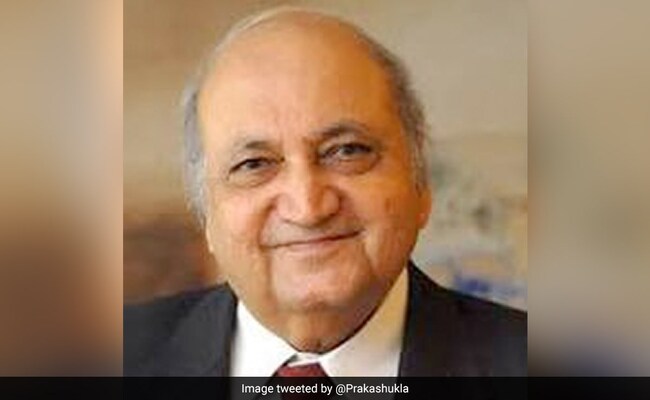
Keshub Mahindra, a pioneer of Indian auto industry and Mahindra & Mahindra Ltd Chairman Emeritus, died on Wednesday morning in Mumbai.
Keshub Mahindra, 99, breathed his last on Wednesday morning at home peacefully, the company confirmed.
"He was a man of principles and led from the front to preserve the legacy of our founders which has ensured that the organisation has remained rooted in ethics, values and good corporate governance," Mahindra Group Chairman Anand Mahindra said.
Further, Anand Mahindra said, "Keshub Mahindra was known for his astute business acumen that helped in transforming Mahindra into a diversified federation of companies. His compassion, and people-centric approach made him a global business icon, who was much loved and respected." Keshub Mahindra had led the Mahindra Group for 48 years as Chairman and expanded it from being an automobile manufacturer to other business segments like IT, real estate, financial services and hospitality.
He played key roles in forging business alliances with global majors such as the Willys Corporation, Mitsubishi, International Harvester, United Technologies, British Telecom and many others.
Born on October 9, 1923, in Shimla, Keshub Mahindra was a graduate from Wharton, University of Pennsylvania, USA, and joined M&M in 1947 and became the Chairman in 1963.
In 2012, Keshub Mahindra, who remained as one of the directors on Mahindra & Mahindra's board for 64 years overseeing the group's metamorphosis from a steel trading company to a $15.4 billion diversified group, handed over the baton to his nephew and the then Vice-Chairman and Managing Director Anand Mahindra.
He had also served on a large number of Boards and Councils in both private and public domain. He was the founder Chairman of HUDCO, and also served on many corporate boards, including SAIL, Tata Steel, Tata Chemicals, Indian Hotels, IFC, ICICI and HDFC.
Besides, he also held the position of President of Employers' Federation of India and the Bombay Chamber of Commerce and Industry. He was a member of the Sachar Commission on Company Law and Reforms, a member of the Prime Minister's Council on Trade and Industry and Chairman of the Indian Institute of Management, Ahmedabad.
A renowned philanthropist, Keshub Mahindra redefined good corporate governance in India. He was also a member of the Apex Advisory Council of ASSOCHAM. In 1987, he was awarded the Chevalier de l'Ordre National de la Legion d'honneur by the French government.
In a statement, Society of Indian Automobile Manufacturers (SIAM) President Vinod Aggarwal condoled his demise saying the Indian Automobile Industry has lost one of its pioneers.
"His leadership in the early years of the journey of the Indian Auto Industry had led to India being recognised as an important player globally and also helped in India becoming a manufacturing hub for the Automobile sector," he added.
Keshub Mahindra was the President of SIAM in 1964.
"SIAM and the Indian Automobile Industry condoles the passing away of a true visionary and pray for the departed soul to rest in peace," Aggarwal said.
Federation of Automobile Dealers Associations (FADA) said, "As members of the Auto Retail fraternity, we join in mourning the loss of an Industry Icon whose contributions to the growth of the Indian Economy will always be remembered." Former M&M Managing Director Pawan Goenka tweeted, "The industrial world has lost one of the tallest personalities today. Shri Keshub Mahindra had no match; the nicest person I had the privilege of knowing. I always looked forward to mtgs with him and inspired by how he connected business, economics and social matters. Om Shanti."
(Except for the headline, this story has not been edited by NDTV staff and is published from a syndicated feed.)

-
Getting To Work Costs Women More | The Reason Why

It is not just about women paying more than men. It is about women paying much more in cities than in villages.
-
AI Bias In Investing Cannot Be Eliminated, But It Can Be Governed
Framing is a particularly important example as identical financial information presented in terms of gains rather than losses can lead an LLM to reach a different assessment.
-
Joining The Dots | Dark Skies, Steady Diya: Why Hope Holds This Diwali
With war, a weak rupee and foreign outflows weighing on sentiment, policymakers at the NDTV World Summit and market veterans at NDTV Profit Ignite: Diwali Edition offered the same advice: stay invested and filter out the noise.
-
The Curious Case of Equitas Small Finance Bank And A CEO Who Quit For Stock
PN Vasudevan believes persistent investor concerns over a perceived conflict of interest had become a governance overhang on Equitas Small Finance Bank's stock, even as the lender improved profitability and asset quality.
-
Talking Points This Week: AI Cash Burn, A Tiger Comeback And An India That Still Finds Its Own Path
India is not immune to higher oil or tighter global liquidity, yet its earnings base is broader, its domestic policy levers are still available.
-
Foreign Investors Own Half Of HDFC Bank and ICICI Bank. An LTCG Cut Could Matter Most Here
Foreign portfolio investors have US$115 billion parked in HDFC Bank, ICICI Bank. If the government cuts long-term capital gains tax, Jefferies says returning foreign money could land here first.
-
'Never Seen This Level Of Negativity': Sandeep Tandon Says The Next Rally May Be Closer Than You Think
Veteran investor Sandeep Tandon says foreign selling is easing, large-caps are due a comeback and mid-caps are crowded, while he turns positive on gold, power and pharma this Diwali.
-
Indians Stay With Family, Not In Hotels | The Reason Why
India still lacks enough clean, reliable and affordable hotels for budget-conscious travellers.
-
The Economic Imperative: Analysing The Material Driving Force Behind India-Canada Strategic Reset
This economic complementarity is further reinforced by deep institutional investment ties and talent mobility, which form the bedrock of the bilateral framework.
-
Medicine Pricing: Where Must Profit Stop?
India must confront excessive margins, hidden incentives and regulatory gaps that threaten the integrity of medicine.










