Keep Calm And Buy Second Hand: The Guide To Post-Pandemic Shopping
If the idea of a second-hand anything evokes an image of an old, dilapidated item, you might be in for a surprise. At least if a Lamborghini Gallardo listed on the pre-owned goods online marketplace OLX is anything to go by. Remember OLX pe sab kuch bikta hain!
While the pandemic might have disrupted shopping as we knew it, it proved to be a booster shot for India's second-hand goods economy. A combination of factors, from income uncertainty to a more digital lifestyle and a wider array of offerings on these sites, have come together to increase the demand for used items.
Since January 2020, daily active users on OLX have risen about 30%, while demand has grown about 25%, said Sapna Arora, chief marketing officer at OLX.
QuikrBazaar saw a 41% growth in the listings in June, July and August this year compared with the pre-Covid quarter, said Sarath Chandra Gudlavalleti, senior vice-president and business head of QuikrBazaar.
Demand for pre-owned goods shot up amid job losses during the pandemic, income insecurity and closures of some companies that did not have a strong digital presence, said Arora. People saw value in second-hand goods. Once in, they stayed, he said.
While there was a sharp rise in demand for second-hand goods after the first wave, it tends to become a lifestyle change.Sapna Arora, Chief Marketing Officer, OLX
Financial restraints and reduced budgets, alongside a more digital lifestyle, led to a change in consumer buying and selling behavior, said Gudlavalleti.
Supply of goods on these platforms increased as well, drawing in new buyers.
For work from home, people wanted to make space and wanted to declutter, said Arora. "When you have to get rid of something, you might as well make money out of it."
What Led The Increase?
Increased demand for second-hand goods is coming from a number of categories.
With consumers spending more time at home now, they may want a larger refrigerator or a washing machine for convenience, said Gudlavalleti.
"We are also seeing a spike in demand for electronics like Smart TVs for entertainment purposes when one is home-bound," he said. There's increased demand for pre-owned laptops as well as education has moved online.
Another factor is the need to set up home-offices. With work-from-home jobs, consumers are looking at making their homes more suitable for their office set-up, Gudlavalleti said.
After the first wave of Covid infections wound down in the third quarter of 2020, traffic on Quikr for consumers interested in buying and selling pre-owned cars and bikes increased 33% compared to even pre-Covid levels.
On OLX, demand has grown about 40% across mobiles, electronics and appliance, bikes and furniture. For phones, alone, demand shot up 61% during the first lockdown, according to a study by OLX. Even in the post lockdown period, demand was higher by 44%, with tier-2 and 3 cities seeing most activity.
The gradual shift, said Sudipto Roy, consumer behaviour and marketing consultant, can be explained by Richard Thaler's theory of perceived value. A consumer is influenced by what they perceive to be of value, not only by economic consideration, Roy said. "When making a second-hand purchase, a customer is primarily trying to get value for money, it's as plain and simple as that."
Rajendra Srivastava, former dean and the Novartis professor of marketing and strategy innovation at Indian School of Business, said it is much easier to extract value out of second-hand things. Risk and information asymmetry has reduced, he explained. Earlier, the seller knew what the problems are with the good, the buyer may not have known. This has changed with more digital platforms offering to sell second hand goods.

Snapshot of various online classified sites. (Source: BloombergQuint)
The Second-Hand Car Boom
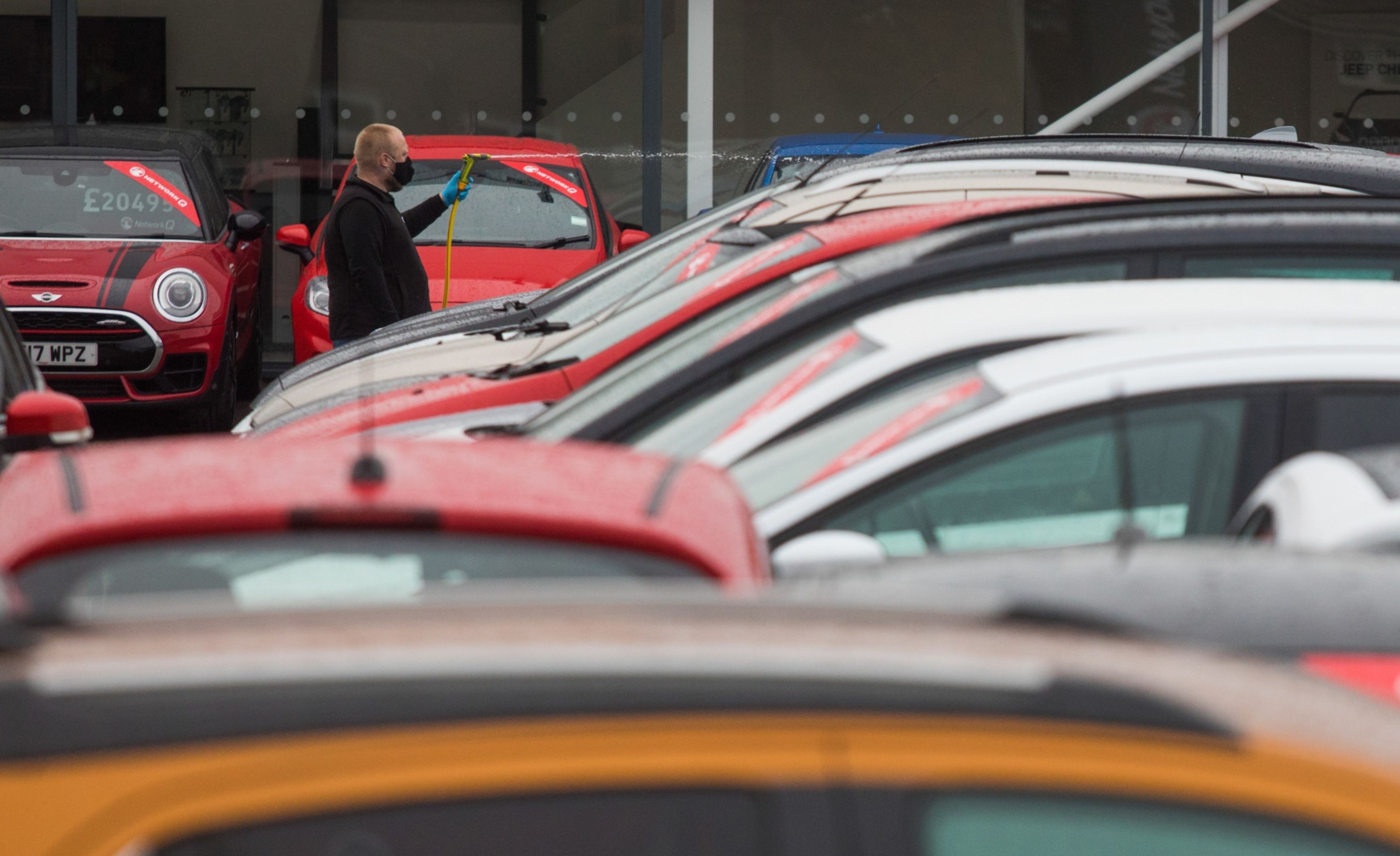
Like in other economies such as the U.S., the business of second-hand cars has boomed in post-pandemic times. The desire to have your own transport and a shortage in supply due to chip unavailability have come together to back this rare surge.
Used car platform Spinny has seen traffic go up six times between January 2020 and now, with strong tailwinds across cities and across price segments, according to Niraj Singh, founder and CEO.
Gajendra Jangid, co-founder and chief marketing officer at Cars24, also said traffic on the site, potentially a lead indicator of buying and selling activity, has risen four times since January 2020.
A shortage of chips and a consequent crunch in supply of new cars has also meant that even those who may have wanted to buy a new vehicle are considering a second-hand one, Singh said.
New cars have also got more expensive, making second-hand cars better value for money, Jangid added.
Besides, there are always those who aspire for bigger, flashier cars.
There is always a (customer) segment that would prefer a three-year-old BMW to a brand new Maruti Suzuki.Rajendra Srivastava, Former Dean, ISB

Image of a second land Lamborghini up for sale. (Source: OLX/ BloombergQuint)
Inflation In Second-Hand Goods
As demand has risen, so have prices.
According to QuikrBazaar, the average price of pre-owned products across the home, lifestyle, electronics and appliances categories have all seen an increase compared to pre-Covid times.
Pre-owned products like beds saw an average price increase of 29%, tables cost about 13% more. Second-hand laptops are 22% more expensive and TVs cost about 18% more.
For second-hand cars as well, all-time high demand has pushed up prices. There has been an approximate rise of about 6%, Singh said. So, a car that might have cost Rs 4 lakh now costs Rs 4.25 lakh.
Is the increased interest in second-hand goods here to stay? The industry believes that it is.
In the case of second-hand cars, demand is expected to go even higher up as people return to offices, said Arora.
Singh agrees. Pre-pandemic, the market for second-hand cars was estimated to grow at about 11.2%; now it is expected to grow at 18-20% for the next three-four years. "It's not a short-term phenomenon. There is a psychological shift."

-
Indians Are Travelling, But Not Every Journey Is A Holiday | The Week In Whys

Pilgrims, patients and working women are the real travellers, and the system hasn't quite caught up with them.
-
Getting To Work Costs Women More | The Reason Why
It is not just about women paying more than men. It is about women paying much more in cities than in villages.
-
AI Bias In Investing Cannot Be Eliminated, But It Can Be Governed
Framing is a particularly important example as identical financial information presented in terms of gains rather than losses can lead an LLM to reach a different assessment.
-
Joining The Dots | Dark Skies, Steady Diya: Why Hope Holds This Diwali
With war, a weak rupee and foreign outflows weighing on sentiment, policymakers at the NDTV World Summit and market veterans at NDTV Profit Ignite: Diwali Edition offered the same advice: stay invested and filter out the noise.
-
The Curious Case of Equitas Small Finance Bank And A CEO Who Quit For Stock
PN Vasudevan believes persistent investor concerns over a perceived conflict of interest had become a governance overhang on Equitas Small Finance Bank's stock, even as the lender improved profitability and asset quality.
-
Talking Points This Week: AI Cash Burn, A Tiger Comeback And An India That Still Finds Its Own Path
India is not immune to higher oil or tighter global liquidity, yet its earnings base is broader, its domestic policy levers are still available.
-
Foreign Investors Own Half Of HDFC Bank and ICICI Bank. An LTCG Cut Could Matter Most Here
Foreign portfolio investors have US$115 billion parked in HDFC Bank, ICICI Bank. If the government cuts long-term capital gains tax, Jefferies says returning foreign money could land here first.
-
'Never Seen This Level Of Negativity': Sandeep Tandon Says The Next Rally May Be Closer Than You Think
Veteran investor Sandeep Tandon says foreign selling is easing, large-caps are due a comeback and mid-caps are crowded, while he turns positive on gold, power and pharma this Diwali.
-
Indians Stay With Family, Not In Hotels | The Reason Why
India still lacks enough clean, reliable and affordable hotels for budget-conscious travellers.
-
The Economic Imperative: Analysing The Material Driving Force Behind India-Canada Strategic Reset
This economic complementarity is further reinforced by deep institutional investment ties and talent mobility, which form the bedrock of the bilateral framework.










