Karnataka May Add To Rs 88,000 Crore In State Farm Loan Waivers Already Announced
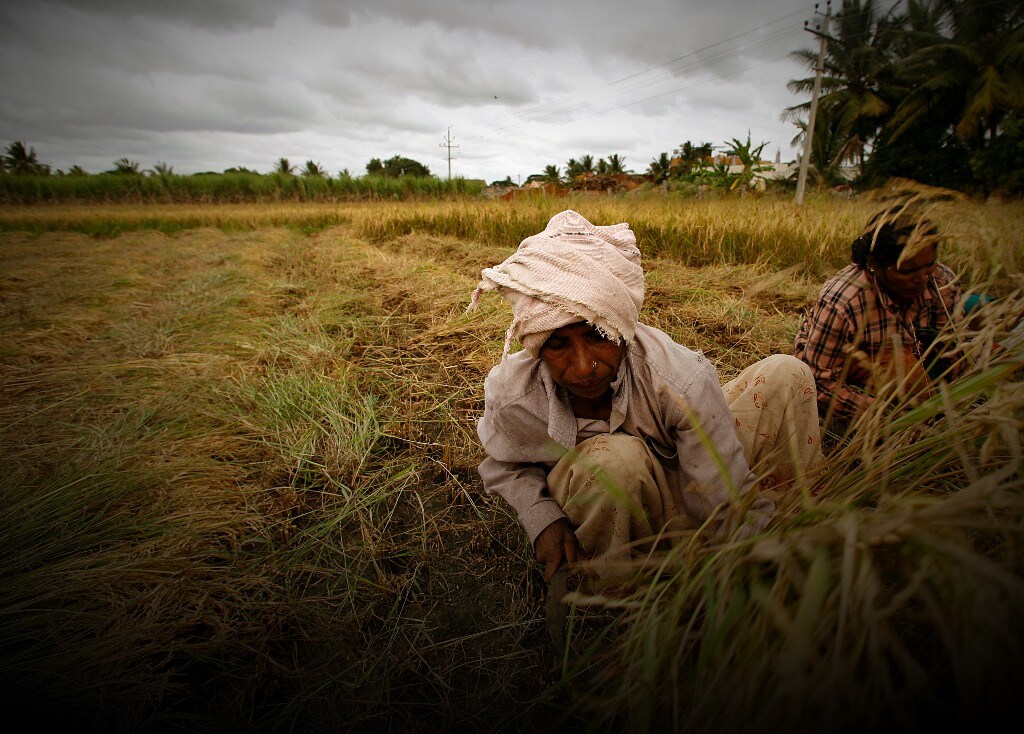
Be it Punjab, Uttar Pradesh or Karnataka, when elections are around the corner, the promise of farm loan waivers seems not far behind. Karnataka, which goes to the polls in five days, has seen two major political parties promise a waiver of agricultural loans, should they be voted into power.
The Bharatiya Janata Party in its manifesto has promised a loan waiver for all crop loans up to Rs 1 lakh from public sector banks and cooperative banks. The JD(S) has matched that promise. This atop an existing farm loan waiver announced by the ruling government. In June 2017, the Congress led government had announced a plan to waive farm loans of up to Rs 50,000 taken from cooperative banks.
Should a wider loan waiver be announced once a new government is in place, Karnataka would join a growing list of states which have opted for a policy that many have cautioned against.
The Centre has stayed away from a nationwide waiver like the one announced by the United Progressive Alliance in 2008, as part of which Rs 60,000 crore in farm loans were waived. But the amount of loans waived by individual states has already overtaken that amount. Over the past twelve months or so, six states have announced loan waivers. This includes Maharashtra, Uttar Pradesh, Punjab, Tamil Nadu, Andhra Pradesh and Telangana. Total loans waived stand at over Rs 88,000 crore.
Karnataka Adds To The Pain
According to a report by Kotak Institutional Equities, Karnataka accounts for 8 percent of all agricultural loans in India.
Nationalised banks account for more than half of the agricultural loans disbursed in the state, while State Bank of India accounted for 17.3 percent as of 2017. Private sector banks accounted for 15.5 percent of total agricultural loans in the state.
Gross non performing loans in this book have been gradually rising over the past few years for all banks, the brokerage house noted in its report. “Public banks have 15 percent non performing loans in this book while private banks are at 3 percent. These issues take time to settle as we have seen in states like Maharashtra and UP where such waivers have been announced in the past,” the brokerage house wrote.
Kotak also cautioned that microfinance institutions and small finance banks that operate in the region could take a hit, even though they are not directly part of the loan waiver. In Karnataka's case, Ujjivan Financial Services and Bharat Financial have close to 11-15 percent of their loan book in this state. “These portfolios are quite quick to deteriorate,” Kotak said.
Samit Ghosh, founder and chief executive officer of Ujjivan said that the impact of farm loan waivers depends from state to state.
“While the waiver in Uttar Pradesh took a toll on MFI's including Ujjivan, in the case of Maharashtra, it was the larger issues which impacted performance. In Karnataka, possibilities of a farm loan waiver may not be a cause of concern for the company as Ujjivan's lending is largely restricted to the urban areas, with a very small percentage being lent in rural areas,” Ghosh told BloombergQuint. He, however, added that loan waivers more generally are undesirable as they have negative side effects including distorting the credit culture and incentivising willful default.
Macro Concerns
There is no shortage on warnings on the negative fallout of farm loan waivers on the broader economy. The RBI reiterated some of these concerns in a September 2017 study published as part of its Mint Street Memos series.
In it, the central bank noted that farm loan waivers can have an “enduring” impact on market borrowings.
“If overall government borrowing increases, yields on state development loans (SDL) may firm up posing higher interest burden for the states in future. Concomitantly, they can also crowd out private borrowers as the general cost of borrowing increases with pressure from higher government borrowing on the finite pool of investible resources in the economy,” said the RBI.
A higher fiscal deficit also impacts inflation adversely. The impact of fiscal deficit on inflation will be higher at higher levels of fiscal deficit and inflation, the RBI said.
The silver lining, according to Kotak Institutional Equities, is that loan waivers could decline in the future with the government introducing new crop insurance schemes.

-
'Never Seen This Level Of Negativity': Sandeep Tandon Says The Next Rally May Be Closer Than You Think

Veteran investor Sandeep Tandon says foreign selling is easing, large-caps are due a comeback and mid-caps are crowded, while he turns positive on gold, power and pharma this Diwali.
-
Indians Stay With Family, Not In Hotels | The Reason Why
India still lacks enough clean, reliable and affordable hotels for budget-conscious travellers.
-
The Economic Imperative: Analysing The Material Driving Force Behind India-Canada Strategic Reset
This economic complementarity is further reinforced by deep institutional investment ties and talent mobility, which form the bedrock of the bilateral framework.
-
Medicine Pricing: Where Must Profit Stop?
India must confront excessive margins, hidden incentives and regulatory gaps that threaten the integrity of medicine.
-
Why Amazon And Flipkart Are Struggling To Beat Meesho In India's Smaller Cities
With 274 million users and lowest-cost logistics, Meesho is defending its value commerce crown against giants like Amazon and Flipkart.
-
High US Salaries, No Green Card Certainty: The Financial Calculation Facing Indian H-1B Families
The suspension of PERM processing at eight technology employers does not cancel existing H-1B visas. What it does is force a question many Indian families have been avoiding: is the US salary worth tying your career and family plans to one employer?
-
Swiggy vs Eternal: Food Delivery's Two Rivals Are No Longer In The Same Race
Eternal is building a private AI assistant, dark.ai. Swiggy is still working out how to make Instamart pay, with an operating loss of Rs 895 crore in the July-September quarter while Blinkit stayed profitable.
-
Where You Live Shapes How You Get To Work | The Reason Why
Two-wheelers are the most popular way to get to work in India, accounting for nearly 43% of workplace commutes.
-
Unhedged Position: Can India See An Indonesia-Style Time Correction?
The Nifty is trading below levels it first clocked in 2024. Is there, then, as I have suggested in the headline, potential that the current time correction drags on painfully for the next three-five, even ten years?
-
Navigating Friction And Energy Realities: An Analysis Of Marco Rubio's October Visit To India
Occurring at a critical juncture marked by stalled trade negotiations and escalating geopolitical pressures over global energy supplies, the visit offers a profound window into modern US-India relations.










