Praising Justice PN Bhagwati, With a Pinch of Salt
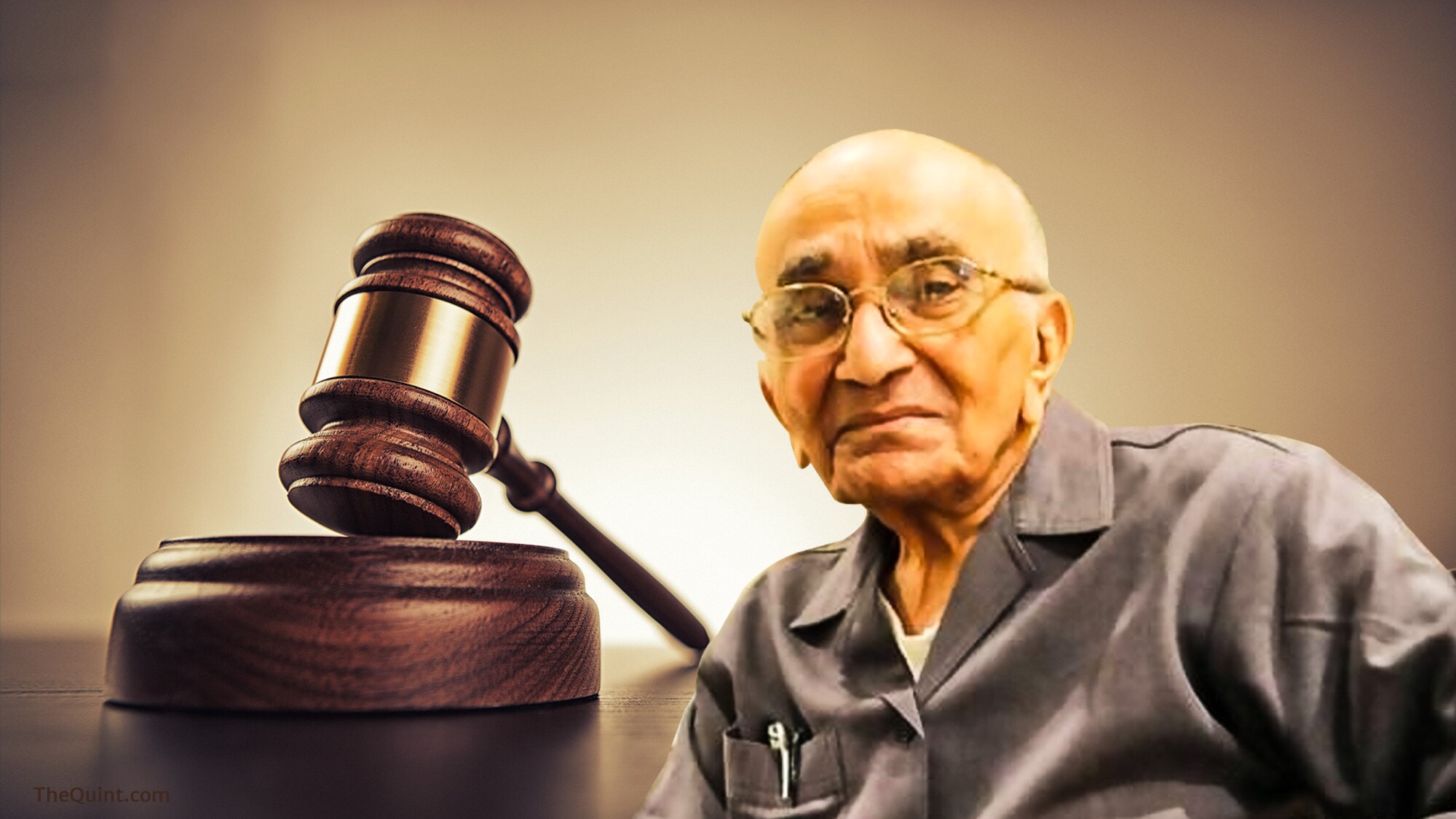
Justice PN Bhagwati, who passed away on 15 June, has been described as “a pioneer of judicial activism”, credited for introducing public interest litigation (PIL) in India, among other things. Justice Bhagwati, who served first as a Supreme Court judge and then as Chief Justice of India, passed away on Thursday at the age of 95.
As a judge with one of the longest tenures on the bench, his impact on jurisprudence in India is undeniable. His judgment in Maneka Gandhi v Union of India changed the way Indian courts approached questions of fundamental rights, expanding their scope more than ever before.
Critically examining his legacy, though, leaves us with a much more complex picture and one that does not necessarily paint him in the best light.

Before Justice Bhagwati
For a start, Justice Krishna Iyer should get an equal share of credit for being the pioneer of public interest litigation. It was his judgment in Municipal Council of Ratlam v Vardhichand that started the procedural innovations which made PIL possible.
No doubt Justice Bhagwati played a role in the process as well, and as a judge with a longer tenure, probably had a greater impact.
Nonetheless, we must still be sceptical about claims concerning what PIL did for the rights of citizens.
A serious critique of PIL can be found in Anuj Bhuwania's Courting the People. Bhuwania's compelling argument is that far from defending the rights of citizens, PILs have been turned around to deprive the poor and underprivileged of their rights through demolition of homes, destruction of jobs and livelihoods, among other injustices, with nothing like a fair hearing.
PILs a Failure?
PILs are now routinely used to demand court-imposed bans on films, books, various parts of the internet and other media with no basis in statute or the Constitution.
It is shameful that courts have, in PILs, acted as lawless censures based on the whims and fancies of individual judges.
As Bhuwania's book points out, the seeds of this disaster were sown when loosened procedural requirements and informalisation of the judiciary became the hallmarks of PILs.
By sloughing off the rigours of principle, precedent, and procedure under the flag of PIL, Iyer, Bhagwati, YV Chandrachud and others may have unwittingly opened the door to a judicial assault on civil rights in the years to come.
On Fundamental Rights
As revolutionary as his approach towards fundamental rights in Maneka Gandhi's case was, it is hard to reconcile it with Justice Bhagwati in Minerva Mills v Union of India.
In this case his dissenting judgment effectively nullified all fundamental rights in one stroke by making them subject to the Directive Principles of State Policy (DPSP).
While the majority judgement of Chief Justice Chandrachud carried the day in Minerva Mills, striking down an amendment to the Constitution for making fundamental rights subject to the DPSP, Justice Bhagwati held that Parliament could amend the Constitution to make fundamental rights subject to DPSP.
It's not hard to see how badly this approach could have gone for India. We are seeing it right now.
Article 48 is being used to discriminate and devastate livelihoods of minority communities through cow slaughter bans.
Unfortunately, this has received judicial sanction from the Supreme Court in its bizarre judgment in State of Gujarat v Mirzapur Moti Kureshi Kassab, using the same discredited reasoning as Bhagwati did.
ADM Jabalpur
In talking about the legacy of Justice Bhagwati, it is impossible to avoid his concurring judgement in ADM Jabalpur v Shiv Kant Shukla.

During the Emergency, when government excesses against citizens were going unchecked, and when the judiciary was believed to be the last hope for civil rights, Justice Bhagwati and three fellow judges slammed the door shut on the faces of those who approached the Supreme Court.
The courts, they said, could not be approached against any illegalities or human rights violations during the Emergency.
It was not an overwhelming tide of judicial opinion that he was reflecting.
Seven high courts had said that even if a state of Emergency had been declared, suspending fundamental rights, they could always be approached to challenge the government's illegal detention of citizens.
Justice HR Khanna wrote a dissenting judgement in ADM Jabalpur that cost him the post of Chief Justice of India. There were two clear choices before him, and Bhagwati made the wrong one.
A Mixed Legacy?
Just as the judgement in Maneka Gandhi's case is probably one of the most cited on questions of fundamental rights, it is a testament to its awfulness that the majority judgement in ADM Jabalpur has rarely been cited approvingly again by the Supreme Court.
Indeed, it was cited by Justice Chelameshwar in his dissent in the NJAC case, as an instance of where the judiciary failed to protect fundamental rights.
In fact, even the few positive citations for ADM Jabalpur are largely for the minority judgement of Justice Khanna.
When it comes to fundamental rights, Justice Bhagwati leaves behind a mixed legacy at best. Alongside the grand rhetoric of the Maneka Gandhi case, we have the terrible consequences of his concurring judgment in ADM Jabalpur.
Whatever good was done through the innovations of PIL jurisprudence was undone later, and perhaps even exceeded by the evils it has wrought.
The glowing praise that is likely to be heaped on him in the days to come must be taken with more than a pinch of salt.
(Alok Prasanna Kumar is an advocate based in Bengaluru and can be reached @alokpi. This is an opinion piece and the views expressed above are the author's own.)

-
Getting To Work Costs Women More | The Reason Why

It is not just about women paying more than men. It is about women paying much more in cities than in villages.
-
AI Bias In Investing Cannot Be Eliminated, But It Can Be Governed
Framing is a particularly important example as identical financial information presented in terms of gains rather than losses can lead an LLM to reach a different assessment.
-
Joining The Dots | Dark Skies, Steady Diya: Why Hope Holds This Diwali
With war, a weak rupee and foreign outflows weighing on sentiment, policymakers at the NDTV World Summit and market veterans at NDTV Profit Ignite: Diwali Edition offered the same advice: stay invested and filter out the noise.
-
The Curious Case of Equitas Small Finance Bank And A CEO Who Quit For Stock
PN Vasudevan believes persistent investor concerns over a perceived conflict of interest had become a governance overhang on Equitas Small Finance Bank's stock, even as the lender improved profitability and asset quality.
-
Talking Points This Week: AI Cash Burn, A Tiger Comeback And An India That Still Finds Its Own Path
India is not immune to higher oil or tighter global liquidity, yet its earnings base is broader, its domestic policy levers are still available.
-
Foreign Investors Own Half Of HDFC Bank and ICICI Bank. An LTCG Cut Could Matter Most Here
Foreign portfolio investors have US$115 billion parked in HDFC Bank, ICICI Bank. If the government cuts long-term capital gains tax, Jefferies says returning foreign money could land here first.
-
'Never Seen This Level Of Negativity': Sandeep Tandon Says The Next Rally May Be Closer Than You Think
Veteran investor Sandeep Tandon says foreign selling is easing, large-caps are due a comeback and mid-caps are crowded, while he turns positive on gold, power and pharma this Diwali.
-
Indians Stay With Family, Not In Hotels | The Reason Why
India still lacks enough clean, reliable and affordable hotels for budget-conscious travellers.
-
The Economic Imperative: Analysing The Material Driving Force Behind India-Canada Strategic Reset
This economic complementarity is further reinforced by deep institutional investment ties and talent mobility, which form the bedrock of the bilateral framework.
-
Medicine Pricing: Where Must Profit Stop?
India must confront excessive margins, hidden incentives and regulatory gaps that threaten the integrity of medicine.










