Just How Deep Is Mark Zuckerberg’s Metaverse Money Pit?
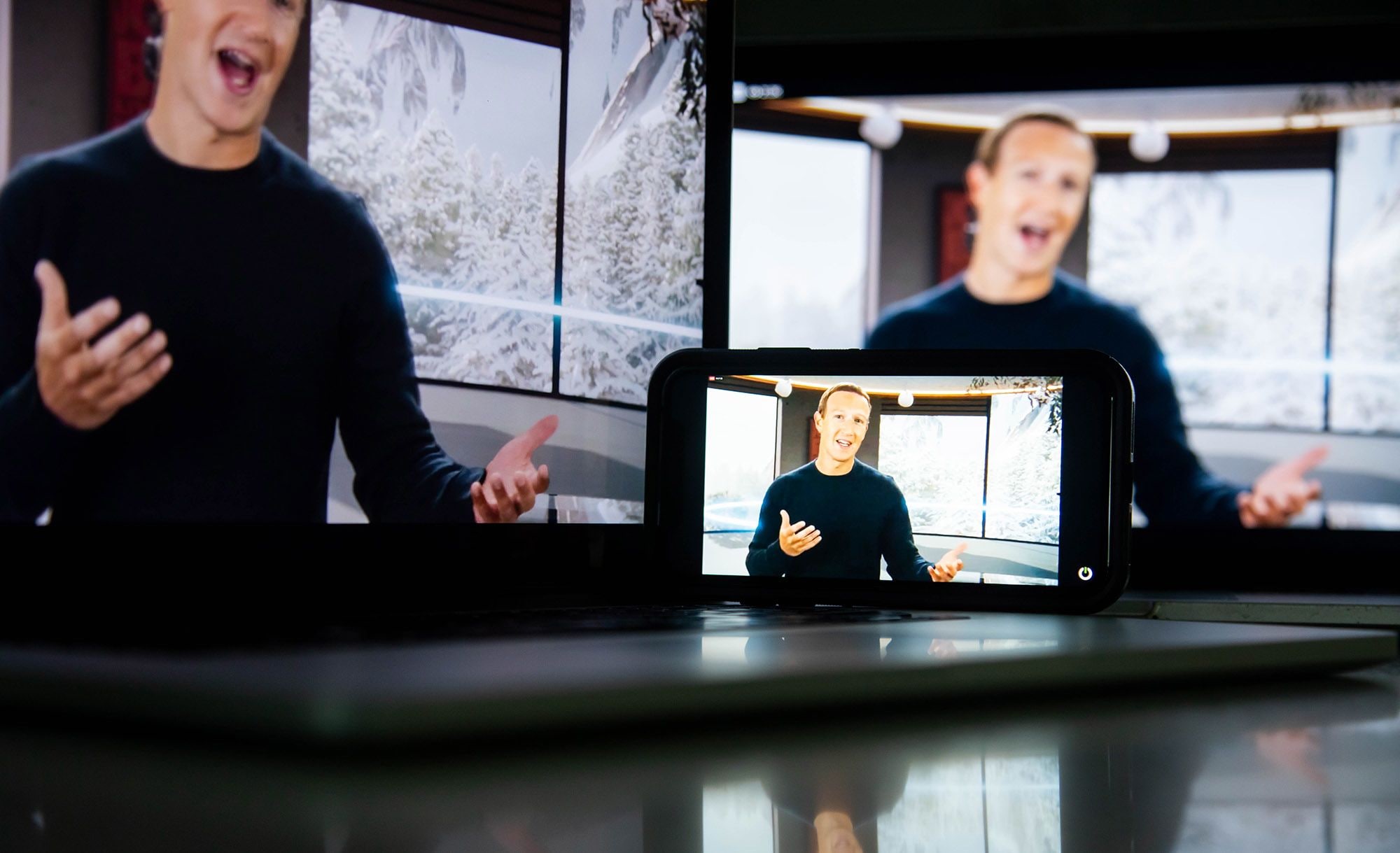
(Bloomberg Opinion) -- When it comes to measuring the progress of Mark Zuckerberg's metaverse, big numbers have been in short supply. Only 20 million of his Quest virtual reality headsets have sold since 2019. Only 200,000 users are reportedly active in Meta Platform Inc.'s flagship virtual reality experience, Horizon Worlds. Oh, actually, there is one big number: $21 billion lost on creating the Metaverse since the start of 2022.
All this prompts an obvious question: Just how much money is Zuckerberg prepared to spend to make his Metaverse successful?
Luckily for him, he doesn't have to answer that just yet. Meta's legacy business — selling online advertising — is roaring, with double digit revenue growth for the first time since the end of 2021. That's providing sufficient distraction to keep investors from coming down on him too hard. Sure they're concerned that Meta has spent so much money on the metaverse with so little to show for it — but they're not angry.
Revenue from the Metaverse — selling headsets, plus apps and services — fell between 2021 and 2022, and analysts expect it to sink even further this year. Reality Labs expenses were $4 billion in the most recent quarter alone — a 23% increase from the same period a year earlier and not a good omen during what is supposedly Meta's “year of efficiency.” Reality Labs expenses will increase in 2024. “A lot of investors might want to see us spending less here in the near term,” Zuckerberg said last week. “My view is that we are leading in these areas. I believe that they're going to be big over time.”
When bad times come around again, and advertising sees a slump, Zuckerberg's metaverse vision needs to be in much stronger shape than it is today. Otherwise, he'll find investors might be far less forgiving.

But if he can manage to turn things around, he may have Apple Inc. to thank. The launch of that company's Vision Pro headset in June drew attention back to the possibilities of virtual and augmented reality, with a cool factor Meta lacks. Apple's network of stores will be used to introduce millions of consumers to the mixed reality experience. “It has created a buzz,” notes analyst Carolina Milanesi from Creative Strategies. Even so, “the cost of Vision Pro will lead some people to look elsewhere,” she added.
Meta's Quest 3, due out later this year, will beat the Vision Pro to market and will be one-seventh the price. Meta can cling to Apple's hype like a skateboarder being pulled along by a bus. Apple's entry has bought Zuckerberg some additional time with investors — and helped give some validation to his overall thesis that mixed reality has a place in millions of homes in the future. If Apple thinks it's worth it, then maybe it is.
But then again, maybe it's not. What can't be shaken is the underlying sense that this is technology that has so far failed to gain the public's attention or desire. Zuckerberg seems to think this is an issue that can be solved via R&D, making the devices lighter and smaller, with sharper graphics and less risk of motion sickness. I think it takes more. VR has proven itself to be a novelty gaming platform, especially when fitness applications are thrown in. But I still can't see it as a serious platform for work, networking and productivity. There is a significant chance that Zuckerberg — and Apple CEO Tim Cook, for that matter — have drastically misread the public mood. Ask most people today about the role of technology in their lives and most will tell you they're seeking less connection.

Meta has shown in the past that it knows when to stop throwing good money after bad. It canned its critically acclaimed Portal video chat device earlier this year, with the main takeaway being that simply building an excellent device — which the Portal certainly was — isn't enough to make it a success. You must convince the consumer their lives are incomplete without it.
It's clear Meta won't give up on the Metaverse so easily. For one thing, it would make the change in the company's name from “Facebook” to “Meta” rather awkward. The bigger issue is that it would again damage Zuckerberg's credibility as a CEO — something which has been on the mend of late with the success of Twitter-clone Threads.
With a small team, no advertising and only a few months of development, it took Threads less than an hour to attract more users than Horizon Worlds has managed in two-and-a-half years. On that evidence, it might be wiser for Zuckerberg to divert more of his resources toward building out that platform instead of chasing the metaverse.
More From Bloomberg Opinion:
- Mark Zuckerberg Is a Fad CEO Who Needs to Focus: Parmy Olson
- Does Zuckerberg Even Want Threads to Replace Twitter?: Dave Lee
- My Eyeball Met Sam Altman's Crypto AI Scanner: Lionel Laurent
This column does not necessarily reflect the opinion of the editorial board or Bloomberg LP and its owners.
Dave Lee is Bloomberg Opinion's US technology columnist. Previously, he was a San Francisco-based correspondent at the Financial Times and BBC News.
More stories like this are available on bloomberg.com/opinion
©2023 Bloomberg L.P.

-
Signature Play: The Classic Cocktail Is Dead. Or Is It?

Classic cocktails are disappearing from India's cocktail menus. But they're still being ordered, taught to bartenders and borrowed from. So, who's really having the last drink?
-
A New Samvat Wishlist: Inclusive Prosperity And Human Development
India has strengthened its economic foundations through infrastructure, digital access and enterprise. Its next growth chapter must deepen productivity, create better livelihoods and widen participation in prosperity.
-
Love, Sex Aur Dhokha: The Audacious Plot To Spy On Jensen Huang
A Taipei dinner, a Singapore chip buyer and a suspected Chinese asset: inside the alleged spy operation that got close to NVIDIA's Jensen Huang.
-
Ten Things I Learnt This Samvat
Patience can be a trap. Cheap stocks can stay cheap. Leverage can wipe you out. What did Samvat 2082 teach us? Niraj Shah writes on 10 lessons from the year gone by.
-
Talking Points This Week: Tech Nerves, FII Buying, And A Faraway Banking Shock
The global markets are not shining this Diwali. The exception in the large markets is, India.
-
Midterm Rally Lasted A Day. The Hard Reality Of A Divided US May Last Two Years | Opinion
Between a contested AI boom, a debt ceiling that arrives in 2027 and a president with every incentive to act alone, the next two years may prove more volatile than the first day's rally suggests.
-
Blue Wave Will Derail the AI Trade but Won't Dismantle the AI Era | Unhedged Position
The Democrats' sweep of the US Congress will see politics collide with economic forces both over the long and short term.
-
It's Time To Take The GST Council's Bet On Trust Global
Payment records can prove India's services exports, and clear, proportionate rules can bring foreign digital sellers into the tax net.
-
Opinion | India at 38: From Innovation Overperformer to Innovation Powerhouse
India now has 453 VC-backed deep science startups, 18 of them late-stage, after 117 percent growth since 2020. Laurus Labs, at USD 9.3 billion, is the most valuable deep science company in any middle-income economy outside China.









