JSW Steel's FY26 Ebitda Could See 10% Impact — Here's Why
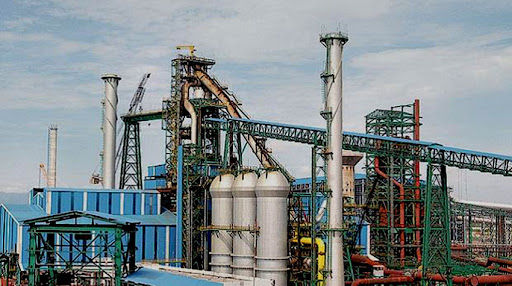
In 2021, JSW Steel Ltd. acquired Bhushan Power & Steel Ltd. through a corporate insolvency resolution plan, valued at Rs 19,400 crore. This involved payments to BPSL's creditors. However, last week the Supreme Court of India rejected the bankruptcy resolution plan JSW Steel submitted for BPSL in 2019.
While JSW Steel is expected to get paid back the acquisition price of Rs 19,400 crore in two months, losing out on the acquisition of BPSL means that the company loses the benefits from the BPSL's production capacity of 4.5 million tonnes (2.4% of India's capacity). This could hurt the steel maker's FY26 consolidated Ebitda by 10-11%, as per Emkay Research.
Historical Context
JSW Steel had acquired BPSL in 2019 under a corporate insolvency resolution plan for a total value of around Rs 19,400 crore, which included 50% recovery for the creditors of BPSL. This payment was agreed to be paid by a mix of cash and convertible debentures.
The approved resolution plan also mandated that JSW Steel would inject a total of Rs 8,550 crore as equity into BPSL. This was structured in two parts:
Rs 100 crore was to be directly invested as share capital. This is the most basic form of equity, representing ownership in the company.
Rs 8,450 crore was to be infused through Compulsorily Convertible Debentures. These CCDs were to be issued to Piombino Steel, which is identified as a group entity of JSW Steel and was intended to eventually merge with BPSL.
When the resolution plan was put into action, JSW Steel only invested the initial Rs 100 crore as share capital, but did not issue the CCDs as the Enforcement Directorate attached some of BPSL's assets.
Supreme Court Rejection
While lenders of BPSL understood the delay in CCD issues, the Supreme Court of India has now rejected the Rs 19,400-crore bankruptcy resolution plan for BPSL, stating that the approved plan is illegal and should not have been accepted by the Committee of Creditors.
Two key reasons being cited for the rejection are JSW Steel's approach:
The combining of equity and convertible debentures to complete the acquisition.
Failure to execute the plan within the given timeline.
Implications For JSW Steel
BPSL operates with a 4.5 million tonne capacity and also plans to expand this to 5 million tonne by September 2027. As per Emkay, the company's assets were expected to generate an Ebitda of Rs 4,000 crore.
In the case of BPSL going out of JSW's hands, the company's expected FY26 Ebitda of Rs 35,000 crore could be impacted by 10-11%.
What Happens Next?
Emkay Research notes three possible outcomes:
JSW Steel may file a review petition, however, the brokerage sees a low probability of a reversal in the Supreme Court's stance.
The most optimal outcome is for BPSL's creditors to find new suitor.
The third outcome is full liquidation of the company, which may not realise the full potential of the company's assets.
Is The Development Priced In?
While the case's overhang could persist for some time, the Supreme Court's adverse ruling is largely priced into the stock, Emkay noted. The brokerage has, however, reduced its price target for JSW Steel by 9% to Rs 1,000 from Rs 1,100 earlier, and compared to stock's current share price of Rs 970.
The stock's 6% fall on May 2, 2025 more-than factors in the negative news, according to Nuvama.

-
Signature Play: The Classic Cocktail Is Dead. Or Is It?

Classic cocktails are disappearing from India's cocktail menus. But they're still being ordered, taught to bartenders and borrowed from. So, who's really having the last drink?
-
A New Samvat Wishlist: Inclusive Prosperity And Human Development
India has strengthened its economic foundations through infrastructure, digital access and enterprise. Its next growth chapter must deepen productivity, create better livelihoods and widen participation in prosperity.
-
Love, Sex Aur Dhokha: The Audacious Plot To Spy On Jensen Huang
A Taipei dinner, a Singapore chip buyer and a suspected Chinese asset: inside the alleged spy operation that got close to NVIDIA's Jensen Huang.
-
Ten Things I Learnt This Samvat
Patience can be a trap. Cheap stocks can stay cheap. Leverage can wipe you out. What did Samvat 2082 teach us? Niraj Shah writes on 10 lessons from the year gone by.
-
Talking Points This Week: Tech Nerves, FII Buying, And A Faraway Banking Shock
The global markets are not shining this Diwali. The exception in the large markets is, India.
-
Midterm Rally Lasted A Day. The Hard Reality Of A Divided US May Last Two Years | Opinion
Between a contested AI boom, a debt ceiling that arrives in 2027 and a president with every incentive to act alone, the next two years may prove more volatile than the first day's rally suggests.
-
Blue Wave Will Derail the AI Trade but Won't Dismantle the AI Era | Unhedged Position
The Democrats' sweep of the US Congress will see politics collide with economic forces both over the long and short term.
-
It's Time To Take The GST Council's Bet On Trust Global
Payment records can prove India's services exports, and clear, proportionate rules can bring foreign digital sellers into the tax net.
-
Opinion | India at 38: From Innovation Overperformer to Innovation Powerhouse
India now has 453 VC-backed deep science startups, 18 of them late-stage, after 117 percent growth since 2020. Laurus Labs, at USD 9.3 billion, is the most valuable deep science company in any middle-income economy outside China.









