JSW Infrastructure Q2 Results: Profit Up 85%, To Buy UAE Oil Terminal For Rs 1,555 Crore
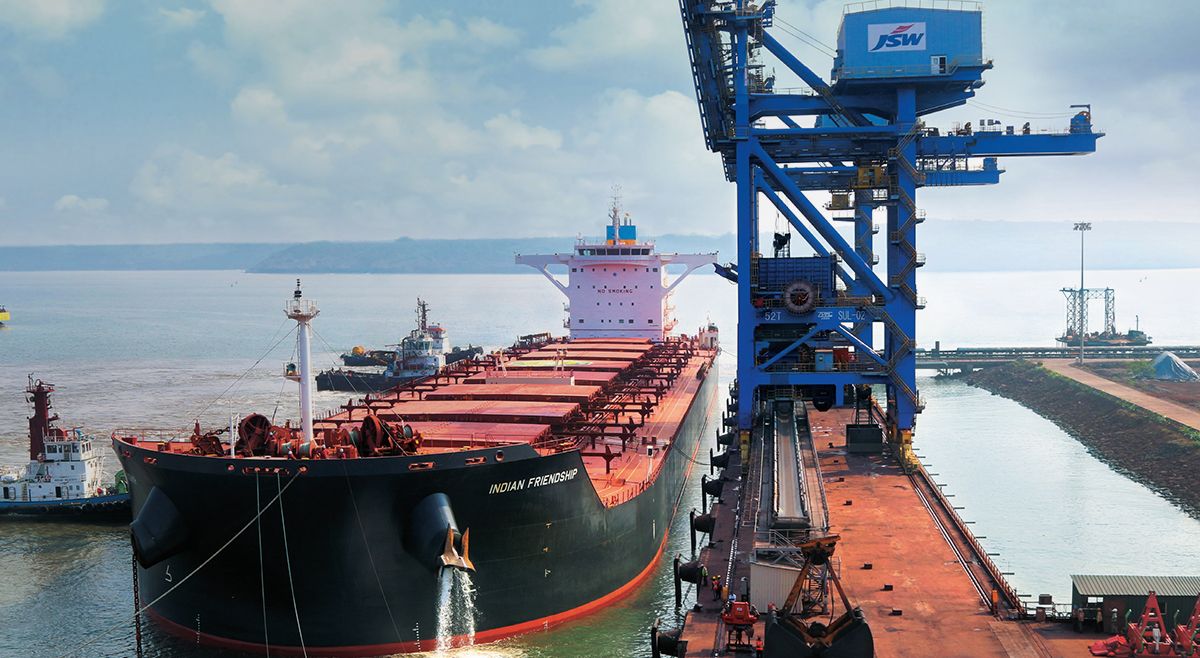
JSW Infrastructure Ltd. reported an 85% jump in its net profit for the quarter ended September, aided by an increase in volume offtake.
The company's net profit increased 85% year-on-year to Rs 255.9 crore in the quarter ended September, according to an exchange filing on Friday.
The second largest port operator reported Ebitda growth on the back of increased revenue and cost control.
The increase in cargo is mainly attributable to the rise in capacity utilisation at the Paradip iron ore terminal, Paradip coal terminal, and an increased offtake by JSW Steel at Dharamtar and Jaigarh port, it said.
JSW Infrastructure Q2 FY24 Highlights (YoY)
Revenue up 28.14% at Rs 848.31 crore vs Rs 662 crore.
Ebitda up 32.6% at Rs 452.2 crore vs Rs 341 crore.
Margin at 53.3% vs 51.5%.
Net profit up 85% at Rs 255.9 crore vs Rs 138.3 crore.
The company's board approved the acquisition of Marine Oil Terminal Corp. along with its Fujairah branch by JSW Terminal (Middle East) FZE, for Rs 1,555 crore. Post this, Marine Oil Terminal will become the step-down subsidiary of the JSW Infrastructure.
Further, the board also approved the purchase of container train operator licence from Sical Multimodal and Rail Transport Ltd., to expand its footprint in the logistics business and participate in the Container Train Operations Business.
This will be subject to receipt of requisite approvals and government clearances, it said.
Shares of JSW Infrastructure closed 0.26% lower at Rs 171.3 apiece, as compared with a 0.51% advance in the benchmark Nifty 50 on Saturday.

-
Why Swapping Your Old Gold Can Trigger A Rs 5 Lakh Tax Bill, And How You Can Avoid It Legally

Swapping old gold for new is taxed as a sale and a fresh purchase. Getting your own gold remade can cut most of that bill, though it has its own costs.
-
The AI Trade is Done. The Real Opportunity for Investors Starts in 2027 | Unhedged Position
As pureplay AI stocks plunge and circular, capex-led financing unwinds, 2027 is set to be a year of reckoning for AI companies. Yet the bust clears the way for a better opportunity for investors in 2027 -- shifting the spotlight from AI builders to the companies using AI.
-
Leadership As Mission: Why The Age Of AI Demands More Human Leadership
Debjani Ghosh examines how AI is changing leadership, arguing that its success must be measured by its impact on people and the accountability of those guiding its use.
-
We May Need Another Tukaram Mundhe To Fight Air Pollution | The Reason Why
Developers may install basic measures such as sprinklers and green nets, resume work, and continue violating rules when this equipment stops working.
-
Extracting Value From Battery Scrap Could Be Challenging For India | The Reason Why
A discarded lithium-ion battery still contains valuable materials such as lithium, nickel and cobalt. These can be recovered and reused. When such batteries are crushed and shredded, they produce a dark powder called black mass.
-
One El Nino, India Can Handle. Two Could Break The Granary
India's grain stocks can absorb one bad year, but a second El Nino could drain the buffer in two to three years, economists say.
-
India's Troika Of Good Luck | Joining The Dots
As Jensen Huang's exit drags Nvidia down, a cooling AI trade and resilient earnings have revived investor interest in India. A likely RBI rate hike looms.
-
Talking Points This Week: Leadership Shock At Nvidia, Earnings Strength, And The Fog Over Hormuz
The Anthropic IPO pricing and first trading day, Nvidia's upcoming earnings, and any fresh signals from Iran will set the tone for the following week.
-
Signature Play: The Classic Cocktail Is Dead. Or Is It?
Classic cocktails are disappearing from India's cocktail menus. But they're still being ordered, taught to bartenders and borrowed from. So, who's really having the last drink?
-
A New Samvat Wishlist: Inclusive Prosperity And Human Development
India has strengthened its economic foundations through infrastructure, digital access and enterprise. Its next growth chapter must deepen productivity, create better livelihoods and widen participation in prosperity.









