JPMorgan Stars Take Other Side Of Dimon’s ‘Hurricane’ Trade
(Bloomberg Opinion) -- As chairman and chief executive officer of JPMorgan Chase & Co., Jamie Dimon is perhaps the most powerful person in the banking industry anywhere in the world. So when he says — like he did on June 1 — that investors should brace for an economic “hurricane,” it's worth taking the warning both literally and seriously. Such advice, however, doesn't seem to extend to the bank's top-ranked analysts, whose jobs are to advise companies and investors on where the economy and financial markets are headed.
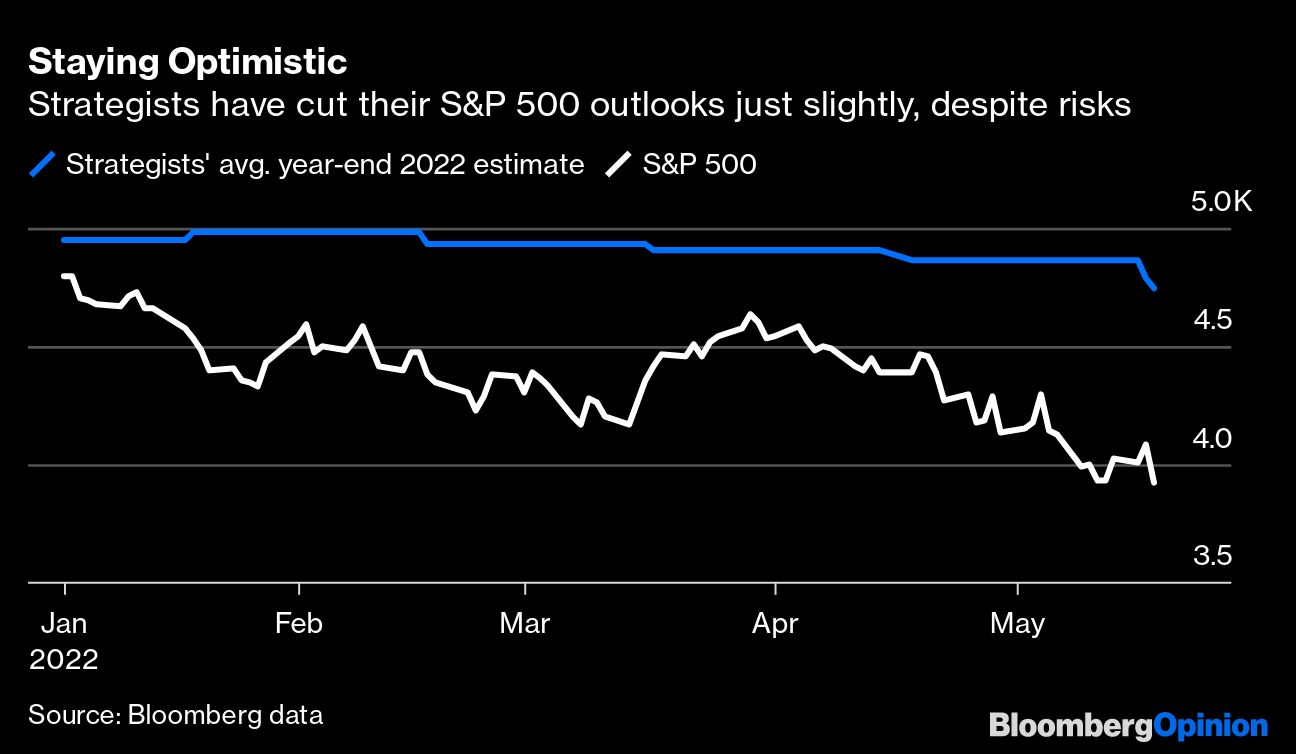
On the same day Dimon said the economic storm is “right out there down the road coming our way,” star strategist Marko Kolanovic, who was ranked the No. 1 equity-linked strategist in last year's Institutional Investor survey, said the US stock market is poised for a gradual recovery in 2022 and the S&P 500 Index will likely end the year unchanged, in part, given “our view that there will be no recession given supports from US consumers.” Less than a week later, Chief Economist Bruce Kasman told Bloomberg Television that the strength of household and corporate finances would keep the economy buoyant. “We don't see a financial storm coming right now,” Kasman said. “We think the economy is going to avoid recession as we go through the rest of this year.”
Differences of opinion on things like the economy and markets within firms are nothing new. But this high profile episode at JPMorgan is a reflection of these unprecedented times, with little consensus about what lay ahead. As a result, market volatility will probably remain elevated as forecasts will likely change often in reaction to incoming data that has been hard to accurately forecast.

No doubt, there are debates are raging inside every Wall Street firm over the path forward for one of the most complex economies and markets in modern history. And it's not hard to see where Dimon is coming from. The inflation rate has risen to the highest in 40 years and the Federal Reserve is raising interest rates at an accelerated clip, something it has rarely succeeded in doing without tipping the economy into a recession. Not only that, but it is also withdrawing some of the cash it pumped directly into the financial system by allowing its $8.9 trillion portfolio of bonds to shrink, all as the war in Ukraine rages and the Covid-19 pandemic continues to snarl supply chains. Meanwhile, this is happening against the backdrop of asset prices — including homes, stocks and cryptocurrencies — that are starting to deflate following epic gains.
The counterpoint is that the economy is actually on pretty solid footing. Fed data show household net worth soared $33.5 trillion, or 29%, to $150.3 trillion in the last two years, thanks mainly to government and central bank stimulus, consumer spending remains healthy, the unemployment rate at 3.6% is near an all-time record low and corporate America on average continues to report near-record profits. So even if some of the risks materialize and send the economy careening off course, it should have plenty of cushioning to shield against any accident.

Given JPMorgan's size and sprawling business, few people have as much insight into what is going on in the real economy and where it may be headed than Jamie Dimon. On the other hand, Kolanovic and Kasman are known for making the right calls about markets and the economy. But rather than who will be proven right or wrong, the takeaway should be that consensus is likely to remain elusive for some time. More From Other Writers at Bloomberg Opinion:
Even a Soft Landing Can Be Ugly for Investors: John Authers Feeling Pinched on a $250,000 Salary? Just Wait: Alexis LeondisFed Risks More Pain If It Dawdles on Inflation: Ramesh Ponnuru
This column does not necessarily reflect the opinion of the editorial board or Bloomberg LP and its owners.
Jonathan Levin has worked as a Bloomberg journalist in Latin America and the U.S., covering finance, markets and M&A. Most recently, he has served as the company's Miami bureau chief. He is a CFA charterholder.
More stories like this are available on bloomberg.com/opinion
©2022 Bloomberg L.P.

-
Talking Points This Week: Leadership Shock At Nvidia, Earnings Strength, And The Fog Over Hormuz

The Anthropic IPO pricing and first trading day, Nvidia's upcoming earnings, and any fresh signals from Iran will set the tone for the following week.
-
Signature Play: The Classic Cocktail Is Dead. Or Is It?
Classic cocktails are disappearing from India's cocktail menus. But they're still being ordered, taught to bartenders and borrowed from. So, who's really having the last drink?
-
A New Samvat Wishlist: Inclusive Prosperity And Human Development
India has strengthened its economic foundations through infrastructure, digital access and enterprise. Its next growth chapter must deepen productivity, create better livelihoods and widen participation in prosperity.
-
Love, Sex Aur Dhokha: The Audacious Plot To Spy On Jensen Huang
A Taipei dinner, a Singapore chip buyer and a suspected Chinese asset: inside the alleged spy operation that got close to NVIDIA's Jensen Huang.
-
Ten Things I Learnt This Samvat
Patience can be a trap. Cheap stocks can stay cheap. Leverage can wipe you out. What did Samvat 2082 teach us? Niraj Shah writes on 10 lessons from the year gone by.
-
Talking Points This Week: Tech Nerves, FII Buying, And A Faraway Banking Shock
The global markets are not shining this Diwali. The exception in the large markets is, India.
-
Midterm Rally Lasted A Day. The Hard Reality Of A Divided US May Last Two Years | Opinion
Between a contested AI boom, a debt ceiling that arrives in 2027 and a president with every incentive to act alone, the next two years may prove more volatile than the first day's rally suggests.
-
Blue Wave Will Derail the AI Trade but Won't Dismantle the AI Era | Unhedged Position
The Democrats' sweep of the US Congress will see politics collide with economic forces both over the long and short term.
-
It's Time To Take The GST Council's Bet On Trust Global
Payment records can prove India's services exports, and clear, proportionate rules can bring foreign digital sellers into the tax net.
-
Opinion | India at 38: From Innovation Overperformer to Innovation Powerhouse
India now has 453 VC-backed deep science startups, 18 of them late-stage, after 117 percent growth since 2020. Laurus Labs, at USD 9.3 billion, is the most valuable deep science company in any middle-income economy outside China.









