JPMorgan Scraps U.S. Recession Call Amid Spreading Optimism
JPMorgan Chase & Co. economists scrapped their call for a recession in the U.S., joining a growing number of forecasters who now expect the economy to avert the downturn that was once viewed as inevitable.
The bank, which had previously said it expected a recession to begin in 2023, now sees continued expansion this year and “modest, sub-par growth” in 2024 as the most likely scenario. Michael Feroli, JPMorgan's chief U.S. economist, flagged the rising possibility of “healthy non-inflationary growth” thanks to potential productivity gains from artificial intelligence and a pickup in labor supply.
“The likelihood of a contraction has diminished in recent months,” Feroli wrote Friday in a note to clients. “A relatively quick resolution of the debt ceiling has taken one type of financial crisis risk off the table,” while “regulators' implicit guarantee of bank depositors has vastly reduced the odds of a different type of financial crisis risk,” he said.
Earlier this week, Bank of America Corp. became the first large Wall Street bank to officially reverse its call amid growing optimism about the economic outlook. Both decisions followed a similar change in tune among the Federal Reserve's own economists in July.
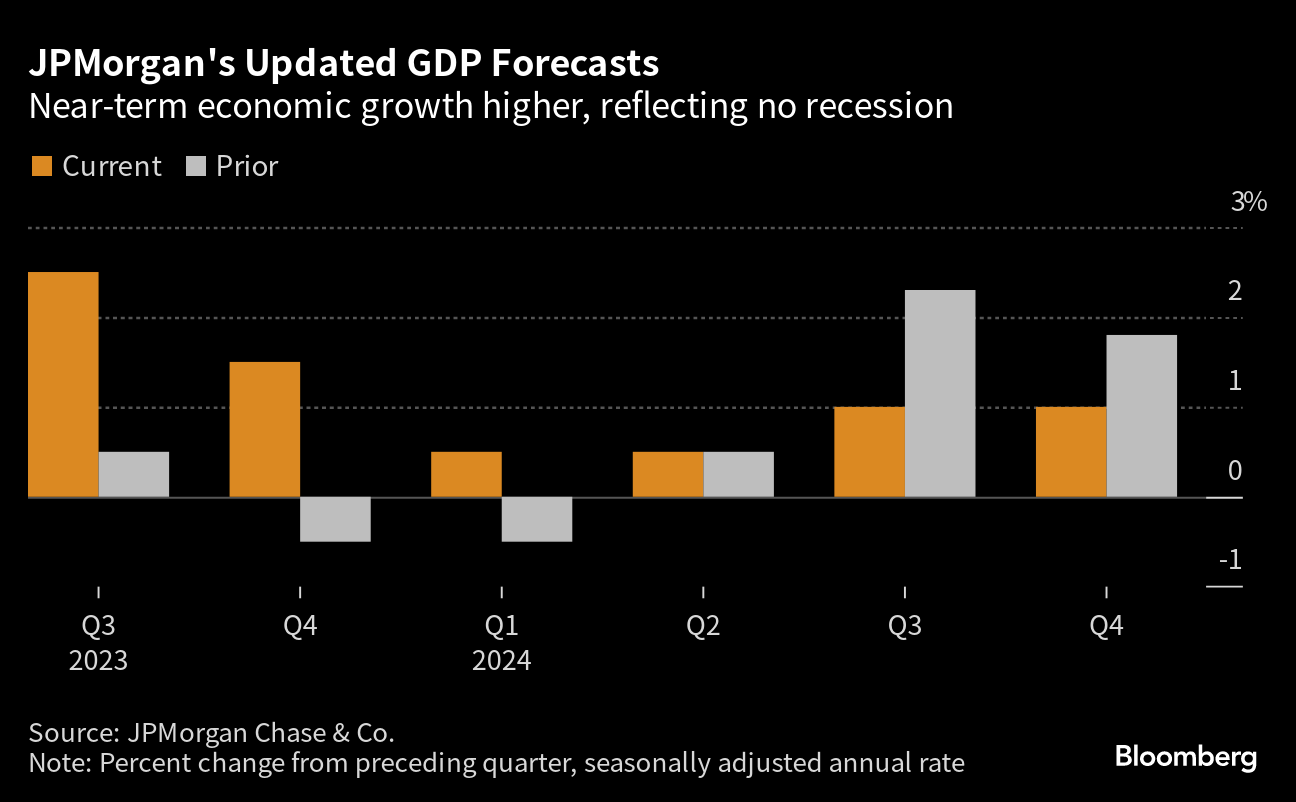
JPMorgan now expects U.S. GDP to grow at a “healthy” 2.5% annualized pace in the current quarter, followed by 1.5% in the fourth quarter. Feroli still anticipates the unemployment rate will climb to 4.5% by the end of next year, a full percentage point above where it is now.
Little Scarring
Relative to the global financial crisis, “the pandemic left little scarring in capital deepening, and companies have started to invest again, possibly paving the way for a long, low-inflation expansion to come,” Feroli wrote.
More generally, the note pointed to the continued resiliency of the U.S. economy in recent months alongside a gradual moderation in core inflation. Wage growth, meanwhile, has also eased without a corresponding rise in unemployment. Still, Feroli emphasized risks to the outlook remain.
“While a recession is no longer our modal scenario, risk of a downturn is still very elevated. One way this risk could materialise is if the Fed is not done hiking rates,” he said. “Another way in which recession risks could materialise is if the normal lagged effects of the tightening already delivered kick in.”
The July jobs report, out earlier Friday, emphasised the enduring strength of the labour market, further fueling hopes for a so-called soft landing. Employers added jobs at a solid pace, and the unemployment rate fell back down to 3.5%, one of its lowest readings in decades.
Monthly inflation data due Aug. 10 is forecast to show consumer prices, excluding food and energy, increased just 0.2% in July, which would mark the smallest back-to-back increases in over two years following a similar reading in June.
©2023 Bloomberg L.P.

-
Signature Play: The Classic Cocktail Is Dead. Or Is It?

Classic cocktails are disappearing from India's cocktail menus. But they're still being ordered, taught to bartenders and borrowed from. So, who's really having the last drink?
-
A New Samvat Wishlist: Inclusive Prosperity And Human Development
India has strengthened its economic foundations through infrastructure, digital access and enterprise. Its next growth chapter must deepen productivity, create better livelihoods and widen participation in prosperity.
-
Love, Sex Aur Dhokha: The Audacious Plot To Spy On Jensen Huang
A Taipei dinner, a Singapore chip buyer and a suspected Chinese asset: inside the alleged spy operation that got close to NVIDIA's Jensen Huang.
-
Ten Things I Learnt This Samvat
Patience can be a trap. Cheap stocks can stay cheap. Leverage can wipe you out. What did Samvat 2082 teach us? Niraj Shah writes on 10 lessons from the year gone by.
-
Talking Points This Week: Tech Nerves, FII Buying, And A Faraway Banking Shock
The global markets are not shining this Diwali. The exception in the large markets is, India.
-
Midterm Rally Lasted A Day. The Hard Reality Of A Divided US May Last Two Years | Opinion
Between a contested AI boom, a debt ceiling that arrives in 2027 and a president with every incentive to act alone, the next two years may prove more volatile than the first day's rally suggests.
-
Blue Wave Will Derail the AI Trade but Won't Dismantle the AI Era | Unhedged Position
The Democrats' sweep of the US Congress will see politics collide with economic forces both over the long and short term.
-
It's Time To Take The GST Council's Bet On Trust Global
Payment records can prove India's services exports, and clear, proportionate rules can bring foreign digital sellers into the tax net.
-
Opinion | India at 38: From Innovation Overperformer to Innovation Powerhouse
India now has 453 VC-backed deep science startups, 18 of them late-stage, after 117 percent growth since 2020. Laurus Labs, at USD 9.3 billion, is the most valuable deep science company in any middle-income economy outside China.









