Jio, Airtel Questioned By Telecom Regulator Over Misreporting 5G AirFiber Subscriber Data — Profit Exclusive
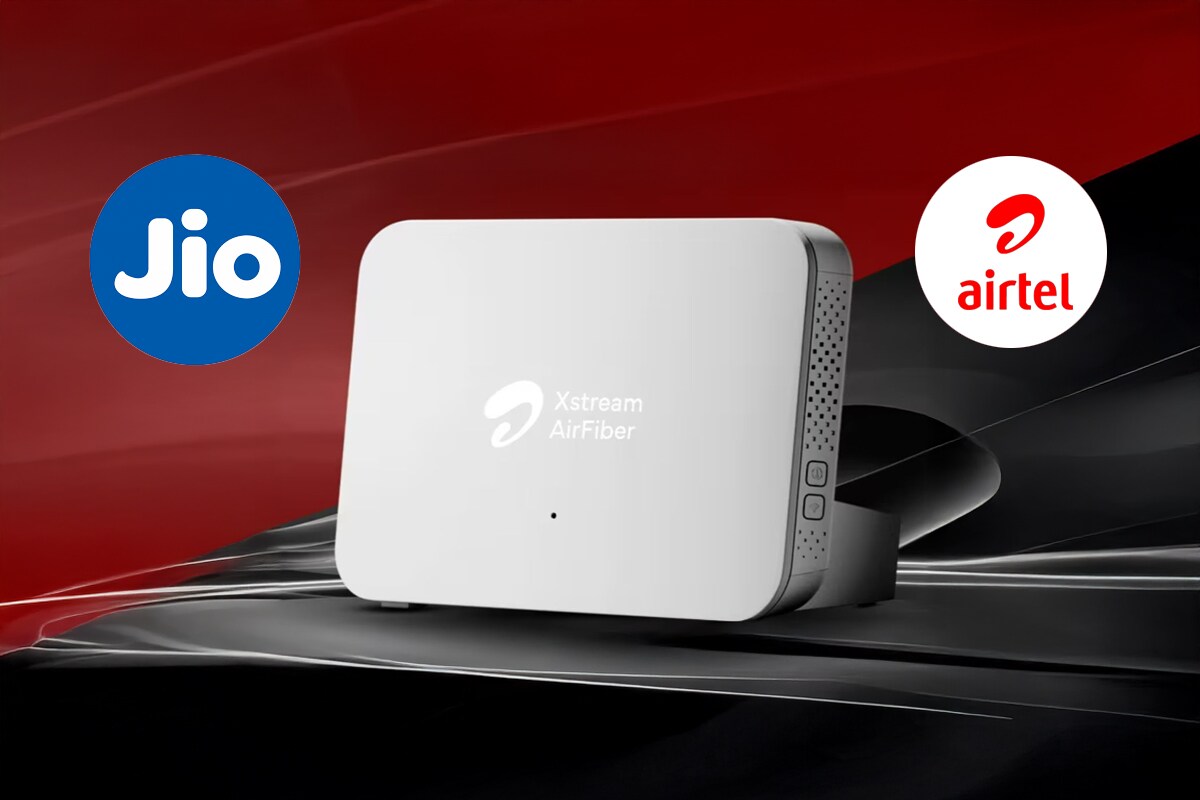
The Telecom Regulatory Authority of India has asked Reliance Jio and Bharti Airtel Ltd. to clarify how they classify their 5G-based home WiFi services—raising critical questions about whether their AirFiber offerings should be counted as wireless or wired broadband.
The telecom regulator had issued directives to both companies on May 27, flagging concerns that users accessing high-speed internet over 5G Fixed Wireless Access, possibly in the millions, may be reported as “wireline” or “fixed-line” subscribers, potentially distorting official broadband penetration data.
Telecom firms are following globally accepted definitions of fixed broadband, including those from the International Telecommunication Union and TRAI itself, which clearly list fixed wireless access as part of wireline broadband, and industry official told NDTV Profit on the condition of anonymity.
Since 5G FWA is installed at a fixed location and delivers consistent high-speed internet, it qualifies as a fixed broadband service irrespective of the access medium, the person said.
At the center of this regulatory scrutiny is Jio's and Airtel's 'AirFiber' services—both marketed as plug-and-play broadband for homes, using 5G to deliver internet without laying physical cables. While these services operate wirelessly from telecom towers to customer homes, they are often 'fixed in place' and used like traditional broadband setups.
According to people in the know, TRAI's concern stems from a sharp spike in Jio's wireline subscriber numbers last year, followed by a sudden decline after the regulator intervened.
The regulator has now formalised its position by writing to both Jio and Airtel, seeking details on how they categorise their 5G FWA users, and whether the reporting aligns with licensing norms and technical definitions of 'wireline services.
The classification matters because it affects how India tracks broadband growth and how telecom companies are charged for their services. Reporting wireless users as wired could give a misleading picture of India's fiber connectivity progress—critical for national digital targets. It also has revenue implications, since levies and license fees differ between wireless and wireline categories.
According to people in the know, Jio has issued a response to TRAI, in which the company has argued that AirFiber should count as wireline broadband because the device is fixed at the user's premises and functions like a traditional broadband connection additionally. The company has been following standards prescribe by ITU globally, the people said. However, TRAI maintains that the transport layer—whether the signal is delivered over fiber, cable, or wireless spectrum—is essential to the classification.
A final ruling from the regulator could have wide-ranging implications, not just for Jio and Airtel, but for the future of FWA services in India. It could also prompt changes in how subscriber data is reported, how levies are calculated, and how India measures progress on fixed broadband targets.
For now, existing users of Jio and Airtel's AirFiber services are unlikely to see any change in connection speeds or pricing. But how these connections are counted could shift the landscape for telecom reporting and policy in the months ahead.

-
We May Need Another Tukaram Mundhe To Fight Air Pollution | The Reason Why

Developers may install basic measures such as sprinklers and green nets, resume work, and continue violating rules when this equipment stops working.
-
Extracting Value From Battery Scrap Could Be Challenging For India | The Reason Why
A discarded lithium-ion battery still contains valuable materials such as lithium, nickel and cobalt. These can be recovered and reused. When such batteries are crushed and shredded, they produce a dark powder called black mass.
-
One El Nino, India Can Handle. Two Could Break The Granary
India's grain stocks can absorb one bad year, but a second El Nino could drain the buffer in two to three years, economists say.
-
India's Troika Of Good Luck | Joining The Dots
As Jensen Huang's exit drags Nvidia down, a cooling AI trade and resilient earnings have revived investor interest in India. A likely RBI rate hike looms.
-
Talking Points This Week: Leadership Shock At Nvidia, Earnings Strength, And The Fog Over Hormuz
The Anthropic IPO pricing and first trading day, Nvidia's upcoming earnings, and any fresh signals from Iran will set the tone for the following week.
-
Signature Play: The Classic Cocktail Is Dead. Or Is It?
Classic cocktails are disappearing from India's cocktail menus. But they're still being ordered, taught to bartenders and borrowed from. So, who's really having the last drink?
-
A New Samvat Wishlist: Inclusive Prosperity And Human Development
India has strengthened its economic foundations through infrastructure, digital access and enterprise. Its next growth chapter must deepen productivity, create better livelihoods and widen participation in prosperity.
-
Love, Sex Aur Dhokha: The Audacious Plot To Spy On Jensen Huang
A Taipei dinner, a Singapore chip buyer and a suspected Chinese asset: inside the alleged spy operation that got close to NVIDIA's Jensen Huang.
-
Ten Things I Learnt This Samvat
Patience can be a trap. Cheap stocks can stay cheap. Leverage can wipe you out. What did Samvat 2082 teach us? Niraj Shah writes on 10 lessons from the year gone by.
-
Talking Points This Week: Tech Nerves, FII Buying, And A Faraway Banking Shock
The global markets are not shining this Diwali. The exception in the large markets is, India.









