Foreign Carriers Savour Rising Demand As Jet Airways Crumbles: Report
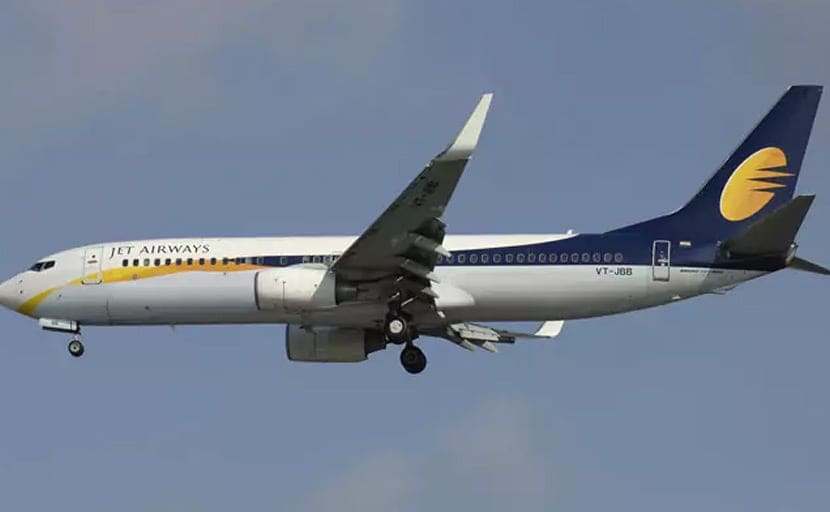
The grounding of Jet Airways is turning into a quick windfall and long-term opportunity for international airlines keen to scoop up nearly a million outbound passengers from what was once the nation's biggest airline.
Jet, which previously had a fleet of around 120 largely Boeing Co planes, was forced to indefinitely halt all flight operations on April 17 after its banks rejected the carrier's plea for emergency funds.
The carrier's descent into crisis has benefited international airlines in the form of rising fares and demand, data showed.
Fares from India to cities such as Dubai, London, New York, Singapore and Bali in the first quarter of 2019 rose between 4 per cent and 32 per cent from a year ago, according to travel portal MakeMyTrip Ltd.
In the peak travel months of May and June, fares to London have spiked as much as 36 per cent and tickets to San Francisco are up nearly 20 per cent from a year ago, according to data from travel portal Yatra.com.
"For the next three months it's actually bonanza time for international players," said Ashish Nainan, a research analyst at CARE Ratings. "At least until the middle of June, the fares are not going to come down."
Due to rising demand, even before Jet's lessors grounded planes, carriers such as British Airways, Cathay Pacific Airways Ltd, Singapore Airlines Ltd and United Airlines saw an up to a 27 per cent increase in passenger numbers from India in the last quarter of 2018, data from India's aviation regulator showed. That is the latest period for which the data is available.
India is one of the world's fastest-growing aviation markets, clocking 15-20 per cent domestic growth in recent years. It has long had only two full-service long-haul carriers, state-run Air India and Jet.
Jet is now hoping to be bailed out by a new investor, with final bids due on May 10.
INCREASING CAPACITY
Before its grounding, Jet had the biggest share of country's outbound international air traffic, carrying 12 per cent of the 78 lakh passengers headed overseas in the October-December quarter, down from 14 per cent a year earlier, data from the Directorate General of Civil Aviation showed.
The total number of passengers travelling overseas with Jet fell 10 per cent during the last quarter of 2018 even as the outbound travel market grew about 5 per cent.
Meanwhile, Singapore Airlines posted a 27 per cent increase in passengers from India, Cathay registered 17 per cent growth and British Airways saw a 10 per cent rise in the same period.
Cathay said the events at Jet combined with increasing demand for travel had led it to deploy larger aircraft with more seats on some domestic routes.
"In the long term we would certainly like to be able to offer more capacity into India, not just on our existing routes but by establishing new services to secondary cities," Cathay said in a statement.
Singapore Airlines, in an email to Reuters, said the Indian market is "very promising" but declined to give details of airfare levels or demand patterns in the wake of Jet's exit, citing a quiet period before the release of its annual results.
DOMESTIC GAINS
Jet's grounding has also had a big impact on the domestic market, with inter-city air fares to major cities such as New Delhi, Mumbai, Bengaluru and Kolkata soaring more than 20 per cent in May and June, according to Yatra.com.
The spike in fares is expected to underpin strong earnings for IndiGo and SpiceJet, which are set to report results for the quarter ended March 31 in the coming weeks.
"Domestic Indian carriers are the main benefactors, but I suspect if Jet fails to be revived by May 10 then Vistara and other airlines that ply international routes, particularly the lucrative Gulf market, are the main winners," said Shukor Yusof, the head of aviation consultancy Endau Analytics. Vistara is a joint venture of India's Tata Sons and Singapore Airlines.
Inadequate bilateral traffic rights between India and other countries, however, could be an impediment to foreign carriers' hopes of winning business lost by Jet, some analysts said.
"Even before Jet's operational shutdown, international capacity was significantly constrained," said Kapil Kaul, CEO for South Asia of consultancy CAPA. "We have now more serious capacity challenge ... this is unlikely to be stabilised in the near term."
A new government likely to be in place sometime after elections end in May is expected to address the international capacity constraints, and once bilateral agreements are eased airlines including Emirates, Turkish and Qatar would immediately benefit, said Mr Kaul.
"We would love to add more flights but we are at the limit of the allocation granted to us for traffic rights," Emirates Chief Commercial Officer Thierry Antinori told reporters in Dubai on Wednesday.

-
Indians Are Travelling, But Not Every Journey Is A Holiday | The Week In Whys

Pilgrims, patients and working women are the real travellers, and the system hasn't quite caught up with them.
-
Getting To Work Costs Women More | The Reason Why
It is not just about women paying more than men. It is about women paying much more in cities than in villages.
-
AI Bias In Investing Cannot Be Eliminated, But It Can Be Governed
Framing is a particularly important example as identical financial information presented in terms of gains rather than losses can lead an LLM to reach a different assessment.
-
Joining The Dots | Dark Skies, Steady Diya: Why Hope Holds This Diwali
With war, a weak rupee and foreign outflows weighing on sentiment, policymakers at the NDTV World Summit and market veterans at NDTV Profit Ignite: Diwali Edition offered the same advice: stay invested and filter out the noise.
-
The Curious Case of Equitas Small Finance Bank And A CEO Who Quit For Stock
PN Vasudevan believes persistent investor concerns over a perceived conflict of interest had become a governance overhang on Equitas Small Finance Bank's stock, even as the lender improved profitability and asset quality.
-
Talking Points This Week: AI Cash Burn, A Tiger Comeback And An India That Still Finds Its Own Path
India is not immune to higher oil or tighter global liquidity, yet its earnings base is broader, its domestic policy levers are still available.
-
Foreign Investors Own Half Of HDFC Bank and ICICI Bank. An LTCG Cut Could Matter Most Here
Foreign portfolio investors have US$115 billion parked in HDFC Bank, ICICI Bank. If the government cuts long-term capital gains tax, Jefferies says returning foreign money could land here first.
-
'Never Seen This Level Of Negativity': Sandeep Tandon Says The Next Rally May Be Closer Than You Think
Veteran investor Sandeep Tandon says foreign selling is easing, large-caps are due a comeback and mid-caps are crowded, while he turns positive on gold, power and pharma this Diwali.
-
Indians Stay With Family, Not In Hotels | The Reason Why
India still lacks enough clean, reliable and affordable hotels for budget-conscious travellers.
-
The Economic Imperative: Analysing The Material Driving Force Behind India-Canada Strategic Reset
This economic complementarity is further reinforced by deep institutional investment ties and talent mobility, which form the bedrock of the bilateral framework.










