Japan's SoftBank to Not Cash In Alibaba Stake on Market Debut
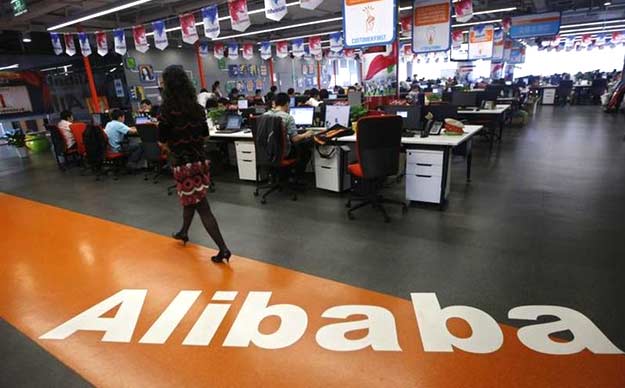
SoftBank Corp's billionaire CEO Masayoshi Son said his company would not cash in any of its stake in Chinese online retailer Alibaba when it lists in New York in what could be the largest market debut ever by a technology company.
SoftBank, whose acquisition sprees have left it holding about $90 billion in interest-bearing debt and could pile on much more, is expected to see its 34.4 per cent holding in Alibaba valued at more than $50 billion after the initial public offering (IPO).
But Mr Son said the Chinese company, which controls 80 per cent of online commerce in that country, was an indispensable strategic partner that was unique in his mobile internet empire.
"There are 1,300 companies in the SoftBank group but the only ones I sit on the board of are SoftBank, Yahoo Japan and Alibaba," he said at a briefing following the release of SoftBank's annual earnings on Wednesday.
SoftBank is the biggest shareholder in Alibaba and some market watchers had speculated it would use the IPO to bank some of his returns on the investment, initially just $20 million plus a handful of additional fund injections that in total came to less than $200 million.
SoftBank spent $21.6 billion to buy No.3 US mobile operator Sprint Corp last summer and is keen to follow that up with an acquisition of No.4 T-Mobile US Inc.
Mr Son said that, while SoftBank's percentage stake in Alibaba may dip due to dilution when new shares are issued in the offering, he would not be selling any of it off.
"Of course that doesn't mean we promise to hold it forever, but for now we consider Alibaba a core strategic partner."
He said he first met Alibaba executive chairman Jack Ma in 2000 while on a hunt for investment opportunities in China. He plucked the company from 20 other prospective firms after Ma impressed him with a short presentation.
"I just liked the smell of the company... I invested with the intention of having a long-term partnership where we co-operated with each other and stimulated each other," Mr Son said.
"When we invested in them they were generating zero revenue and so I think that since then we had somewhat of a positive influence on them."
The company said its holding in Alibaba added 66.78 billion yen ($657.57 million at ($1 = 101.5550 Japanese yen) to its pretax profit for the fiscal year to March 31.
Record profit
SoftBank posted a record 1.09 trillion yen operating profit for fiscal year 2013-14 that ended on March 31, up 36 per cent from last year and just above the 1.07 trillion yen average of 14 analyst estimates according to Thomson Reuters StarMine.
That makes SoftBank the only Japanese company to top 1 trillion yen in operating profit apart from Toyota Motor Corp and NTT DoCoMo, the country's biggest mobile carrier by subscribers.
With earnings from its most recent acquisitions, including Sprint, SoftBank surpassed both NTT DoCoMo and No.2 Japanese carrier KDDI Corp in both sales and profit for the year ended in March.
It also raised its sales target for the current year to 8 trillion yen from 7 trillion yen, citing a boost from its acquisition of handset distributor Brightstar, but maintained a previous goal of achieving 1 trillion in operating profit.
That would represent an 8 per cent drop on the year as it loses one-off benefits from the consolidation of some of its units, including mobile games developer GungHo Online Entertainment Inc. It is also slightly below analyst projections of 1.09 trillion yen.
SoftBank is still reaping gains, however, from its domestic mobile business, where operating profit grew 18 per cent to 609 billion yen in 2013/14 after its incorporation of mobile game app developer GungHo Online Entertainment and as it continues to enjoy brisk sales of Apple Inc's iPhone despite NTT DoCoMo beginning to offer the popular smartphone from last September.
On Wednesday, Mr Son reiterated his ambition to replicate in the US market his success in Japan in taking on larger rivals, but declined to comment on progress on the proposal to buy T-Mobile, which has hit regulatory snags.
"It's very clear that the No.1 and No.2 companies in the US dominate the market," he said, referring to AT&T Inc and Verizon Communications.
"We think that we need to increase scale by investing in infrastructure and increasing our spectrum holding. But I have no comment as to how we will move forward with that at this time."
Copyright @ Thomson Reuters 2014

-
Getting To Work Costs Women More | The Reason Why

It is not just about women paying more than men. It is about women paying much more in cities than in villages.
-
AI Bias In Investing Cannot Be Eliminated, But It Can Be Governed
Framing is a particularly important example as identical financial information presented in terms of gains rather than losses can lead an LLM to reach a different assessment.
-
Joining The Dots | Dark Skies, Steady Diya: Why Hope Holds This Diwali
With war, a weak rupee and foreign outflows weighing on sentiment, policymakers at the NDTV World Summit and market veterans at NDTV Profit Ignite: Diwali Edition offered the same advice: stay invested and filter out the noise.
-
The Curious Case of Equitas Small Finance Bank And A CEO Who Quit For Stock
PN Vasudevan believes persistent investor concerns over a perceived conflict of interest had become a governance overhang on Equitas Small Finance Bank's stock, even as the lender improved profitability and asset quality.
-
Talking Points This Week: AI Cash Burn, A Tiger Comeback And An India That Still Finds Its Own Path
India is not immune to higher oil or tighter global liquidity, yet its earnings base is broader, its domestic policy levers are still available.
-
Foreign Investors Own Half Of HDFC Bank and ICICI Bank. An LTCG Cut Could Matter Most Here
Foreign portfolio investors have US$115 billion parked in HDFC Bank, ICICI Bank. If the government cuts long-term capital gains tax, Jefferies says returning foreign money could land here first.
-
'Never Seen This Level Of Negativity': Sandeep Tandon Says The Next Rally May Be Closer Than You Think
Veteran investor Sandeep Tandon says foreign selling is easing, large-caps are due a comeback and mid-caps are crowded, while he turns positive on gold, power and pharma this Diwali.
-
Indians Stay With Family, Not In Hotels | The Reason Why
India still lacks enough clean, reliable and affordable hotels for budget-conscious travellers.
-
The Economic Imperative: Analysing The Material Driving Force Behind India-Canada Strategic Reset
This economic complementarity is further reinforced by deep institutional investment ties and talent mobility, which form the bedrock of the bilateral framework.
-
Medicine Pricing: Where Must Profit Stop?
India must confront excessive margins, hidden incentives and regulatory gaps that threaten the integrity of medicine.










