Japan Stock Exchange’s Board Diversity Is Among Worst In World

(Bloomberg) -- Japan Exchange Group's female board ratio remains far below global peers and its own listing rule goal, highlighting the country's struggles with gender equality at the top of businesses.
The company that manages the world's third largest stock market only has a female board ratio of 13%, a level that's less than half the average of global peers. It remains one of the worst among 26 major exchanges, according to data compiled by Bloomberg. Only Chile, India and Argentina score lower.
The number also trails the Tokyo Stock Exchange's own revised listing rule goal as of late July, which set a target of getting women to occupy 30% of executive roles by 2030. Earlier this year the government also disclosed plans to press companies listed on the TSE Prime Market Index to achieve that 30% level.
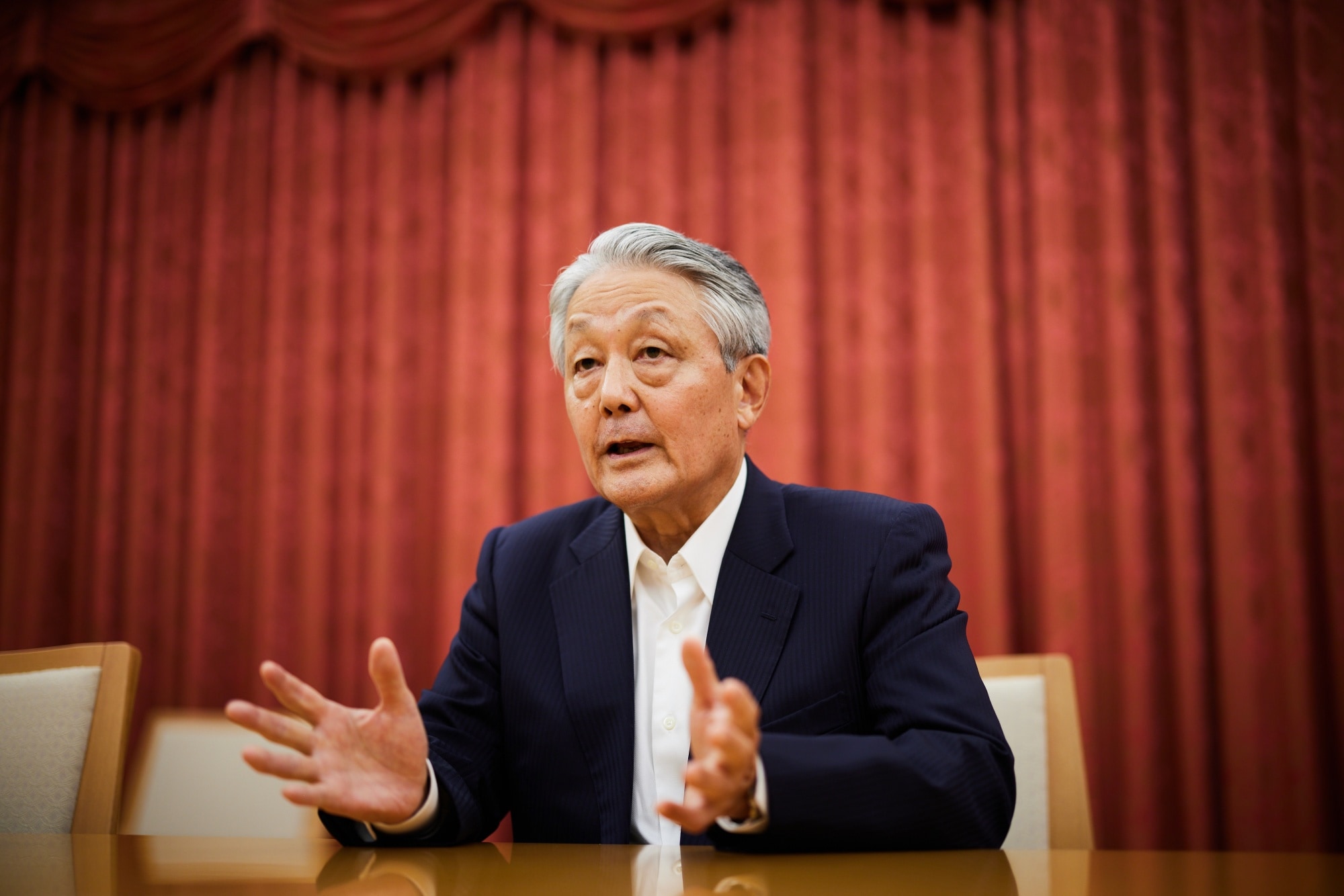
Hiromi Yamaji, chief executive officer of Japan Exchange Group Inc. (Photographer: Shoko Takayasu/Bloomberg)
“We have to be the role model among listed companies, so we will try to fulfill the requirements way before the 2030 deadline,” said Hiromi Yamaji, chief executive officer of Japan Exchange Group Inc. in an interview with Bloomberg last month.
The lack of board diversity is not an issue specific to the stock exchange, but a common one that all Japanese companies share and need to seriously work on, he added.
Only 3.7% of Prime Market companies have reached that threshold, the Nikkei newspaper reported last month. JPX's board now has two women out of 16 board members. Share prices have risen 37% so far this year, outperforming the 25% gains in the broader Topix Index.
“Even though they are pushing listed companies to have more women on their boards, they don't have that many women themselves,” said Sachiko Ichikawa, director of the Board Director Training Institute of Japan, which advocates for stronger governance in the country and provides consulting services for boards. “Transparency is a key issue. There isn't good data, and anecdotes like JPX aren't well known.”
While foreign investors have credited TSE's corporate governance reform as one of the key drivers for Japan's world-beating market rally this year, Yamaji told Bloomberg that there is more room for improvement. He said there has been “less than expected” progress on gender diversity, and the focus also needs to shift beyond just numerical targets.
Institutional investors including Norway's $1.4 trillion pension fund, the world's largest asset manager BlackRock and Goldman Sachs Asset Management have also joined the regulators in setting rules to vote against Japanese firms with few or no female board members.
Yet, the 30% goal may remain a challenge for Japanese firms, Ichikawa said. Because good governance practices cost money and there's a limited pool of qualified women candidates, she said efforts should be focused first on the largest and most visible firms of Japan, before there are more widespread attempts among smaller businesses.
“Corporate governance is not free,” said Ichikawa, who also sits on the boards of Olympus Corp. and Tokyo Electron Ltd. “I don't think it's realistic, as there are too many companies in the prime market, there are so many small companies.”
--With assistance from Xiaoyu Zhu, Hideyuki Sano, Peter Elstrom and Irene Huang.
More stories like this are available on bloomberg.com
©2023 Bloomberg L.P.

-
Gold Is Rs 22,000 Cheaper Than A Month Ago. Should You Buy Amid The Wedding Season?

Gold's potential slide to $3,500 could save around Rs 4,700 per 10 grams, but a soft inflation print could just as easily push prices back up. One way to split the risk is to buy in parts, some now and the rest after the Fed's Dec. 9 decision.
-
AI Agents Are Gaining Power. Who Governs Them?
Artificial intelligence agents promise to transform productivity by moving machines from assisting decisions to executing them. But as organisations delegate greater authority to these AI-agents, they must first establish who controls that authority and who remains accountable when things go wrong.
-
Why Swapping Your Old Gold Can Trigger A Rs 5 Lakh Tax Bill, And How You Can Avoid It Legally
Swapping old gold for new is taxed as a sale and a fresh purchase. Getting your own gold remade can cut most of that bill, though it has its own costs.
-
The AI Trade is Done. The Real Opportunity for Investors Starts in 2027 | Unhedged Position
As pureplay AI stocks plunge and circular, capex-led financing unwinds, 2027 is set to be a year of reckoning for AI companies. Yet the bust clears the way for a better opportunity for investors in 2027 -- shifting the spotlight from AI builders to the companies using AI.
-
Leadership As Mission: Why The Age Of AI Demands More Human Leadership
Debjani Ghosh examines how AI is changing leadership, arguing that its success must be measured by its impact on people and the accountability of those guiding its use.
-
We May Need Another Tukaram Mundhe To Fight Air Pollution | The Reason Why
Developers may install basic measures such as sprinklers and green nets, resume work, and continue violating rules when this equipment stops working.
-
Extracting Value From Battery Scrap Could Be Challenging For India | The Reason Why
A discarded lithium-ion battery still contains valuable materials such as lithium, nickel and cobalt. These can be recovered and reused. When such batteries are crushed and shredded, they produce a dark powder called black mass.
-
One El Nino, India Can Handle. Two Could Break The Granary
India's grain stocks can absorb one bad year, but a second El Nino could drain the buffer in two to three years, economists say.
-
India's Troika Of Good Luck | Joining The Dots
As Jensen Huang's exit drags Nvidia down, a cooling AI trade and resilient earnings have revived investor interest in India. A likely RBI rate hike looms.
-
Talking Points This Week: Leadership Shock At Nvidia, Earnings Strength, And The Fog Over Hormuz
The Anthropic IPO pricing and first trading day, Nvidia's upcoming earnings, and any fresh signals from Iran will set the tone for the following week.









