Jaitley May Take Up H-1B Visa Issue With U.S. Authorities
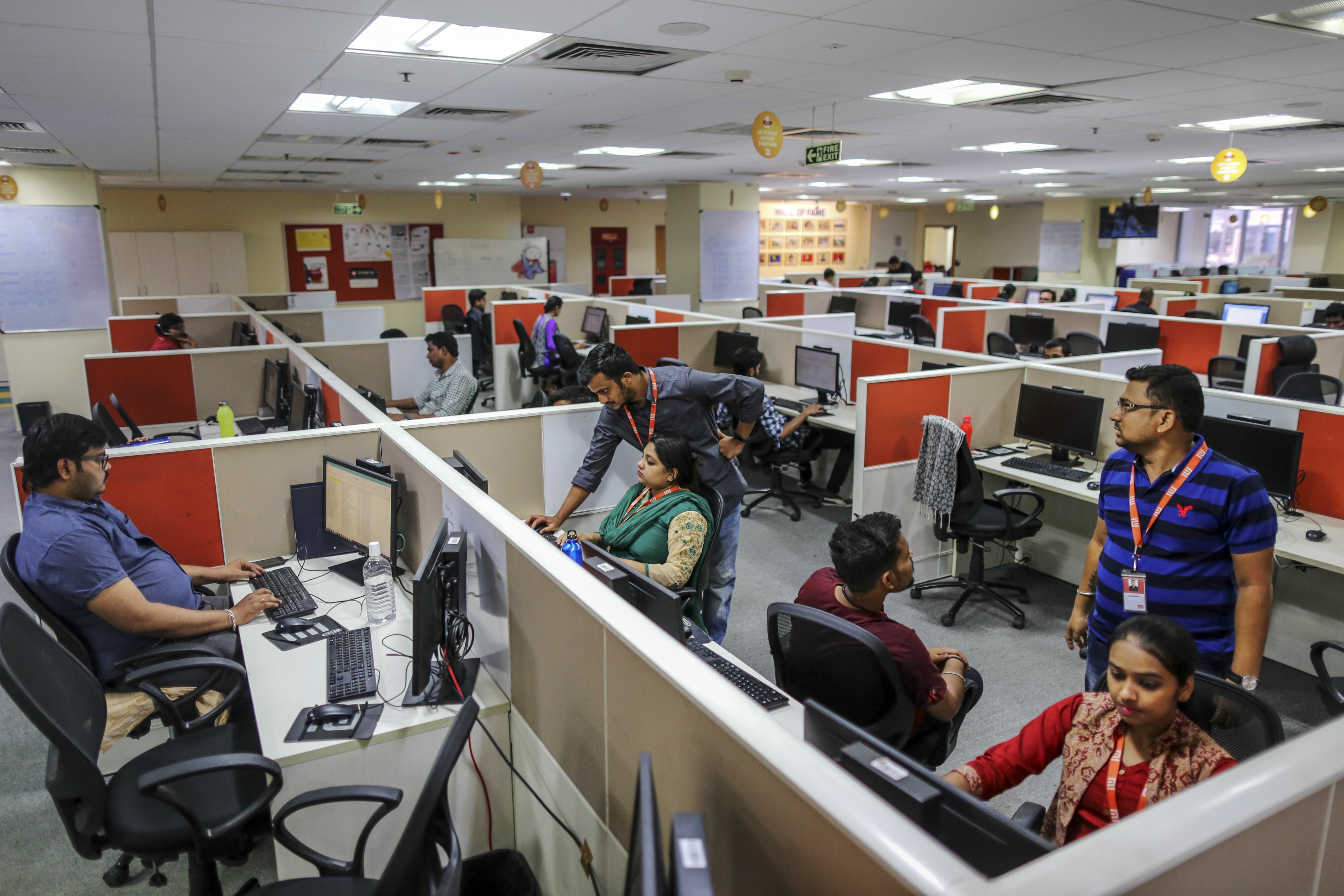
Finance Minister Arun Jaitley on Wednesday indicated he would take up the visa issue with the U.S. authorities during his visit to America.
"These (IT industry issues) are matters of discussion with the appropriate authorities there. Once I do discuss and get an opportunity, I will let you know," he told reporters when asked whether he would take up concerns of the Indian information technology sector with the U.S. administration.
Jaitley will reach Washington on Thursday to attend the Spring Meetings of the International Monetary Fund (IMF) and the World Bank as well as deliberations of G20 nations. He is slated to meet the U.S. Treasury Secretary, among others, during his five-day visit.
The Indian IT industry has expressed serious concerns over the U.S. government moving towards tightening the rules for grant of H-1B visas, mainly used by domestic IT professionals for short-term work.
Also Read: Trump Moves to Realign Visa Allotments Key to Tech Outsourcing
Companies like Tata Consultancy Services Ltd. and Infosys Ltd. that send engineers on H-1B visas to the U.S. could come under pressure in coming days as U.S. President Donald Trump has signed an executive order to replace the current lottery system for issuing work visas with a so-called merit-based approach.
IT Secretary Aruna Sundararajan said there was no cause for alarm, as the review process has just started.
Industry body NASSCOM warned that the move could have "unintended consequences" even though it downplayed any immediate impact on IT companies this year.
No new changes are being implemented immediately ...Nothing is being proposed that would impact or change the FY18 H-1B lottery that is currently underway.NASSCOM Statement
NASSCOM also highlighted that there is shortage of highly-skilled domestic talent in the U.S. in IT, healthcare, education, and other fields.
Industry chamber ASSOCHAM said Indian IT companies may face disruptions by way of higher costs and even some lay offs. It estimated that as much as 86 percent of the H-1B visas issued for IT workers go to Indians and this number is likely to come down to about 60 percent.
The H-1B visa programme is most sought-after by Indian IT firms and professionals to work on customer sites. Every year, the U.S. grants 65,000 H-1B visas, while another 20,000 are set aside for those with U.S. advanced degrees.
Most Indian IT companies get over 60 percent of their revenues from the North American market.
Meanwhile, the Indian IT firms put a brave face to the impending changes being mooted by the U.S.
"We continue to invest in the local communities in which we operate, including hiring local American top talent, bringing education and training to our clients to shrink the skills gap in the U.S., and working with policymakers to foster innovation," Infosys said in a statement.
TCS, the country's largest software services company, has exuded confidence that these issues can be tackled through greater engagement. It has also said it will "tweak" its business model to continue to be in compliance with regulations.
With rising protectionism across markets like the U.S., Singapore and now Australia, companies are beginning to adjust their business models to reduce their dependence on visas, hiring more locals instead.
Australia has abolished a work visa programme – 457 visa – used by over 95,000 temporary foreign workers, majority of them Indians, to tackle the growing unemployment in the country.
The programme will be replaced by another visa programme, with new restrictions. Expressing surprise over the Australian government's move to eliminate the 457 visa category, NASSCOM said the move would not have a major impact on visas granted to Indian IT workers.

-
We May Need Another Tukaram Mundhe To Fight Air Pollution | The Reason Why

Developers may install basic measures such as sprinklers and green nets, resume work, and continue violating rules when this equipment stops working.
-
Extracting Value From Battery Scrap Could Be Challenging For India | The Reason Why
A discarded lithium-ion battery still contains valuable materials such as lithium, nickel and cobalt. These can be recovered and reused. When such batteries are crushed and shredded, they produce a dark powder called black mass.
-
One El Nino, India Can Handle. Two Could Break The Granary
India's grain stocks can absorb one bad year, but a second El Nino could drain the buffer in two to three years, economists say.
-
India's Troika Of Good Luck | Joining The Dots
As Jensen Huang's exit drags Nvidia down, a cooling AI trade and resilient earnings have revived investor interest in India. A likely RBI rate hike looms.
-
Talking Points This Week: Leadership Shock At Nvidia, Earnings Strength, And The Fog Over Hormuz
The Anthropic IPO pricing and first trading day, Nvidia's upcoming earnings, and any fresh signals from Iran will set the tone for the following week.
-
Signature Play: The Classic Cocktail Is Dead. Or Is It?
Classic cocktails are disappearing from India's cocktail menus. But they're still being ordered, taught to bartenders and borrowed from. So, who's really having the last drink?
-
A New Samvat Wishlist: Inclusive Prosperity And Human Development
India has strengthened its economic foundations through infrastructure, digital access and enterprise. Its next growth chapter must deepen productivity, create better livelihoods and widen participation in prosperity.
-
Love, Sex Aur Dhokha: The Audacious Plot To Spy On Jensen Huang
A Taipei dinner, a Singapore chip buyer and a suspected Chinese asset: inside the alleged spy operation that got close to NVIDIA's Jensen Huang.
-
Ten Things I Learnt This Samvat
Patience can be a trap. Cheap stocks can stay cheap. Leverage can wipe you out. What did Samvat 2082 teach us? Niraj Shah writes on 10 lessons from the year gone by.
-
Talking Points This Week: Tech Nerves, FII Buying, And A Faraway Banking Shock
The global markets are not shining this Diwali. The exception in the large markets is, India.









