Jack Ma To Give Up Control Of Ant Group After China's Crackdown
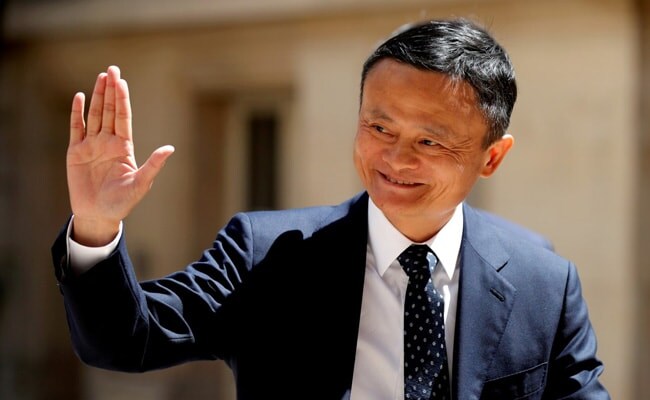
Ant Group's founder Jack Ma will no longer control the Chinese fintech giant after the firm's shareholders agreed to implement a series of adjustments that will see him give up most of his voting rights, the group said on Saturday.
The move marks another big development after a regulatory crackdown that scuppered Ant's $37 billion IPO in late 2020 and led to a forced restructuring of the financial technology behemoth.
"Jack Ma's departure from Ant, a company he founded, shows the determination of the Chinese leadership to reduce the influence of large private investors. This trend will continue the erosion of the most productive parts of the Chinese economy," Andre Collier, Managing Director, Orient Capital Research, Hong Kong.
"Despite official comments, Ant posed little risk to the financial system and was effective in arranging loans for small businesses, one of the main drivers of economic growth," he added.
Duncan Clark, Chairman Of Investment Advisory Firm BDA, Beijing said, "Yes, it's obviously significant if he is no longer the controlling shareholder. This in theory should pave the way for an IPO assuming the other key issue - oversight/ownership of data - is also resolved."
"With the Chinese economy in a very febrile state, the government is looking to signal its commitment to growth, and the tech/private sectors are key to that as we know. At least Ant investors can (now) have some timetable for an exit after a long period of uncertainty."
"If these voting arrangement changes are deemed as a change-of-control event under the A share and/or Hong Kong listing rules, Ant Group's IPO process could be further delayed," Weiheng Chen, Partner And Head of Greater China, Practice at law firm Wilson Sonsini, Hong Kong.
(Except for the headline, this story has not been edited by NDTV staff and is published from a syndicated feed.)

-
Signature Play: The Classic Cocktail Is Dead. Or Is It?

Classic cocktails are disappearing from India's cocktail menus. But they're still being ordered, taught to bartenders and borrowed from. So, who's really having the last drink?
-
A New Samvat Wishlist: Inclusive Prosperity And Human Development
India has strengthened its economic foundations through infrastructure, digital access and enterprise. Its next growth chapter must deepen productivity, create better livelihoods and widen participation in prosperity.
-
Love, Sex Aur Dhokha: The Audacious Plot To Spy On Jensen Huang
A Taipei dinner, a Singapore chip buyer and a suspected Chinese asset: inside the alleged spy operation that got close to NVIDIA's Jensen Huang.
-
Ten Things I Learnt This Samvat
Patience can be a trap. Cheap stocks can stay cheap. Leverage can wipe you out. What did Samvat 2082 teach us? Niraj Shah writes on 10 lessons from the year gone by.
-
Talking Points This Week: Tech Nerves, FII Buying, And A Faraway Banking Shock
The global markets are not shining this Diwali. The exception in the large markets is, India.
-
Midterm Rally Lasted A Day. The Hard Reality Of A Divided US May Last Two Years | Opinion
Between a contested AI boom, a debt ceiling that arrives in 2027 and a president with every incentive to act alone, the next two years may prove more volatile than the first day's rally suggests.
-
Blue Wave Will Derail the AI Trade but Won't Dismantle the AI Era | Unhedged Position
The Democrats' sweep of the US Congress will see politics collide with economic forces both over the long and short term.
-
It's Time To Take The GST Council's Bet On Trust Global
Payment records can prove India's services exports, and clear, proportionate rules can bring foreign digital sellers into the tax net.
-
Opinion | India at 38: From Innovation Overperformer to Innovation Powerhouse
India now has 453 VC-backed deep science startups, 18 of them late-stage, after 117 percent growth since 2020. Laurus Labs, at USD 9.3 billion, is the most valuable deep science company in any middle-income economy outside China.









