Is Real Estate Reviving? Depends On Who You Ask
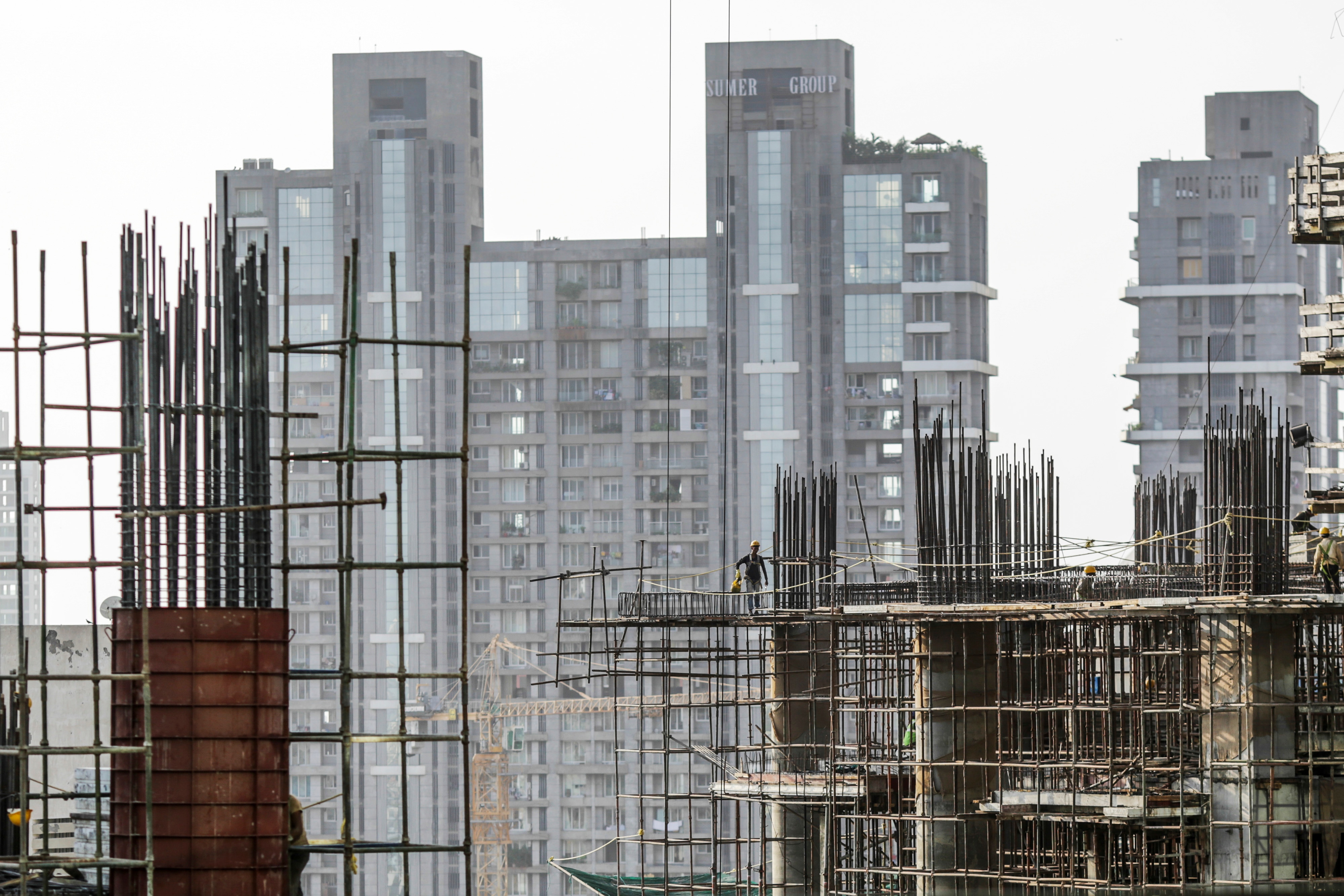
Developers and property consultants are unanimous that India's real-estate demand is recovering from the twin blows of the note ban and a new housing law. Citi Research says that's unlikely soon.
There's been no significant improvement in India's residential market, Citi Research said in a report. Demand fell by 12 percent and 23 percent in the quarter and year ended March, respectively. Recovery will be prolonged and measured due to weak demand conditions combined with hardening interest rates, it said.
Prime Minister Narendra Modi outlawed 86 percent of the currency in circulation in late 2016, hitting the real estate sector the hardest as buyers had to pay up to 40 percent in cash upfront. The Real Estate Regulation Act that followed protects customers against false promises and bars builders from shifting funds from one project to another. A combination of the two triggered a cash crunch, bringing down demand and new launches.
Sentiment improved in 2017 as the companies were upbeat on the government's affordable housing push. The Nifty Realty Index surprised by turning out to be the best performer that year. Not only did the index more than double last year, it also clocked its best annual performance since inception in 2008.
But the index has had a rocky 2018, falling nearly 23 percent this year. That makes it the second-worst sector performer after the Nifty PSU Bank Index's 25 percent decline.
Developers are upbeat though. In interviews with BloombergQuint in June, they'd said the current financial year would be better than the previous one. Here are key highlights from the interviews:
Godrej Properties Ltd.
- Bullish on the residential space.
- Expect profit to double in the next five years.
- Expect return on equity to grow to 20 percent from 10–12 percent over the next five years.
Sobha Ltd.
- Believe financial year 2019 will be better than financial year 2018.
- Seeing good growth from the contract manufacturing business.
Prestige Estates Projects Ltd.
- Expect Rs 4,000 crore of new sales value for financial year 2019.
- Sustainable margin levels to be around 25 percent going forward.
DLF Ltd.
- Believe financial year 2019 will be better than financial year 2018.
- To focus on clearing existing inventory.
The real estate sector is ripe for a strong upturn as suggested by economic indicators –growth in India's GDP, interest rates being low and affordability being at its best in the last 15 years, Pirojsha Adi Godrej, executive chairman at Godrej Properties, had told BloombergQuint in an interview. He is betting on the residential segment not only as developer but also as a home buyer.
Anarock Property Consultants Pvt. Ltd said in its latest report that housing sales and project launches in top seven cities rose by nine and 21 percent, respectively. It sees a similar trend in the commercial real estate segment and expects nearly 85 malls to come up in the next five years. There's a rise in demand for Grade A office spaces across cities, it said. The new financial year has started on a positive note with April demand rising 25 percent and supply increasing 6 percent on an annual basis, said Anarock.


Citi Research paints a different picture. It said the demand for commercial real estate declined 20 percent in the quarter ended March and by nearly six percent in the year ended March 2018. A challenging situation persists for Grade B commercial space, it said.


-
The Economic Imperative: Analysing The Material Driving Force Behind India-Canada Strategic Reset

This economic complementarity is further reinforced by deep institutional investment ties and talent mobility, which form the bedrock of the bilateral framework.
-
Medicine Pricing: Where Must Profit Stop?
India must confront excessive margins, hidden incentives and regulatory gaps that threaten the integrity of medicine.
-
Why Amazon And Flipkart Are Struggling To Beat Meesho In India's Smaller Cities
With 274 million users and lowest-cost logistics, Meesho is defending its value commerce crown against giants like Amazon and Flipkart.
-
High US Salaries, No Green Card Certainty: The Financial Calculation Facing Indian H-1B Families
The suspension of PERM processing at eight technology employers does not cancel existing H-1B visas. What it does is force a question many Indian families have been avoiding: is the US salary worth tying your career and family plans to one employer?
-
Swiggy vs Eternal: Food Delivery's Two Rivals Are No Longer In The Same Race
Eternal is building a private AI assistant, dark.ai. Swiggy is still working out how to make Instamart pay, with an operating loss of Rs 895 crore in the July-September quarter while Blinkit stayed profitable.
-
Where You Live Shapes How You Get To Work | The Reason Why
Two-wheelers are the most popular way to get to work in India, accounting for nearly 43% of workplace commutes.
-
Unhedged Position: Can India See An Indonesia-Style Time Correction?
The Nifty is trading below levels it first clocked in 2024. Is there, then, as I have suggested in the headline, potential that the current time correction drags on painfully for the next three-five, even ten years?
-
Navigating Friction And Energy Realities: An Analysis Of Marco Rubio's October Visit To India
Occurring at a critical juncture marked by stalled trade negotiations and escalating geopolitical pressures over global energy supplies, the visit offers a profound window into modern US-India relations.
-
India Exports Capital. Why Not Export Trusteeship?
The big question, then, is whether India can build an institution that global borrowers, investors, banks, and lawyers can trust, even without an Indian connection.
-
France's Economy & Politics Are In Crisis | The Reason Why
Let's look at how the French economy and politics evolved under Nicolas Sarkozy, Franois Hollande and Emmanuel Macron.










