IRDAI’s Stake Sale Pricing Notice Does Not Put Issues To Rest: Sanjiv Bajaj
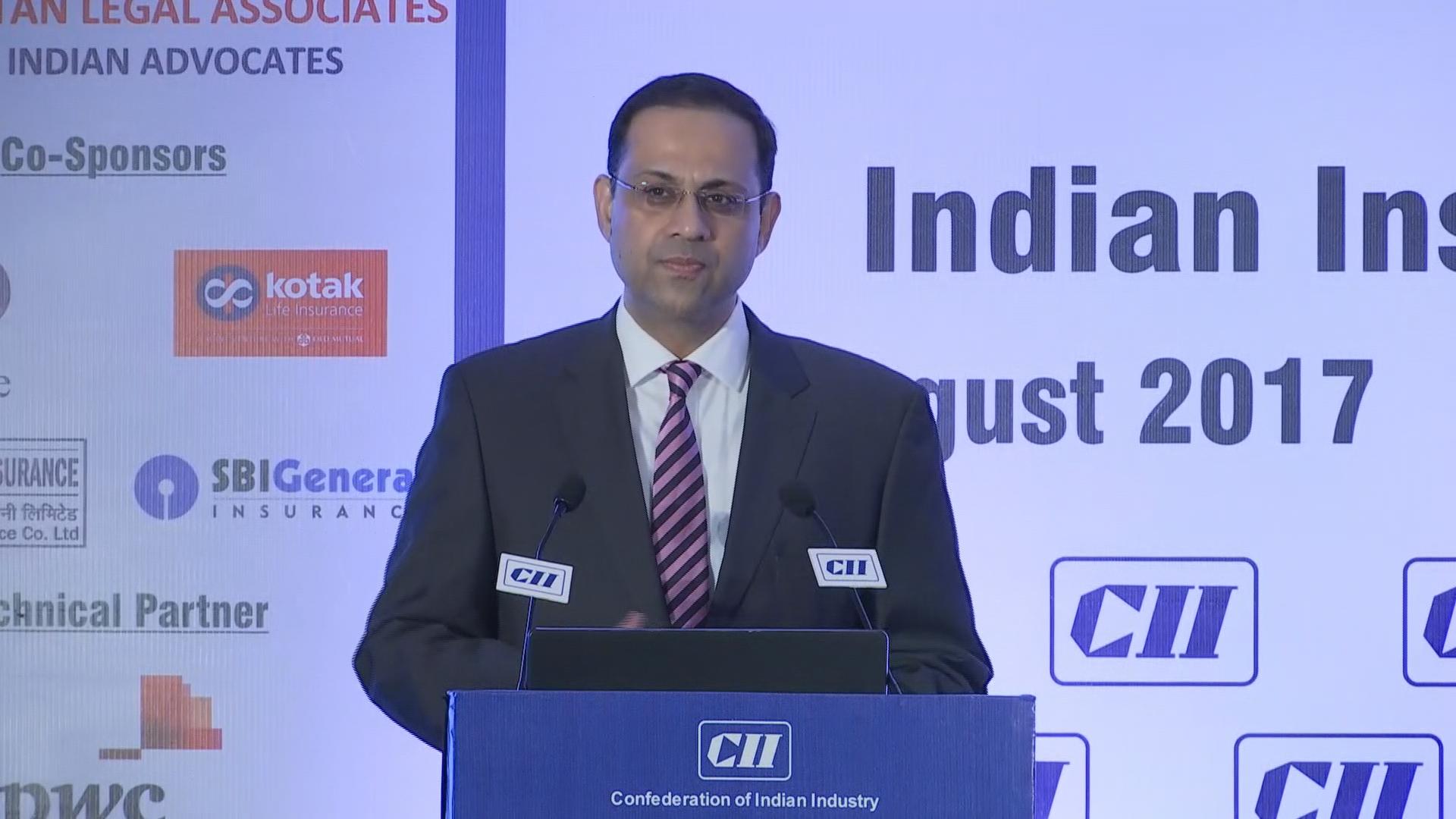
Insurance regulator's latest guidelines on sale of stake by an Indian insurance company to a foreign partner at the existing market price are “absolute and clear” but don't put “issues to rest that are different for different companies”, said Sanjiv Bajaj, managing director of Bajaj Finserv Ltd.
Bajaj was referring to a notice issued by the Insurance Regulatory and Development Authority of India on July 6 that asked all insurance companies to follow the Reserve Bank of India's guidelines under the Foreign Exchange Management Act for existing joint venture contracts. It said the ‘optionality clause' (for put and call options) is applicable to existing as well as new contracts. He was speaking on the sidelines of an insurance summit organised by the Confederation of Indian Industry on Monday.
IRDAI allowed Indian insurance companies to issue instruments under a ‘call' option only after they have run for at least five years. However, according to the optionality clause of RBI, no Indian company can exit at an assured price.
A put option in a joint venture contract allows the owner to sell its stakes to the partner at a specified price, by a predetermined date. In case of call option, the other party has the right to purchase the stake at a specified price for a certain period.
In the case of Bajaj Allianz, the German company had the ‘call' option to raise its stake from 26 percent to 74 percent at a price that gave Bajaj Allianz a ‘fixed' annual returns of 16 percent compounded since 2001, when the arrangement was signed. The IRDA guidelines nullify this arrangement as Allianz will have to pay current market rates to raise its stake.
Many JV agreements signed in early 2000 had these options when the opportunity arrived to raise the stake of the foreign partner from 26 percent to 49 percent. But they found themselves caught in a difficult situation as rules changed later.

-
The Economic Imperative: Analysing The Material Driving Force Behind India-Canada Strategic Reset

This economic complementarity is further reinforced by deep institutional investment ties and talent mobility, which form the bedrock of the bilateral framework.
-
Medicine Pricing: Where Must Profit Stop?
India must confront excessive margins, hidden incentives and regulatory gaps that threaten the integrity of medicine.
-
Why Amazon And Flipkart Are Struggling To Beat Meesho In India's Smaller Cities
With 274 million users and lowest-cost logistics, Meesho is defending its value commerce crown against giants like Amazon and Flipkart.
-
High US Salaries, No Green Card Certainty: The Financial Calculation Facing Indian H-1B Families
The suspension of PERM processing at eight technology employers does not cancel existing H-1B visas. What it does is force a question many Indian families have been avoiding: is the US salary worth tying your career and family plans to one employer?
-
Swiggy vs Eternal: Food Delivery's Two Rivals Are No Longer In The Same Race
Eternal is building a private AI assistant, dark.ai. Swiggy is still working out how to make Instamart pay, with an operating loss of Rs 895 crore in the July-September quarter while Blinkit stayed profitable.
-
Where You Live Shapes How You Get To Work | The Reason Why
Two-wheelers are the most popular way to get to work in India, accounting for nearly 43% of workplace commutes.
-
Unhedged Position: Can India See An Indonesia-Style Time Correction?
The Nifty is trading below levels it first clocked in 2024. Is there, then, as I have suggested in the headline, potential that the current time correction drags on painfully for the next three-five, even ten years?
-
Navigating Friction And Energy Realities: An Analysis Of Marco Rubio's October Visit To India
Occurring at a critical juncture marked by stalled trade negotiations and escalating geopolitical pressures over global energy supplies, the visit offers a profound window into modern US-India relations.
-
India Exports Capital. Why Not Export Trusteeship?
The big question, then, is whether India can build an institution that global borrowers, investors, banks, and lawyers can trust, even without an Indian connection.
-
France's Economy & Politics Are In Crisis | The Reason Why
Let's look at how the French economy and politics evolved under Nicolas Sarkozy, Franois Hollande and Emmanuel Macron.










