Iran Doesn’t Want Hezbollah Fighting Israel
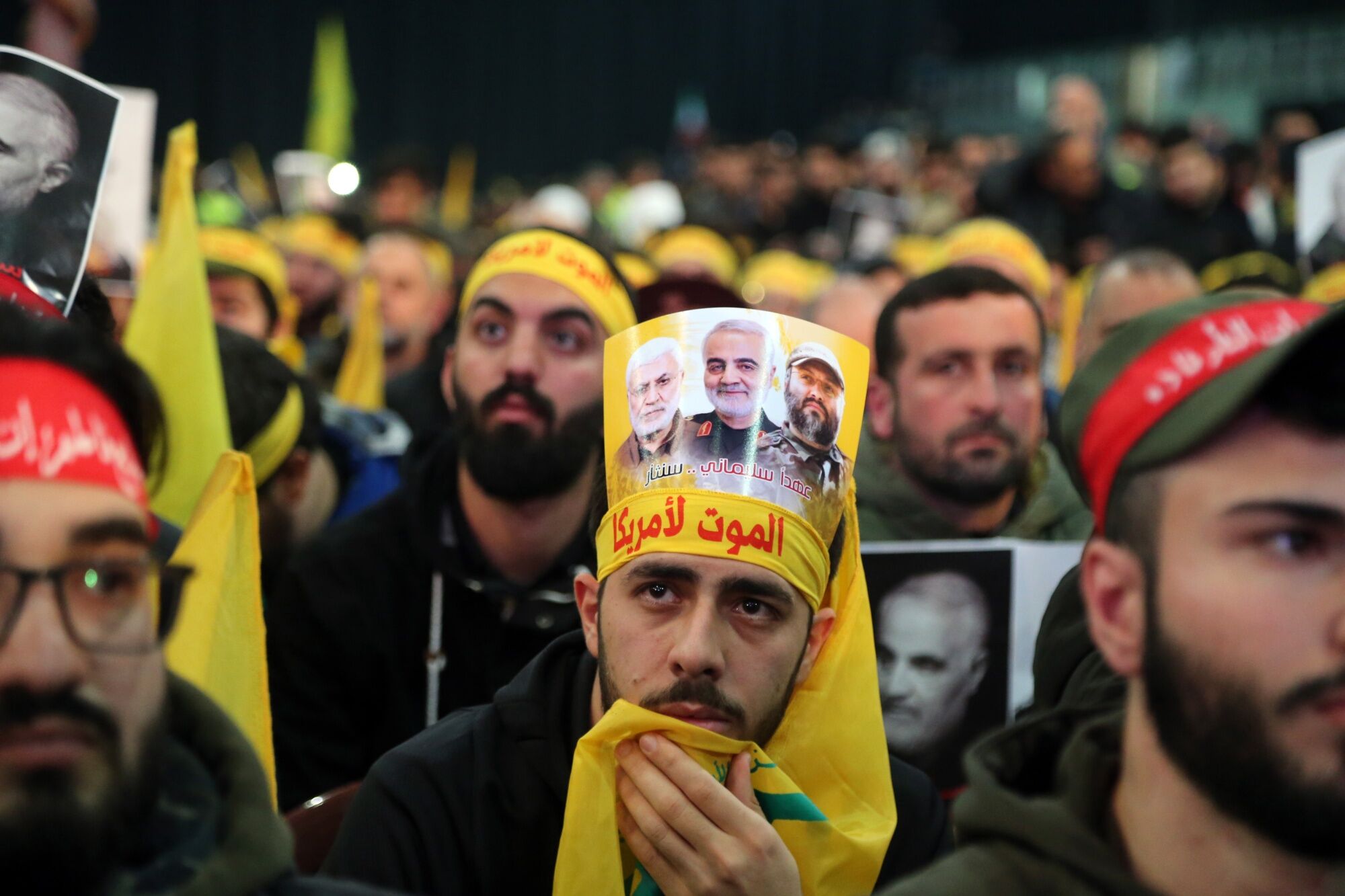
(Bloomberg Opinion) -- What's holding up Hezbollah? From the moment Israel began to retaliate against Hamas for the Oct. 7 terrorist attack, the world has been expecting the Lebanese militia to join the war, opening a second front in Israel's north. That prospect has repeatedly been raised by Iran, which counts Hamas and Hezbollah as vital nodes in its network of proxy militias across the Middle East.
But the Lebanese group has until now restricted itself mainly to firing rockets into Israel, along with some anti-tank and small-arms fire. Even more remarkably, its fire-breathing leader, Hassan Nasrallah, has refrained from his usual rhetorical broadsides against “the Zionist entity.” He is expected to give his first public speech since the Hamas attack this Friday, nearly a month after Israel began raining bombs on Gaza.
Hezbollah's restraint suggests its patrons in Tehran, for all their threats of a wider war against Israel, are reluctant to commit their most valuable asset to the conflict. Of all the proxies, the Lebanese militia has enjoyed the longest and closest relationship with the Islamic Republic; it has received more funds, arms and training than any other group in the network. Moreover, Nasrallah's fighters are battle-hardened from deployments in the Syrian civil war, and their senior commanders have plenty of experience fighting Israel in the 2006 Lebanon war.
And yet, Hezbollah's limited role has been not much different from that of other Iranian proxies, such as the Houthi militia in Yemen and the Hashd al-Shaabi in Iraq. The Houthis have fired off missiles in the direction of Israel, while the Hashd have taken aim at American bases in Iraq.

Why is Nasrallah holding back — or being held back by Iran — from a full assault on Israel? Some analysts believe Tehran is still reveling in the “success” of Hamas's Oct. 7 operation, thrilled that Israel's outreach to the Arab world has been stalled and that the war in Gaza is stoking regionwide, even global, anger at Israel and the US.
Since Hezbollah is the most valuable of Iran's assets, the regime in Tehran is reluctant to have it damaged and degraded, as it would inevitably be in a direct confrontation with the Israel Defense Forces. Even if it were to fight the IDF to a standstill, as it did in 2006, Hezbollah would suffer massive losses. With its economy shackled by economic sanctions, Iran would need years, decades even, to restore its proxy to peak fighting capacity.
And Tehran has other reasons to keep Hezbollah fighting fit: It needs Nasrallah to protect other Iranian constituencies and interests.
In addition to allowing Tehran to maintain a constant level of menace against Israel, Nasrallah's forces serve two other no less important purposes: They maintain the ascendancy of the Shiite faction over the country's two other principal sects, the Sunnis and Maronite Christians. (Founded on a strict Shiite worldview, the Islamic Republic takes very seriously its self-appointed role as protector of the sect.) And they prop up the Syrian regime of Bashar al-Assad, the most vulnerable of Tehran's marionettes in the Middle East.
Iran can't afford to have Hezbollah stand down from either task. Assad may have survived a long, bloody civil war with the help of Iran, Hezbollah and Russia, but he has been left with the responsibility of repairing a devastated country while ruling over a resentful populace. Spasms of anti-regime protest, the most recent only last month, are a reminder of his precarious position. For its part, Lebanon is perennially on the precipice of economic and political implosion, with the attendant risk of a revival of tripartite sectarian violence.
Were Hezbollah to commence full-scale hostilities with Israel, the economic shock would almost certainly push Lebanon over the edge. Nasrallah would then be required to defend Hezbollah's interests. He would also have to divert some of his resources, men and materiel from Syria — enabling the opposition to Assad to regroup. With Russia embroiled in the war in Ukraine, Iran would be left carrying much of the burden, a position unfamiliar to the theocrats in Tehran, who prefer to have others doing the heavy lifting.
Nasrallah may conceivably act on his own initiative and put his forces where his mouth is: His speech on Friday deserves close listening. But in opening a second front against Israel, Hezbollah would also open two other fronts for Iran to contend with. His masters in Tehran would not be pleased.
More From Bloomberg Opinion:
- Where's the United Nations in All of This? Oh, Right, Nowhere: Andreas Kluth
- Why Hasn't the Israel-Hamas War Escalated? Just Wait: Tobin Harshaw
- Hamas Draws Bloody Line Between Fanaticism and Fundamentalism: Clive Crook
This column does not necessarily reflect the opinion of the editorial board or Bloomberg LP and its owners.
Bobby Ghosh is a Bloomberg Opinion columnist covering culture. Previously, he covered foreign affairs.
More stories like this are available on bloomberg.com/opinion
©2023 Bloomberg L.P.

-
Talking Points This Week: Leadership Shock At Nvidia, Earnings Strength, And The Fog Over Hormuz

The Anthropic IPO pricing and first trading day, Nvidia's upcoming earnings, and any fresh signals from Iran will set the tone for the following week.
-
Signature Play: The Classic Cocktail Is Dead. Or Is It?
Classic cocktails are disappearing from India's cocktail menus. But they're still being ordered, taught to bartenders and borrowed from. So, who's really having the last drink?
-
A New Samvat Wishlist: Inclusive Prosperity And Human Development
India has strengthened its economic foundations through infrastructure, digital access and enterprise. Its next growth chapter must deepen productivity, create better livelihoods and widen participation in prosperity.
-
Love, Sex Aur Dhokha: The Audacious Plot To Spy On Jensen Huang
A Taipei dinner, a Singapore chip buyer and a suspected Chinese asset: inside the alleged spy operation that got close to NVIDIA's Jensen Huang.
-
Ten Things I Learnt This Samvat
Patience can be a trap. Cheap stocks can stay cheap. Leverage can wipe you out. What did Samvat 2082 teach us? Niraj Shah writes on 10 lessons from the year gone by.
-
Talking Points This Week: Tech Nerves, FII Buying, And A Faraway Banking Shock
The global markets are not shining this Diwali. The exception in the large markets is, India.
-
Midterm Rally Lasted A Day. The Hard Reality Of A Divided US May Last Two Years | Opinion
Between a contested AI boom, a debt ceiling that arrives in 2027 and a president with every incentive to act alone, the next two years may prove more volatile than the first day's rally suggests.
-
Blue Wave Will Derail the AI Trade but Won't Dismantle the AI Era | Unhedged Position
The Democrats' sweep of the US Congress will see politics collide with economic forces both over the long and short term.
-
It's Time To Take The GST Council's Bet On Trust Global
Payment records can prove India's services exports, and clear, proportionate rules can bring foreign digital sellers into the tax net.
-
Opinion | India at 38: From Innovation Overperformer to Innovation Powerhouse
India now has 453 VC-backed deep science startups, 18 of them late-stage, after 117 percent growth since 2020. Laurus Labs, at USD 9.3 billion, is the most valuable deep science company in any middle-income economy outside China.









