Insolvency Diaries: Lenders Set To Recover Only A Tenth Of Their Dues Under Liquidation
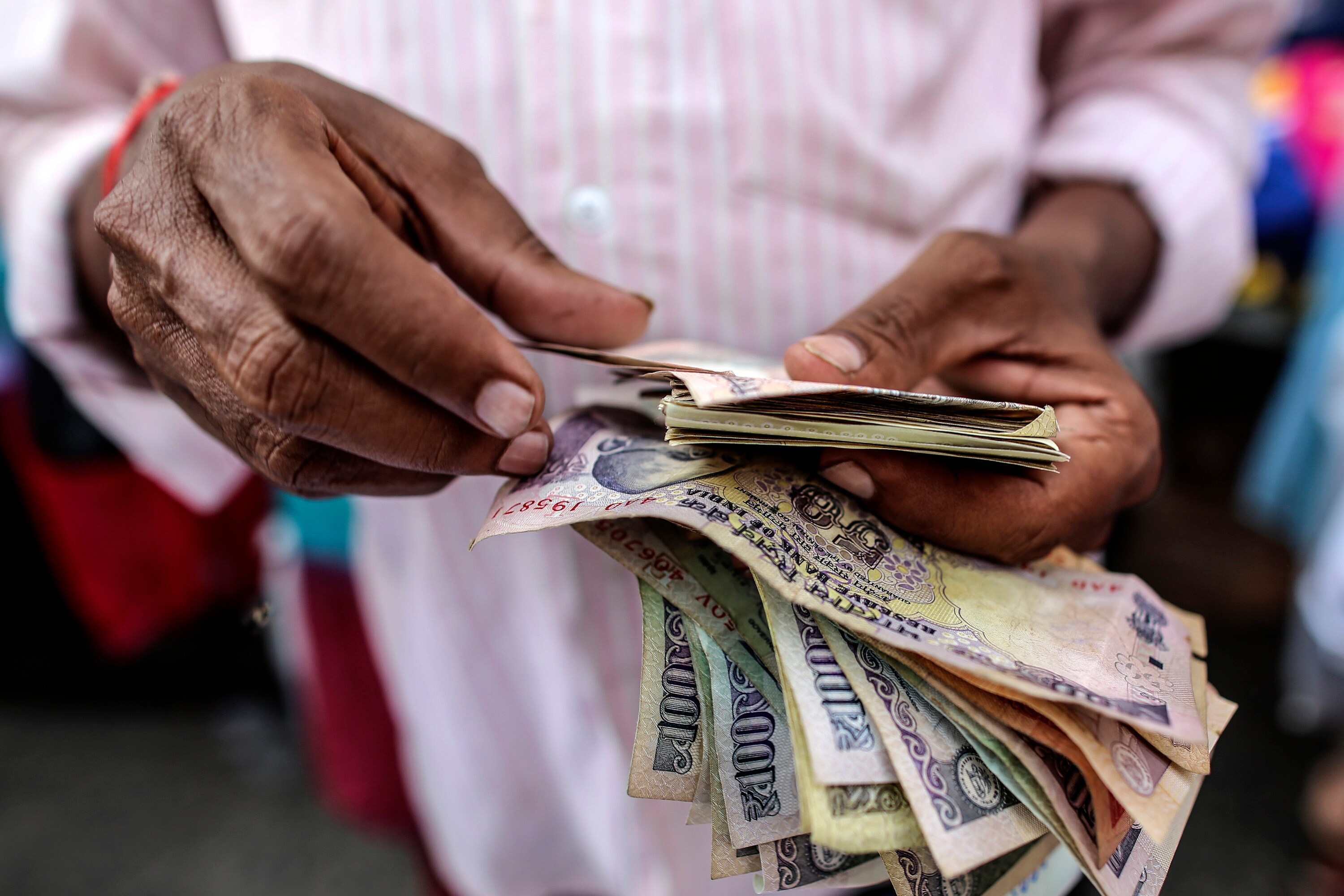
Lenders may recover as little as a tenth of their dues if a company goes into liquidation under the Insolvency and Bankruptcy Code. That's the takeaway from data provided by the Insolvency and Bankruptcy Board of India on the liquidation value set for companies headed for liquidation under the new regime.
According to a list released by the IBBI last week, about 136 companies have been sent for liquidation by various benches of the National Company Law Tribunal. The total claims admitted by the resolution professionals appointed in these cases amount to Rs 57,637.67 crore. But the cumulative liquidation value of these assets has been set at Rs 4,873 crore.
That pegs the maximum expected recovery for financial and operational creditors at about 9 percent.
In 12 of the 136 cases, the IBBI was not able to confirm the liquidation value. Even if these values are added, the percentage of recovery would move only marginally.
The data provided by the IBBI points out that of the total claims admitted, financial creditor claims stand at Rs 52,671.21 crore, while operational creditors have claimed an amount of Rs 4,967.06 crore. As such, lenders and other financial creditors to the companies in question would end up losing the most.
Under the IBC, a case goes into liquidation when the committee of creditors is not able to clear a resolution scheme within a span of 270 days from the admission of the case. Before the resolution schemes are sought, the committee of creditors is expected to conduct a valuation exercise for the assets and determine a liquidation value for the assets.
The IBBI's list of large companies that have gone into liquidation till June 30 included REI Agro Ltd, Gujarat NRE Coke, Rotoman Global Ltd and Roofit Industries Ltd among others.
According to Abizer Diwanji, partner and head- financial services at EY, the wide gap between the outstanding dues and the liquidation value is a reflection of excessive indebtedness that has built up over years.
“Post 2010, we were actually playing the system. We were basically borrowing money to pay interest. So the leverage in the companies was going up significantly. When these companies ended up at insolvency proceedings, they had at least an 8-10 year lag,” Diwanji told BloombergQuint. The comparison between the recovery and the outstanding loan reflects that time lag, he said.
A quarterly newsletter published by the IBBI noted that as on March 31, more than 700 cases had been admitted across NCLT benches for insolvency proceedings.
Of these, 22 have seen successful resolution plans being approved, while 87 were sent for liquidation. About 67 accounts were facing litigation of various kinds.
A larger number of accounts going into liquidation cannot be ruled out, said Diwanji.
“There is a fear among bankers to take a decision. So wherever the values are not up to acceptable levels or where the value is not commensurate with what it should be in the minds of the bankers, then they tend to lean toward liquidation of the asset,” Diwanji said.
Watch a discussion with Abizer Diwanji on liquidation under the IBC below:

-
Indians Are Travelling, But Not Every Journey Is A Holiday | The Week In Whys

Pilgrims, patients and working women are the real travellers, and the system hasn't quite caught up with them.
-
Getting To Work Costs Women More | The Reason Why
It is not just about women paying more than men. It is about women paying much more in cities than in villages.
-
AI Bias In Investing Cannot Be Eliminated, But It Can Be Governed
Framing is a particularly important example as identical financial information presented in terms of gains rather than losses can lead an LLM to reach a different assessment.
-
Joining The Dots | Dark Skies, Steady Diya: Why Hope Holds This Diwali
With war, a weak rupee and foreign outflows weighing on sentiment, policymakers at the NDTV World Summit and market veterans at NDTV Profit Ignite: Diwali Edition offered the same advice: stay invested and filter out the noise.
-
The Curious Case of Equitas Small Finance Bank And A CEO Who Quit For Stock
PN Vasudevan believes persistent investor concerns over a perceived conflict of interest had become a governance overhang on Equitas Small Finance Bank's stock, even as the lender improved profitability and asset quality.
-
Talking Points This Week: AI Cash Burn, A Tiger Comeback And An India That Still Finds Its Own Path
India is not immune to higher oil or tighter global liquidity, yet its earnings base is broader, its domestic policy levers are still available.
-
Foreign Investors Own Half Of HDFC Bank and ICICI Bank. An LTCG Cut Could Matter Most Here
Foreign portfolio investors have US$115 billion parked in HDFC Bank, ICICI Bank. If the government cuts long-term capital gains tax, Jefferies says returning foreign money could land here first.
-
'Never Seen This Level Of Negativity': Sandeep Tandon Says The Next Rally May Be Closer Than You Think
Veteran investor Sandeep Tandon says foreign selling is easing, large-caps are due a comeback and mid-caps are crowded, while he turns positive on gold, power and pharma this Diwali.
-
Indians Stay With Family, Not In Hotels | The Reason Why
India still lacks enough clean, reliable and affordable hotels for budget-conscious travellers.
-
The Economic Imperative: Analysing The Material Driving Force Behind India-Canada Strategic Reset
This economic complementarity is further reinforced by deep institutional investment ties and talent mobility, which form the bedrock of the bilateral framework.










