Rupee May Eventually Strengthen Back To 68, Says SBI Official
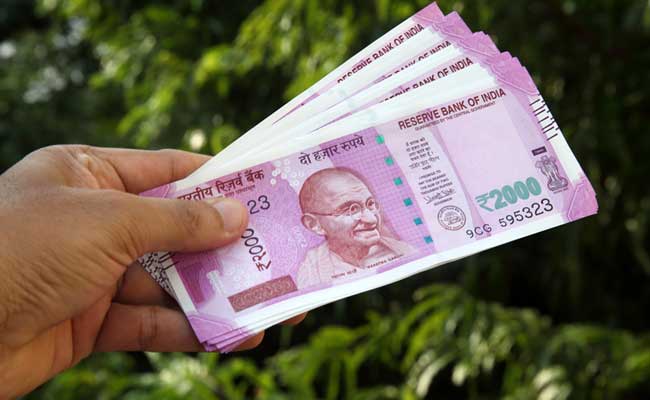
India's rupee may be set to recover as oil peaks out and investors realize the currency has been sold off too heavily amid the emerging-market rout, according to Shantanu Shukla, a vice president for global markets at India's biggest bank.
The currency's slide this year is also likely to be self-correcting to some extent as its weakness will help boost exports, said Shukla, who works for SBI in Singapore. While part of the rupee's weakness has stemmed from the US-China trade war, he said this may actually benefit India's economy as businesses look to source products from alternative markets.
"In the short term, the rupee is suffering from the market sentiment," Shukla said in an interview this week. "Right now it's contagion. Everything is being painted with the same brush. I don't think beyond 70 is a number that the Indian rupee should trade at."
The rupee is this year's worst-performing Asian currency, dropping 11 per cent to set a succession of record lows. It reached an all-time low of 72.9750 per dollar this week before jumping 0.2 per cent on Friday to 72.2288. The currency may eventually strengthen back to 68, Shukla said, without giving a time frame.
India's government has been seeking to stem the selloff, last week announcing a number of measures to stem the rupee's slide. These included relaxing overseas borrowing restrictions on local manufacturers, reviewing whether to ease a cap of foreign ownership of corporate bonds, and considering limiting "non-essential imports."

Worsening Deficit
These efforts have so far failed to halt the currency's decline as buoyant fuel costs have pushed up India's import bill and worsened its current-account deficit.
Relief may be in sight on the oil front, Shukla said. The surge in crude will encourage shale producers to re-enter the market, helping to cap the oil price at $80 to $85 per barrel, he said.
The Reserve Bank of India may also tighten policy again to bolster the rupee when it meets next month, he said. The central bank raised interest rates to the highest in two years in August.
The rupee's recent plunge is evoking memories of slide of around 20 per cent from February to August 2013 during the so-called taper tantrum. India's fundamentals have improved since then and it has a bigger war chest of foreign-exchange reserves, Shukla said.
"Smart institutional money will come back," he said. "At some point, this whole fall will be stemmed and we will see money coming back."
(Except for the headline, this story has not been edited by NDTV staff and is published from a syndicated feed.)

-
Indians Are Travelling, But Not Every Journey Is A Holiday | The Week In Whys

Pilgrims, patients and working women are the real travellers, and the system hasn't quite caught up with them.
-
Getting To Work Costs Women More | The Reason Why
It is not just about women paying more than men. It is about women paying much more in cities than in villages.
-
AI Bias In Investing Cannot Be Eliminated, But It Can Be Governed
Framing is a particularly important example as identical financial information presented in terms of gains rather than losses can lead an LLM to reach a different assessment.
-
Joining The Dots | Dark Skies, Steady Diya: Why Hope Holds This Diwali
With war, a weak rupee and foreign outflows weighing on sentiment, policymakers at the NDTV World Summit and market veterans at NDTV Profit Ignite: Diwali Edition offered the same advice: stay invested and filter out the noise.
-
The Curious Case of Equitas Small Finance Bank And A CEO Who Quit For Stock
PN Vasudevan believes persistent investor concerns over a perceived conflict of interest had become a governance overhang on Equitas Small Finance Bank's stock, even as the lender improved profitability and asset quality.
-
Talking Points This Week: AI Cash Burn, A Tiger Comeback And An India That Still Finds Its Own Path
India is not immune to higher oil or tighter global liquidity, yet its earnings base is broader, its domestic policy levers are still available.
-
Foreign Investors Own Half Of HDFC Bank and ICICI Bank. An LTCG Cut Could Matter Most Here
Foreign portfolio investors have US$115 billion parked in HDFC Bank, ICICI Bank. If the government cuts long-term capital gains tax, Jefferies says returning foreign money could land here first.
-
'Never Seen This Level Of Negativity': Sandeep Tandon Says The Next Rally May Be Closer Than You Think
Veteran investor Sandeep Tandon says foreign selling is easing, large-caps are due a comeback and mid-caps are crowded, while he turns positive on gold, power and pharma this Diwali.
-
Indians Stay With Family, Not In Hotels | The Reason Why
India still lacks enough clean, reliable and affordable hotels for budget-conscious travellers.
-
The Economic Imperative: Analysing The Material Driving Force Behind India-Canada Strategic Reset
This economic complementarity is further reinforced by deep institutional investment ties and talent mobility, which form the bedrock of the bilateral framework.










