Rupee Recovers Most Of Day's Losses To Close At 72.69 Against Dollar: 5 Things To Know
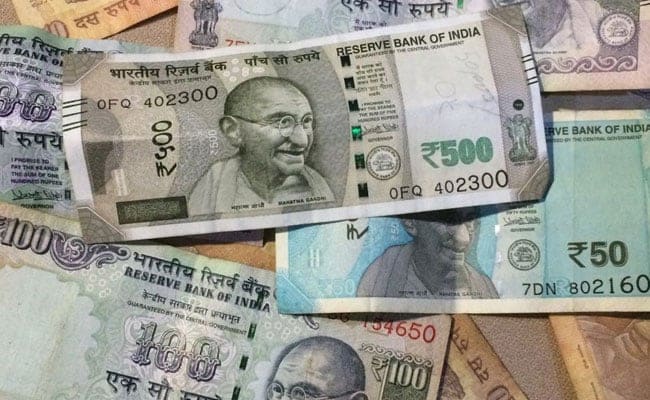
The rupee closed marginally lower at 72.69 against the dollar on Tuesday, extending its decline to a second straight session. A surge in crude oil prices to new 2014 highs above $81 a barrel fuelled demand for the dollar while escalating tensions among investors on the US-China trade front pressurised the rupee. Tuesday's decline meant two days of fresh depreciation in the rupee after the Reserve Bank of India (RBI) said the central bank and market regulator Sebi were watching market developments closely and would act if required.
Here are five things to know about movement in rupee against the US dollar (INR vs USD):
1. The rupee touched 72.96 against the dollar at the day's lowest point. It had closed at 72.63 against the greenback on Monday.
2. Brent crude - the international benchmark for crude oil - touched a four-year high of $82.20 a barrel, the highest price since November 2014. Analysts see tightening of global oil supply in view of impending US sanctions on Iranian crude exports and reluctance top producers to hike output.
3. High crude oil prices tend to widen the current account deficit for India, which meets more than 80 per cent of its oil requirement through imports.
4. Demand for crude oil in the country is forecast to grow to 500 million tonnes per year by 2040 but persistent increases in oil prices might act as a dampener for the rate of growth, Reuters cited Partha Ghosh, an executive director at Indian Oil Corporation, as saying. That would be equivalent to around 10 million barrels per day (bpd), up from about 4.7 million bpd in 2017.
5. "Brent is now trading at $82 per barrel as OPEC (Organization of the Petroleum Exporting Countries) is reluctant to boost output. This may cause the rupee to underperform its current account surplus emerging market counterparts," said IFA Global, a forex advisory firm.
6. Cancellation of scheduled trade talks between the US and China has dampened risk sentiment, IFA Global added.
7. US tariffs on $200 billion worth of Chinese goods and retaliatory taxes by Beijing on $60 billion worth of US products kicked in on Monday, unnerving global financial markets.
8. Outcome of the Federal Reserve's policy meeting will be closely watched by oil investors.
9. "Besides the oil prices, FOMC (Federal Open Market Committee) meet this week is also going to have a directional impact on the currency markets. Even though the ongoing Sino-US Trade spat has weakened the dollar...we expect rupee to continue to be weak and trade between 72.50-73.20 levels due to the likely impact of oil at these elevated levels on our current account deficit," said Salil Datar, CEO and executive director, Essel Finance VKC Forex.
10. Meanwhile, cutting banks' cash reserve ratio (CRR) are among options that the RBI could look at to improve liquidity in the system, news agency Reuters cited a finance ministry official as saying. CRR is the amount of funds commercial banks have to park with the central bank.
(With agency inputs)

-
Getting To Work Costs Women More | The Reason Why

It is not just about women paying more than men. It is about women paying much more in cities than in villages.
-
AI Bias In Investing Cannot Be Eliminated, But It Can Be Governed
Framing is a particularly important example as identical financial information presented in terms of gains rather than losses can lead an LLM to reach a different assessment.
-
Joining The Dots | Dark Skies, Steady Diya: Why Hope Holds This Diwali
With war, a weak rupee and foreign outflows weighing on sentiment, policymakers at the NDTV World Summit and market veterans at NDTV Profit Ignite: Diwali Edition offered the same advice: stay invested and filter out the noise.
-
The Curious Case of Equitas Small Finance Bank And A CEO Who Quit For Stock
PN Vasudevan believes persistent investor concerns over a perceived conflict of interest had become a governance overhang on Equitas Small Finance Bank's stock, even as the lender improved profitability and asset quality.
-
Talking Points This Week: AI Cash Burn, A Tiger Comeback And An India That Still Finds Its Own Path
India is not immune to higher oil or tighter global liquidity, yet its earnings base is broader, its domestic policy levers are still available.
-
Foreign Investors Own Half Of HDFC Bank and ICICI Bank. An LTCG Cut Could Matter Most Here
Foreign portfolio investors have US$115 billion parked in HDFC Bank, ICICI Bank. If the government cuts long-term capital gains tax, Jefferies says returning foreign money could land here first.
-
'Never Seen This Level Of Negativity': Sandeep Tandon Says The Next Rally May Be Closer Than You Think
Veteran investor Sandeep Tandon says foreign selling is easing, large-caps are due a comeback and mid-caps are crowded, while he turns positive on gold, power and pharma this Diwali.
-
Indians Stay With Family, Not In Hotels | The Reason Why
India still lacks enough clean, reliable and affordable hotels for budget-conscious travellers.
-
The Economic Imperative: Analysing The Material Driving Force Behind India-Canada Strategic Reset
This economic complementarity is further reinforced by deep institutional investment ties and talent mobility, which form the bedrock of the bilateral framework.
-
Medicine Pricing: Where Must Profit Stop?
India must confront excessive margins, hidden incentives and regulatory gaps that threaten the integrity of medicine.










