Infosys settles US visa case for $34 million
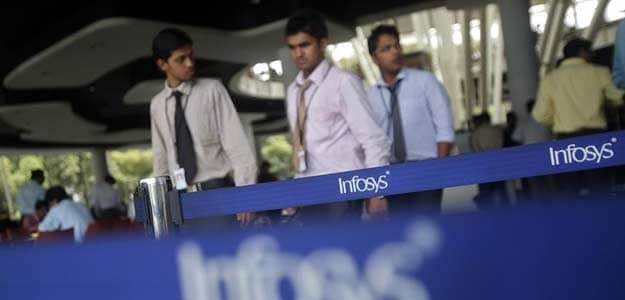
Tech services giant Infosys Ltd agreed on Wednesday to pay $34 million to end a US investigation related to the widespread practice by Indian firms of flying workers to client sites in the United States on temporary visas.
The settlement, which the US Justice Department said was the largest in a case of alleged civil fraud over visas, was filed in US District Court for the Eastern District of Texas.
Infosys, India's second-largest IT services exporter, agreed in the settlement that it committed civil violations of US employment law, but it was not required to admit and did not admit widespread further wrongdoing.
"Infosys denies and disputes any claims of systemic visa fraud, misuse of visas for competitive advantage or immigration abuse. Those claims are untrue and are assertions that remain unproven," Infosys said in a statement.
The company emphasized that the allegations were not criminal, and that there would be no limitations on its eligibility for US federal contracts or access to US visa programs as a result of the settlement.
The Justice Department had alleged in court papers that Infosys knowingly and unlawfully sent people to work without proper visas, that there were widespread failures in the company's record-keeping and that the company tried to deceive US consular officials with false "invitation letters", which tell the government the purpose of travel.
One invitation letter from May 2010 for someone identified in court papers as "AR" said the person "would be involved in meetings and business discussions," but the real purpose of the trip was for computer coding and programming, the Justice Department said.
One reason the Justice Department decided to settle its allegations rather than try to prove them at trial was that Infosys took steps to fix irregularities and agree to outside monitoring, said US Attorney John Bales of the Eastern District of Texas.
Bales said the Justice Department had anecdotal evidence that problems with I-9 forms - used to verify employment eligibility - and visa forms were common in the tech services industry. While he would not confirm that there are other open cases, he said others should pay attention to the Infosys settlement.
"They do acknowledge that there are problems with their I-9 process, and that however it happened - unintentional or not - their visa practice had some irregularities," Bales told Reuters in a phone interview. "They have pledged to be more accurate."
"We've learned a lot in the case, and we're going to use that knowledge," he said.
US lawmakers are considering legislation that would make it more difficult and costly for Indian IT firms to send workers to the United States on temporary, restricted visas.
Infosys employs roughly 15,000 people in the United States. As of March 31, about 10,800 of those were on H-1B visas, which allow an employee to stay and work in the United States up to six years, and 1,600 were on temporary L-1 visas, a company filing said.
The U.S. investigation focused on the use of B-1 business visas and I-9 forms, Infosys has said. A person on a B-1 visa in the United States can participate in meetings but is not allowed to work.
"It is likely to add more fuel to the ongoing debate around visa reforms," Chirajeet Sengupta, practice director in Gurgaon at Everest Group, which advises clients on technology vendors, said on Tuesday after reports that a settlement was imminent.
"These reforms, if executed, have the potential to impact Indian service providers' landed resource model that is largely driven by access to H-1B visas in large numbers," he said.
In its statement, Infosys said only 0.02 per cent of the days that Infosys staff worked on US projects last year were performed by people on B-1 visas.
"The Company's use of B-1 visas was for legitimate business purposes and not in any way intended to circumvent the requirements of the H-1B program," the Bangalore-based company said.
Infosys has secured roughly one B-1 visa for every 10 H-1B visas, according to a person with direct knowledge of the matter who declined to be identified.
US authorities had been looking into Infosys' use of visas since 2011. This month, Infosys set aside a reserve of $35 million, including legal fees, as it worked towards a resolution of the US investigation.
The case is "an important event in the annals of Indian IT industry," Sundararaman Viswanathan, a consultant in Bangalore with Zinnov, which advises US corporations on sending outsourcing work to India, said ahead of the settlement.
"This is a common issue amongst all the Indian service providers - just that Infosys had to deal with it," he said.
"Though the Indian service providers do not intend to flout the visa regulations, there was definitely a lack of regard for certain norms and procedures. This will be fixed. There will be an increase in onsite hiring," he said.
Copyright @ Thomson Reuters 2013

-
Why Swapping Your Old Gold Can Trigger A Rs 5 Lakh Tax Bill, And How You Can Avoid It Legally

Swapping old gold for new is taxed as a sale and a fresh purchase. Getting your own gold remade can cut most of that bill, though it has its own costs.
-
The AI Trade is Done. The Real Opportunity for Investors Starts in 2027 | Unhedged Position
As pureplay AI stocks plunge and circular, capex-led financing unwinds, 2027 is set to be a year of reckoning for AI companies. Yet the bust clears the way for a better opportunity for investors in 2027 -- shifting the spotlight from AI builders to the companies using AI.
-
Leadership As Mission: Why The Age Of AI Demands More Human Leadership
Debjani Ghosh examines how AI is changing leadership, arguing that its success must be measured by its impact on people and the accountability of those guiding its use.
-
We May Need Another Tukaram Mundhe To Fight Air Pollution | The Reason Why
Developers may install basic measures such as sprinklers and green nets, resume work, and continue violating rules when this equipment stops working.
-
Extracting Value From Battery Scrap Could Be Challenging For India | The Reason Why
A discarded lithium-ion battery still contains valuable materials such as lithium, nickel and cobalt. These can be recovered and reused. When such batteries are crushed and shredded, they produce a dark powder called black mass.
-
One El Nino, India Can Handle. Two Could Break The Granary
India's grain stocks can absorb one bad year, but a second El Nino could drain the buffer in two to three years, economists say.
-
India's Troika Of Good Luck | Joining The Dots
As Jensen Huang's exit drags Nvidia down, a cooling AI trade and resilient earnings have revived investor interest in India. A likely RBI rate hike looms.
-
Talking Points This Week: Leadership Shock At Nvidia, Earnings Strength, And The Fog Over Hormuz
The Anthropic IPO pricing and first trading day, Nvidia's upcoming earnings, and any fresh signals from Iran will set the tone for the following week.
-
Signature Play: The Classic Cocktail Is Dead. Or Is It?
Classic cocktails are disappearing from India's cocktail menus. But they're still being ordered, taught to bartenders and borrowed from. So, who's really having the last drink?
-
A New Samvat Wishlist: Inclusive Prosperity And Human Development
India has strengthened its economic foundations through infrastructure, digital access and enterprise. Its next growth chapter must deepen productivity, create better livelihoods and widen participation in prosperity.









