Infosys Diluted Focus on Meritocracy, Accountability: Narayana Murthy
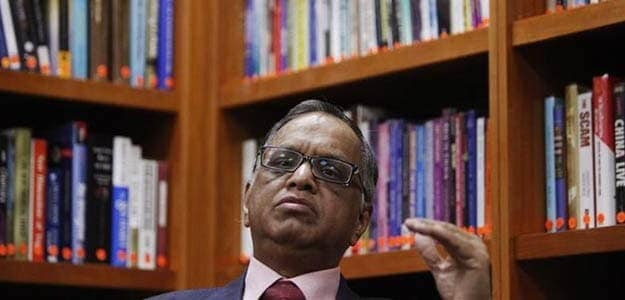
As he signed off his second innings at Infosys, industry icon N R Narayana Murthy on Saturday said Infosys, India's second largest IT services firm, had "diluted focus on meritocracy and accountability" in the past decade, forcing him to take "hard and tough decisions".
Addressing shareholders for the last time as executive chairman, Mr Murthy, who earlier this week announced that he along with his son Rohan have decided to step down full four years ahead of their term, said his "work was done" and hoped that the new CEO Vishal Sikka would chart a new course without any interference from founders.
"...fairness, transparency, meritocracy and accountability are the key to success for any enterprise. Somehow, the company had diluted its focus on meritocracy and accountability during the last decade," Mr Murthy said at the 33rd annual general meeting (AGM) in Bangalore.
Describing Mr Sikka as a technology visionary, Mr Murthy said he had carried out the mandate that the Infosys board had accorded him about a year ago.
Mr Sikka, whose appointment was announced on June 12, was not present at the AGM as he was on his way to the US.
Thirty three years since its inception, the Indian IT behemoth appointed Mr Sikka as its first non-founder CEO.
Analysts believe this could be the "fresh start" that Infosys needed as it has lagged behind peers like Tat Constancy Services (TCS) and HCL Technologies.
Mr Murthy, who founded Infosys along with six engineers in 1981, bid adieu to the over $8 billion entity for the second time. (Read more)
He was called back from retirement last June. Defending his decision to bring in his son, Rohan, Mr Murthy said he wanted to bring in a "fresh perspective to the field" and focus on the use of "technology and high quality people".
Mr Murthy will continue as non-executive chairman till October 10, after which he will be designated as chairman emeritus.
Emphasising that Infosys will continue to be a technology company, Mr Murthy highlighted various efforts that the company is making for automation and improving the quality of its employees.
"We have started initiatives to introduce automation. We will soon start fast-track career programme for high performers, technology stream programme for architects, designers," he added.
The company has hired many engineers at entry-level in sales and is also working on improving training programmes and assessment process for employees to improve software delivery.
On the senior-level exits, Mr Murthy said, "Some of those who left were low performers, some were seniors who had higher aspirations. Those who had to be retained were retained."
In the past one year, Infosys has seen exits of former CFO V Balakrishnan, Americas head Ashok Vemuri and President BG Srinivas. Other key exits include global sales head Basab Pradhan, Infosys consulting head Stephen Pratt, BPO sales head Australia Kartik Jayaraman and BPO head Latin America Humberto Andrade.
Explaining the rationale behind his move, Mr Murthy said he had set upon identifying performers and non-performers upon his return.
"I set upon identifying performers and giving them opportunities to lead the resurrection of the company and identifying not so well performing people and moving them to tasks they were best suited for."
Mr Murthy also said that every decision was approved by the senior management.
However, former Infosys official Mohandas Pai attributed the exits to lack of empowered senior managers.
"Lack of empowerment of senior managers is the reason the company failed in the last three years. The people who left, they are doing extraordinarily well, wherever they are," said Mr Pai, who held the finance and HR responsibilities at Infosys.

-
Getting To Work Costs Women More | The Reason Why

It is not just about women paying more than men. It is about women paying much more in cities than in villages.
-
AI Bias In Investing Cannot Be Eliminated, But It Can Be Governed
Framing is a particularly important example as identical financial information presented in terms of gains rather than losses can lead an LLM to reach a different assessment.
-
Joining The Dots | Dark Skies, Steady Diya: Why Hope Holds This Diwali
With war, a weak rupee and foreign outflows weighing on sentiment, policymakers at the NDTV World Summit and market veterans at NDTV Profit Ignite: Diwali Edition offered the same advice: stay invested and filter out the noise.
-
The Curious Case of Equitas Small Finance Bank And A CEO Who Quit For Stock
PN Vasudevan believes persistent investor concerns over a perceived conflict of interest had become a governance overhang on Equitas Small Finance Bank's stock, even as the lender improved profitability and asset quality.
-
Talking Points This Week: AI Cash Burn, A Tiger Comeback And An India That Still Finds Its Own Path
India is not immune to higher oil or tighter global liquidity, yet its earnings base is broader, its domestic policy levers are still available.
-
Foreign Investors Own Half Of HDFC Bank and ICICI Bank. An LTCG Cut Could Matter Most Here
Foreign portfolio investors have US$115 billion parked in HDFC Bank, ICICI Bank. If the government cuts long-term capital gains tax, Jefferies says returning foreign money could land here first.
-
'Never Seen This Level Of Negativity': Sandeep Tandon Says The Next Rally May Be Closer Than You Think
Veteran investor Sandeep Tandon says foreign selling is easing, large-caps are due a comeback and mid-caps are crowded, while he turns positive on gold, power and pharma this Diwali.
-
Indians Stay With Family, Not In Hotels | The Reason Why
India still lacks enough clean, reliable and affordable hotels for budget-conscious travellers.
-
The Economic Imperative: Analysing The Material Driving Force Behind India-Canada Strategic Reset
This economic complementarity is further reinforced by deep institutional investment ties and talent mobility, which form the bedrock of the bilateral framework.
-
Medicine Pricing: Where Must Profit Stop?
India must confront excessive margins, hidden incentives and regulatory gaps that threaten the integrity of medicine.










