Central Bankers Don’t Know How to Tackle Inflation
(Bloomberg Opinion) -- The Federal Reserve, the European Central Bank and the Bank of England all preside over inflation rates that have surged to quadruple their 2% targets. One of their brethren is highly skeptical of their chances of success in calming price increases. It may turn out that they've been lucky rather than good in achieving price stability in recent years — and their luck has run out.
A few weeks ago, Jeremy Rudd, a senior economist at the Fed, published a paper that does little to inspire confidence in the ability of policy makers to prevent stagflation from afflicting their economies. Moreover, one of his conclusions — that anchoring inflation expectations has little effect on prices — suggests the current mania among central bankers for raising interest rates may exact a cost on growth without a corresponding benefit of achieving their chief policy goal.
Rudd examined a surge in US inflation in the second half of 1960, noting parallels between then and now. It's his assessment of what's been learned in the intervening period — or rather, what remains unknown — that's most striking:
Perhaps the most sobering fact, though, is how little practical benefit six decades' worth of additional experience has provided us: Our understanding of how the economy works — as well as our ability to predict the effects of shocks and policy actions — is in my view no better today than it was in the 1960s.
The current bout of rising prices has certainly caught today's central bankers napping. Figures last week showed consumer prices in the euro zone rising at a record pace of 8.1% in May, up from 7.5% in the previous month and faster than the 7.8% anticipated by economists. In the UK, the Bank of England expects inflation to surpass 10% in the coming months. And economists expect the US to post its fourth consecutive increase of more than 8% on June 10.

It's understandable, if not forgivable, that the forward guidance policy makers are currently delivering is all over the place. “For me, I think a pause in September might make sense,” Atlanta Fed President Raphael Bostic said on May 23. Contrast that with Fed Governor Christopher Waller's comments last week that “I support tightening policy by another 50 basis points for several meetings,” and the path for at least the next three US central bank decisions is as clear as mud, as Jim Bianco of Bianco Research alluded to in a tweet:
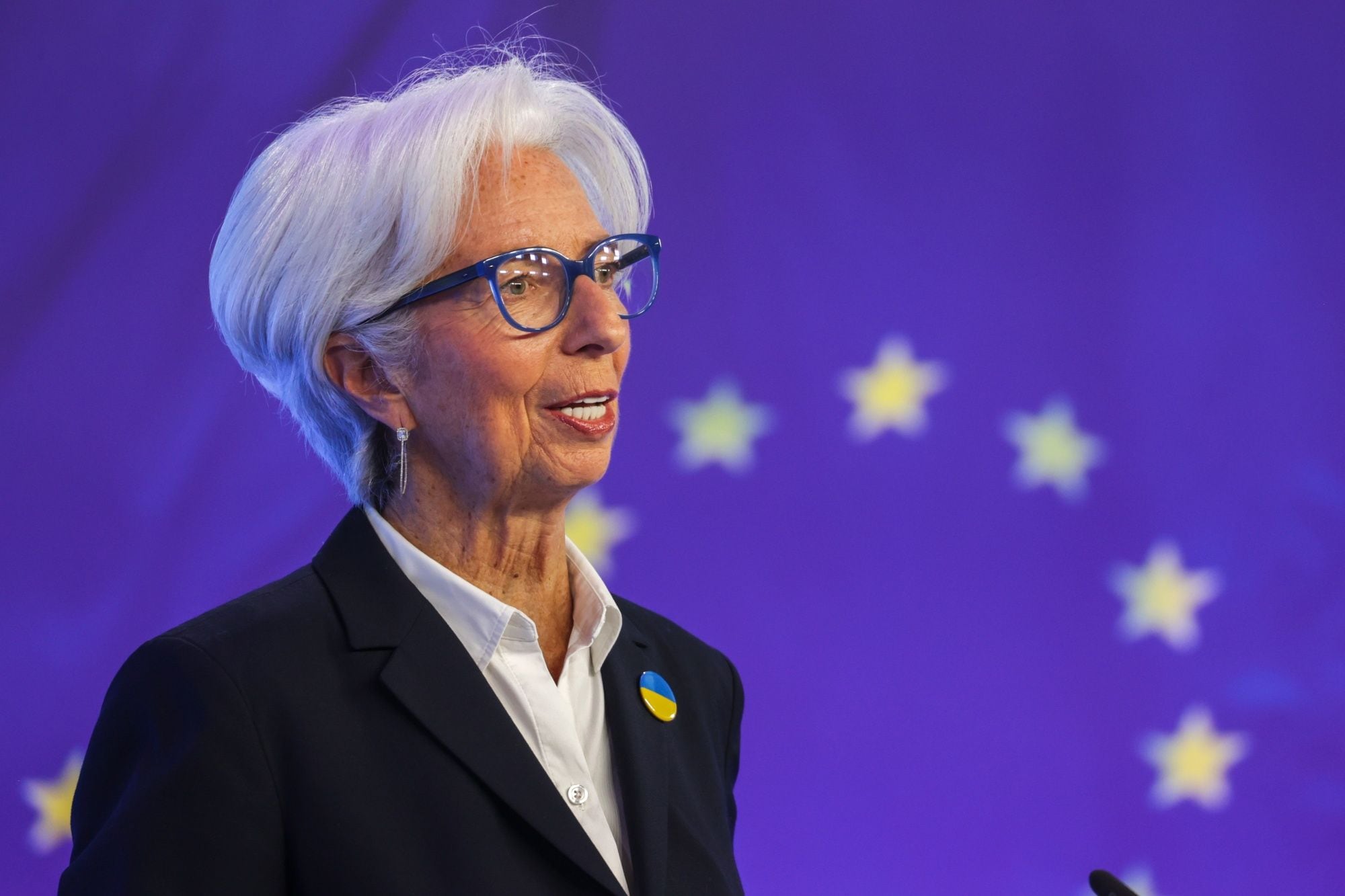
ECB President Christine Lagarde has attempted to give financial markets clarity about what her institution is planning, committing last month to raising interest rates by a quarter-point in July and again by the end of the third quarter. That would bring the bank's deposit rate to zero, up from -0.5%.
But both Dutch central banker Klaas Knot and Slovakian policy maker Peter Kazimir are refusing to rule out half-point increases, while Austrian central bank chief Robert Holzmann said on Friday that “a 50 basis-point rise would send the necessary clear signal that the ECB is serious about fighting inflation.”
Given the surge in last week's inflation print, Lagarde could find herself outflanked by the hawks on the governing council in the coming months, even if the self-imposed desire to halt bond purchases before raising borrowing costs means this week's decision probably remains a non-event.
Rudd's April 9 research note echoes a paper he published in September in attempting to debunk the notion that expectations are drivers of inflation, a proposition he called “arrant nonsense.” His more recent work calls into question how effective policy makers can expect to be in reacting to unforeseen — and arguably unforeseeable — shifts in the economy:
Perhaps the most useful lesson from the 1960s inflation experience is how difficult it is to successfully conduct economic policy in the real world and in real time. Policymaking unfolds on a ‘darkling plain,' and its practitioners—as well as those who seek to advocate an alternative course—will invariably be burdened by a highly imperfect understanding of how the economy works; noisy and revision-plagued data; and outcomes that cannot even be specified in advance, let alone be assigned a credible probability weight. Of course, policymakers face an additional burden that these others don't: They are the ones responsible for making consequential decisions, and they are the ones held accountable for the results.
If major economies do slump into stagflation, policy makers will have failed to do their jobs. Nevertheless, as tempting as it might become for some politicians, questioning their independence to set monetary conditions would be the wrong reaction.
More From Bloomberg Opinion:
- ECB Drops Strategic Ambiguity on Rate Increases: Marcus Ashworth
- The Bank of England Taketh Away. Rishi Sunak Should Giveth: Mark Gilbert
- Memo to Fed: Hurry Up and Hike So We Can Slow Down: Daniel Moss
This column does not necessarily reflect the opinion of the editorial board or Bloomberg LP and its owners.
Mark Gilbert is a Bloomberg Opinion columnist covering asset management. A former London bureau chief for Bloomberg News, he is author of “Complicit: How Greed and Collusion Made the Credit Crisis Unstoppable.”
More stories like this are available on bloomberg.com/opinion
©2022 Bloomberg L.P.

-
Talking Points This Week: Leadership Shock At Nvidia, Earnings Strength, And The Fog Over Hormuz

The Anthropic IPO pricing and first trading day, Nvidia's upcoming earnings, and any fresh signals from Iran will set the tone for the following week.
-
Signature Play: The Classic Cocktail Is Dead. Or Is It?
Classic cocktails are disappearing from India's cocktail menus. But they're still being ordered, taught to bartenders and borrowed from. So, who's really having the last drink?
-
A New Samvat Wishlist: Inclusive Prosperity And Human Development
India has strengthened its economic foundations through infrastructure, digital access and enterprise. Its next growth chapter must deepen productivity, create better livelihoods and widen participation in prosperity.
-
Love, Sex Aur Dhokha: The Audacious Plot To Spy On Jensen Huang
A Taipei dinner, a Singapore chip buyer and a suspected Chinese asset: inside the alleged spy operation that got close to NVIDIA's Jensen Huang.
-
Ten Things I Learnt This Samvat
Patience can be a trap. Cheap stocks can stay cheap. Leverage can wipe you out. What did Samvat 2082 teach us? Niraj Shah writes on 10 lessons from the year gone by.
-
Talking Points This Week: Tech Nerves, FII Buying, And A Faraway Banking Shock
The global markets are not shining this Diwali. The exception in the large markets is, India.
-
Midterm Rally Lasted A Day. The Hard Reality Of A Divided US May Last Two Years | Opinion
Between a contested AI boom, a debt ceiling that arrives in 2027 and a president with every incentive to act alone, the next two years may prove more volatile than the first day's rally suggests.
-
Blue Wave Will Derail the AI Trade but Won't Dismantle the AI Era | Unhedged Position
The Democrats' sweep of the US Congress will see politics collide with economic forces both over the long and short term.
-
It's Time To Take The GST Council's Bet On Trust Global
Payment records can prove India's services exports, and clear, proportionate rules can bring foreign digital sellers into the tax net.
-
Opinion | India at 38: From Innovation Overperformer to Innovation Powerhouse
India now has 453 VC-backed deep science startups, 18 of them late-stage, after 117 percent growth since 2020. Laurus Labs, at USD 9.3 billion, is the most valuable deep science company in any middle-income economy outside China.









