CPI: Inflation Surges Above Monetary Policy Committee’s Tolerance Level
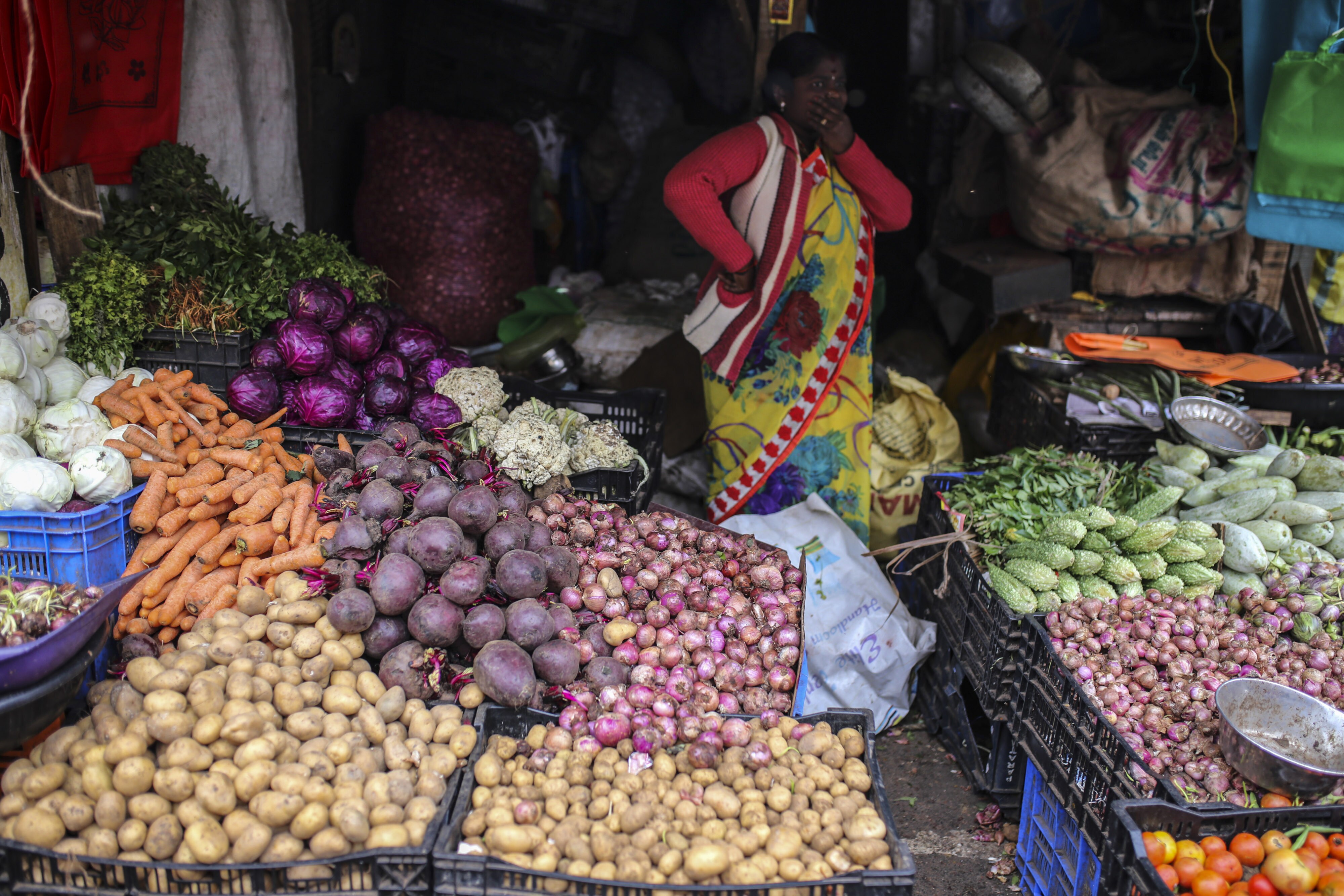
Retail inflation surged above the tolerance band of India's monetary policy committee, pushed up by a surge in food prices and an increase in telecom tariffs.
Consumer price inflation rose to 7.35 percent in December 2019, compared to 5.54 percent in November, according to data released by the Ministry of Statistics and Program Implementation on Monday. At current levels, inflation is at its highest since July 2014. Core inflation rose to 3.75 percent in December from 3.5 percent last month.
A Bloomberg poll of 37 economists had estimated inflation at 6.7 percent for December 2020.

Inflation Internals
The surge in inflation continues to be driven by higher prices across the food and beverages category.
Inflation in food and beverages segment rose to 12.16 percent compared to 8.6 percent in November 2019. Food and beverage inflation is at its highest level since December 2013. Vegetable prices surged to 60.5 percent in December over a year-ago, compared to a rise of 40 percent in November.
Onion prices, which rose over 300 percent over a year ago, remain the biggest pain point in the food category.
“The Inflation is driven by GOP — garlic, onion and potato,” said Soumya Kanti Ghosh, chief economist at State Bank of India. “If you sweep out the impact of these three commodities, the inflation rate falls to 4.48 percent. The impact of telecom tariffs is also 16 basis points, so if you leave out all these four items, inflation is actually at 4.32 percent,” he told BloombergQuint.
Aditi Nayar, principal economist at ICRA, said while vegetable prices led the spike in food inflation, prices of other food items, especially proteins, hardened appreciably as well.
In particular, prices of pulses may remain elevated in the coming months, despite the favorable outlook for the rabi crop. Stickiness in prices of protein items may provide a floor to food inflation going forward, even once vegetable prices correct to seasonally appropriate levels.Aditi Nayar, Principal Economist, ICRA

Transport and communication inflation rose to 4.77 percent from 0.88 percent for the same duration, reflecting the telecom tariff hikes across service providers. Higher telecom costs were a key contributor to increased core inflation.
This isn't the end of it, Ghosh warned.
The second aspect is that inflation still hasn't peaked out. In January it is likely to cross 8 percent. After that it will bottom out, but as of now, the inflation trajectory remains a little bit of concern to the policy makers.Soumya Kanti Ghosh, Chief Economist, State Bank of India
Siddhartha Sanyal, chief economist at Bandhan Bank, agreed. The inflation figure will be “significantly softer” in the early summer months, once the winter crops hit the market, he said. “Three or four months down the line, the scenario can be significantly different.”
According to Sanyal, the core inflation — the number which shows some kind of strength in demand — is still very weak. “Given the momentum of economic activity in the country is relatively poor, and consumer and business sentiment are not really that strong, it is unlikely that the inflation pressure will be generalised.”
Among other key components:
- Clothing and footwear inflation was at 1.5 percent in December compared to 1.3 percent in November.
- Housing inflation stood at 4.3 percent compared to 4.5 percent last month.
- Fuel and light inflation stood at 0.7 percent compared to a contraction of 1.9 percent last month.
- Household goods and services stood at 1.75 percent compared to 2.2 percent in November.
- Health inflation stood at 3.8 percent as against 5.5 percent in the preceding month.

Stagflation-Like Conditions
Inflation rising to above 6 percent will reduce the changes of another interest rate cut in February, even though RBI governor Shaktikanta Das had termed the pause in rate cuts as temporary. The MPC had voted 6-0 in favor of a pause in December, after 135 basis points in rate cuts over the course of 2019.
The higher inflation, coming at a time of very weak growth, leaves the MPC facing a dilemma. While lower growth may warrant a further cut in rates, inflation above the MPC's target may demand an end to the rate cutting cycle.
Economists are divided.
In a note on Monday, Bank of America Securities said that inflation will peak in December, allowing for another 25 basis point cut in rates in February. In contrast, Nomura Global Market Research expects a prolonged pause. The March quarter is likely to witness stagflationary conditions, Nomura cautioned. With the higher inflation trajectory, fiscal slippage in the coming budget and signs of stabilisation in high frequency data, the case for keeping policy rates on hold is now stronger, the brokerage house said in a report dated Jan.10.
No denying there is an element of seasonality involved in the current retail inflation, but the job of RBI has become more complicated due to (i) growth slowdown, (ii) very little window to play around with the policy rate on the down side and (iii) retail inflation now higher than the targeted level. Under such circumstances all eyes are now on the forthcoming Union Budget FY21.Devendra Pant, Chief Economist, India Ratings & Research
India Ratings added that irrespective of the fiscal stance taken by the government,the RBI is unlikely to utilise the limited window for a rate cut in its February monetary policy review.

-
Getting To Work Costs Women More | The Reason Why

It is not just about women paying more than men. It is about women paying much more in cities than in villages.
-
AI Bias In Investing Cannot Be Eliminated, But It Can Be Governed
Framing is a particularly important example as identical financial information presented in terms of gains rather than losses can lead an LLM to reach a different assessment.
-
Joining The Dots | Dark Skies, Steady Diya: Why Hope Holds This Diwali
With war, a weak rupee and foreign outflows weighing on sentiment, policymakers at the NDTV World Summit and market veterans at NDTV Profit Ignite: Diwali Edition offered the same advice: stay invested and filter out the noise.
-
The Curious Case of Equitas Small Finance Bank And A CEO Who Quit For Stock
PN Vasudevan believes persistent investor concerns over a perceived conflict of interest had become a governance overhang on Equitas Small Finance Bank's stock, even as the lender improved profitability and asset quality.
-
Talking Points This Week: AI Cash Burn, A Tiger Comeback And An India That Still Finds Its Own Path
India is not immune to higher oil or tighter global liquidity, yet its earnings base is broader, its domestic policy levers are still available.
-
Foreign Investors Own Half Of HDFC Bank and ICICI Bank. An LTCG Cut Could Matter Most Here
Foreign portfolio investors have US$115 billion parked in HDFC Bank, ICICI Bank. If the government cuts long-term capital gains tax, Jefferies says returning foreign money could land here first.
-
'Never Seen This Level Of Negativity': Sandeep Tandon Says The Next Rally May Be Closer Than You Think
Veteran investor Sandeep Tandon says foreign selling is easing, large-caps are due a comeback and mid-caps are crowded, while he turns positive on gold, power and pharma this Diwali.
-
Indians Stay With Family, Not In Hotels | The Reason Why
India still lacks enough clean, reliable and affordable hotels for budget-conscious travellers.
-
The Economic Imperative: Analysing The Material Driving Force Behind India-Canada Strategic Reset
This economic complementarity is further reinforced by deep institutional investment ties and talent mobility, which form the bedrock of the bilateral framework.
-
Medicine Pricing: Where Must Profit Stop?
India must confront excessive margins, hidden incentives and regulatory gaps that threaten the integrity of medicine.










