Industrial Growth Slows in June; Inflation a Worry
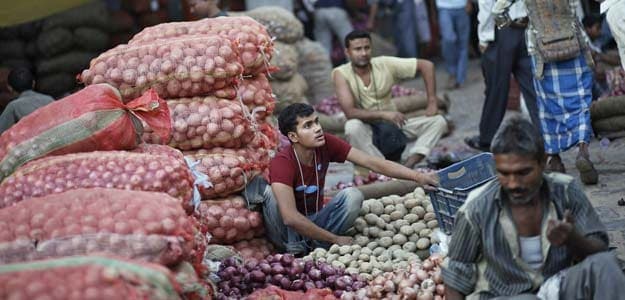
Industrial output slowed in June, though expanding for a third straight month, its best run since last September, boosting Asia's third-largest economy as it struggles to emerge from the longest spell of sub-par growth in a quarter-century.
Annual growth in output from mines, utilities and factories slowed to 3.4 percent in June from a upwardly revised 5 percent a month earlier, government data showed on Tuesday.
The data may disappoint Prime Minister Narendra Modi who won the strongest electoral mandate in 30 years in May on a promise to revive growth and control inflation.
Retail inflation, tracked by the central bank to set interest rate policy, edged up to 7.96 percent in July from 7.31 percent a month earlier, other data released on Tuesday showed. It had eased below 8 percent for the first time in 29 months in June.
Analysts said good rains in July in parts of the country could ease some pressure on food prices in coming months.
"We expect the progress in rains and sowings to ease some pressure on food prices in the months ahead, the RBI is likely to remain cautious and keep the policy rate unchanged," Upasna Bhardwaj, an economist at ING Vysya Bank, Mumbai, said referring to the central bank, the Reserve Bank of India.
Consumer food price inflation, under a new series published by the government, jumped in July to 9.36 percent from 7.97 percent the previous month.
Weak industrial production has been one of the main factors behind India's ailing growth. A fall in output during the fiscal year that ended in March resulted in the second successive year gross domestic product growth was less than 5 percent.
Annual economic growth is forecast to accelerate to about 5.5 percent in the fiscal year to March 2015 from 4.7 percent last year. Given the country's young population far faster growth is needed to provide jobs for new entrants to the labour market.
A weak start to the monsoon could also constrain growth in the farm sector, which accounts for 14 percent of the economy, while the central bank's focus on bringing down inflation prevents it from setting a more accommodative monetary policy.
The central bank wants to reduce retail inflation to 6 percent by 2016, and its governor, Raghuram Rajan, left interest rates steady last week, citing inflationary risks from the weak monsoon and volatile global crude oil prices.
With the central bank determined to tamp down price pressure, market expectations for a rate cut before the first half of next year have dampened.
SURGING PRICES
Encouragingly, the industrial production numbers came days after data showing infrastructure output growth hit a nine-month high and a survey showing that the manufacturing sector posted its fastest growth in 17 months.
An improving global economy would help boost exports and aid industry's recovery, but tension over Ukraine and the Middle East have cast a shadow over those prospects.
The lack of room for manoeuvre in monetary policy puts the onus on the new Modi government to encourage investment needed to boost growth.
Since taking office, Modi has initiated a clutch of small policy changes aimed at speeding up regulatory approvals and reducing bureaucratic discretion.
He has also sought to boost capital investment through measures such as tax breaks for power projects, and setting higher caps on foreign investment in railway infrastructure and defence manufacturing.
His government has also set in motion the first major revamp in decades of India's archaic labour laws as part of his plan to revive the economy and create millions of jobs.
Copyright: Thomson Reuters 2014

-
Getting To Work Costs Women More | The Reason Why

It is not just about women paying more than men. It is about women paying much more in cities than in villages.
-
AI Bias In Investing Cannot Be Eliminated, But It Can Be Governed
Framing is a particularly important example as identical financial information presented in terms of gains rather than losses can lead an LLM to reach a different assessment.
-
Joining The Dots | Dark Skies, Steady Diya: Why Hope Holds This Diwali
With war, a weak rupee and foreign outflows weighing on sentiment, policymakers at the NDTV World Summit and market veterans at NDTV Profit Ignite: Diwali Edition offered the same advice: stay invested and filter out the noise.
-
The Curious Case of Equitas Small Finance Bank And A CEO Who Quit For Stock
PN Vasudevan believes persistent investor concerns over a perceived conflict of interest had become a governance overhang on Equitas Small Finance Bank's stock, even as the lender improved profitability and asset quality.
-
Talking Points This Week: AI Cash Burn, A Tiger Comeback And An India That Still Finds Its Own Path
India is not immune to higher oil or tighter global liquidity, yet its earnings base is broader, its domestic policy levers are still available.
-
Foreign Investors Own Half Of HDFC Bank and ICICI Bank. An LTCG Cut Could Matter Most Here
Foreign portfolio investors have US$115 billion parked in HDFC Bank, ICICI Bank. If the government cuts long-term capital gains tax, Jefferies says returning foreign money could land here first.
-
'Never Seen This Level Of Negativity': Sandeep Tandon Says The Next Rally May Be Closer Than You Think
Veteran investor Sandeep Tandon says foreign selling is easing, large-caps are due a comeback and mid-caps are crowded, while he turns positive on gold, power and pharma this Diwali.
-
Indians Stay With Family, Not In Hotels | The Reason Why
India still lacks enough clean, reliable and affordable hotels for budget-conscious travellers.
-
The Economic Imperative: Analysing The Material Driving Force Behind India-Canada Strategic Reset
This economic complementarity is further reinforced by deep institutional investment ties and talent mobility, which form the bedrock of the bilateral framework.
-
Medicine Pricing: Where Must Profit Stop?
India must confront excessive margins, hidden incentives and regulatory gaps that threaten the integrity of medicine.










