Indonesia's Exports Ban Of Palm Oil; Resultant Markets Shock: Report
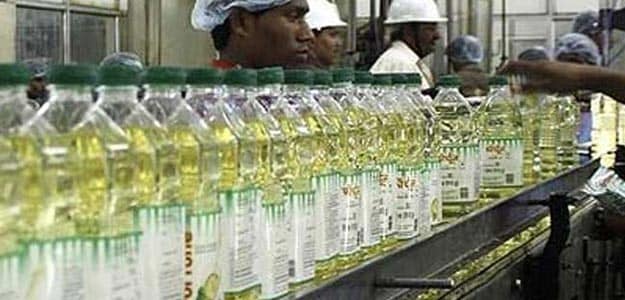
Indonesia's ban on palm oil exports shocked global edible oils markets that already reached record high prices this year, and sparked alarm among major importers of the cooking medium.
Palm oil is the world's most widely used vegetable oil and is used in the manufacture of many products including biscuits, margarine, laundry detergents and chocolate.
Below are details on the world's major edible oils:
PALM OIL
Palm oil is by far the most produced, consumed and traded edible oil in the world, and accounts for roughly 40% of the supply of the top four most popular edible oils: palm oil, soybean oil, rapeseed oil (canola) and sunflower seed oil.
Around 77 million tonnes of palm oil are expected to be produced this year, according to the U.S. Department of Agriculture (USDA). Indonesia is the top producer, exporter and consumer of palm oil, accounting for around 60% of total supply. Malaysia is the second largest supplier with about 25% of global supply share.
India is the top palm oil importer, while China, Pakistan, Bangladesh, Egypt and Kenya are other major buyers.
In a typical year, palm oil accounts for 40% of India's vegetable oil food consumption, according to the USDA. Import forecasts have declined this year because of Indonesia's restrictive trade policies, high edible oil prices and other factors.
Global palm oil production slumped in 2020 and 2021 due to a drop in migrant labour on plantations across Southeast Asia, which led to reduced fruit bunch collection and lower fertilizer applications for trees.
Indonesian authorities previously restricted exports of the edible oil between late January and mid-March to try to control domestic cooking oil prices.
SOYBEAN OIL
Soybean oil is the second most produced edible oil, with around 59 million tonnes expected to be produced this year. China is by far the largest producer (15.95 million tonnes), followed by the United States (11.9 million tonnes), Brazil (9 million tonnes) and Argentina (7.9 million tonnes).
Prices soared to a record high on concerns over Indonesia's decision to effectively ban exports of palm oil.
Argentina is the top soyoil exporter but expected to ship less oil this year following a poor end to its soybean growing season. The country briefly halted new overseas sales of soy oil and meal in mid-March before hiking the export tax rate on soy oil and meal to 33% from 31% in a bid to tamp down domestic food inflation. Brazil and the United States are the next largest exporters, according to the USDA. More soy crushing plants are expected to open in coming years in the United States due to a strong demand to use the oil in biofuel, but capacity to increase demand in the near term is limited.
India is the top soyoil importer.
RAPESEED OIL
Around 29 million tonnes of rapeseed oil are expected to be produced this year, according to the USDA, mainly in Europe, Canada and China. China and the United States are top importers.
In 2021, drought slashed Canada's harvest of canola, a variety of rapeseed, and Europe also suffered crop damage, which reduced oil supplies for 2022.
Canada exported about 75% of its canola oil used in food and fuel last year, with United States taking 62% and 25% heading for China, the Canadian Oilseed Processors Association said.
Top edible oil importer India this year harvested a record rapeseed crop, popularly known as mustard in the country.
SUNFLOWERSEED OIL
Russia and Ukraine account for 55% of global sunoil output and 76% of world exports. Since Russia's invasion of Ukraine in February, shipments from the region have slumped and this year's production is expected to be disrupted in Ukraine.
Traditionally, China, India and Europe are the main sunoil importers, but buyers there are all currently scrambling to find alternative oils to replace the lost supplies from the Black Sea.
More than 90% of India's imported sunflower oil usually comes from Ukraine and Russia.
Argentina is the world's fifth biggest sunflower oil exporter, according to the USDA.
(Except for the headline, this story has not been edited by NDTV staff and is published from a syndicated feed.)

-
Leadership As Mission: Why The Age Of AI Demands More Human Leadership

Debjani Ghosh examines how AI is changing leadership, arguing that its success must be measured by its impact on people and the accountability of those guiding its use.
-
We May Need Another Tukaram Mundhe To Fight Air Pollution | The Reason Why
Developers may install basic measures such as sprinklers and green nets, resume work, and continue violating rules when this equipment stops working.
-
Extracting Value From Battery Scrap Could Be Challenging For India | The Reason Why
A discarded lithium-ion battery still contains valuable materials such as lithium, nickel and cobalt. These can be recovered and reused. When such batteries are crushed and shredded, they produce a dark powder called black mass.
-
One El Nino, India Can Handle. Two Could Break The Granary
India's grain stocks can absorb one bad year, but a second El Nino could drain the buffer in two to three years, economists say.
-
India's Troika Of Good Luck | Joining The Dots
As Jensen Huang's exit drags Nvidia down, a cooling AI trade and resilient earnings have revived investor interest in India. A likely RBI rate hike looms.
-
Talking Points This Week: Leadership Shock At Nvidia, Earnings Strength, And The Fog Over Hormuz
The Anthropic IPO pricing and first trading day, Nvidia's upcoming earnings, and any fresh signals from Iran will set the tone for the following week.
-
Signature Play: The Classic Cocktail Is Dead. Or Is It?
Classic cocktails are disappearing from India's cocktail menus. But they're still being ordered, taught to bartenders and borrowed from. So, who's really having the last drink?
-
A New Samvat Wishlist: Inclusive Prosperity And Human Development
India has strengthened its economic foundations through infrastructure, digital access and enterprise. Its next growth chapter must deepen productivity, create better livelihoods and widen participation in prosperity.
-
Love, Sex Aur Dhokha: The Audacious Plot To Spy On Jensen Huang
A Taipei dinner, a Singapore chip buyer and a suspected Chinese asset: inside the alleged spy operation that got close to NVIDIA's Jensen Huang.
-
Ten Things I Learnt This Samvat
Patience can be a trap. Cheap stocks can stay cheap. Leverage can wipe you out. What did Samvat 2082 teach us? Niraj Shah writes on 10 lessons from the year gone by.









