IndiGo Won’t ‘Miss A Heartbeat’ In The Transition From Aditya To Greg, Says Co-Founder
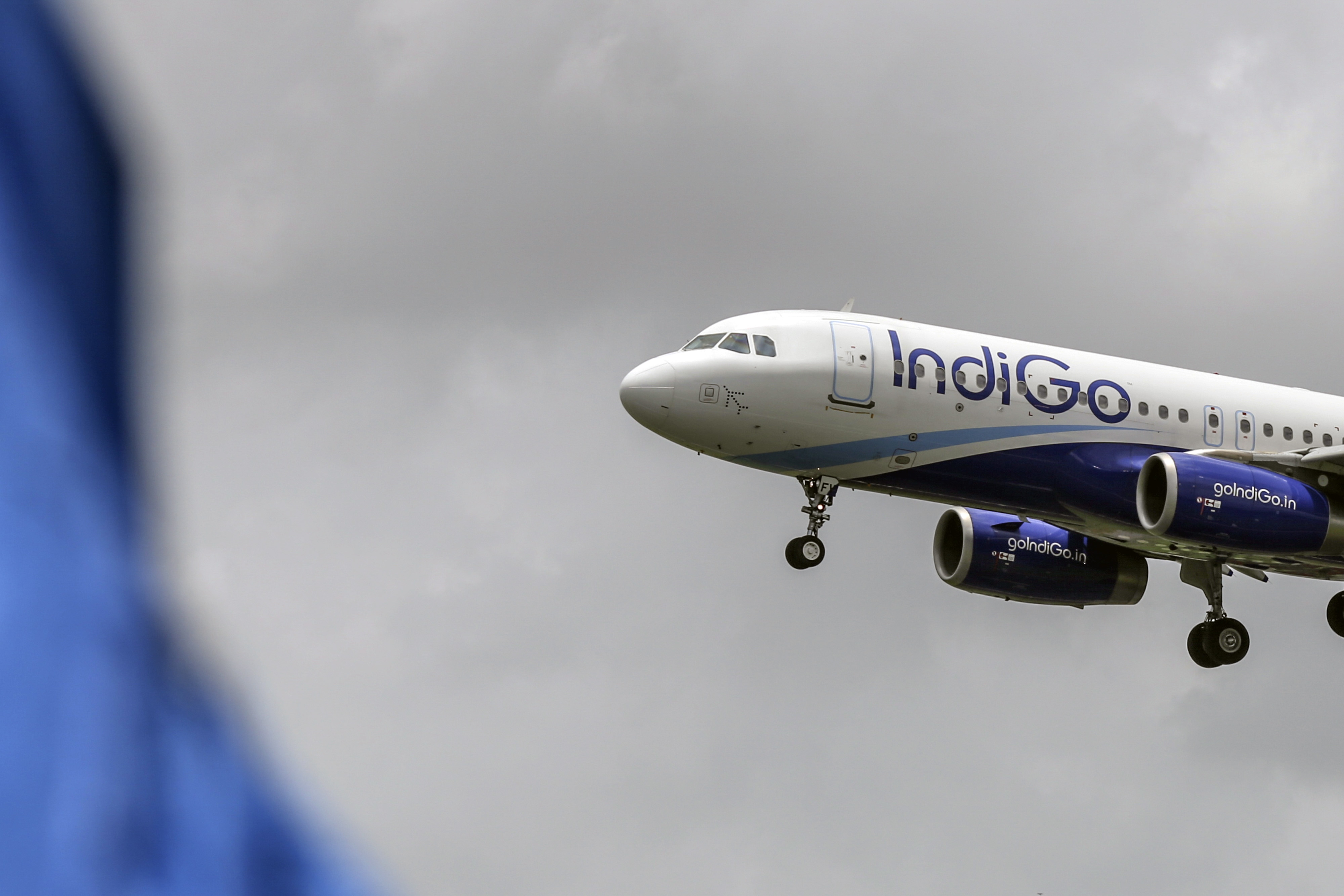
The seemingly sudden resignation of Aditya Ghosh from India's largest airline IndiGo was “not so sudden” said the airline's co-founder Rahul Bhatia.
Bhatia told BloombergQuint that a few months ago Ghosh had expressed a desire to step down and devote more time to his personal life.
“Aditya has been integral to InterGlobe ever since the aviation project started 13 years ago. There can never be any animosity,” said Bhatia in an effort to counter rumours that Ghosh's departure was prompted by recent trouble at the airline connected to technical glitches in engines supplied by Pratt and Whitney and a few highly publicised customer run-ins with airline staff.
It may not be sudden, but the timing of Ghosh's departure is curious.
Ghosh, president and whole-time director of InterGlobe Aviation Ltd., the company that runs IndiGo, has stepped down just months before he finishes 10 years at the helm of the airline. He was appointed president in August 2008.
While a company filing with the stock exchanges on Apr. 27 said Bhatia would be interim chief executive officer, a separate media statement issued by the company on the same day said Gregory Taylor, who had been appointed senior adviser, was also being considered for the top job once regulatory clearance was received.
Interestingly, Taylor served as executive vice president of revenue management and network planning at IndiGo for over a year and left the airline as recently as February 2018.
Why did IndiGo let Taylor go if at the time it knew of Ghosh's desire to step down?
“ We were hopeful of convincing Aditya. That's why the gap between Greg leaving and coming back,” Bhatia claimed. He was emphatic in his efforts to quell speculation around Ghosh's exit. The press is dealing with Aditya unfairly he said.
To attribute engine issues to Aditya or customer issues to Aditya is very unfortunate. Aditya doesn't manufacture engines. The world has read way more into his departure than is real.Rahul Bhatia, Co-Founder and Interim CEO, InterGlobe Aviation

New Team At IndiGo?
Recent media reports of an expansion of the executive leadership team at IndiGo have added fuel to the fire. Did Ghosh leave because of turf wars?
Bhatia said the additions would have happened irrespective of Ghosh's decision, referring to the appointment of Wolfgang Prock-Schauer as chief operating officer, Michael Swiatek as chief planning officer and Willy Boulter as chief strategy officer.
“Complexity is like a hockey stick in a growing airline,” he said.
From 30 aircraft in the early years to over 200 by March 2019, IndiGo's expanding scale needed someone to take charge of operations. Hence the appointment of a COO after eight years, he explained. For the purposes of scale and optimisation, the commercial group has been divided into network planning under Swiatek and revenue management, cargo and corporate communications under Boulter.
That the new hires are all expatriates has not gone unnoticed.
IndiGo is committed to building a massive air transportation network in this country. In that journey of trying to build a world class airline we will bring in talent from around the world and that should never be misread as the company not having competence in local management.Rahul Bhatia, Co-Founder and Interim CEO, InterGlobe Aviation
Strategy Headwinds At IndiGo?
Ghosh's departure has had analysts expressing concern about a change in leadership mid-air while the airline flies through uncharted territory.
“At a time when the company has decided to change strategy from single fleet to multi-fleet, from having operational leases to owning some assets, a guy as critical as Aditya Ghosh would have really played a key role,” Mayur Milak, aviation analyst at IndiaNivesh Securities told BloombergQuint in an earlier interview.
The move to a multi-aircraft fleet is because IndiGo intends to expand domestically with more flights to hinterland India, and add long-haul international routes as well.
The international operations will be expanded organically after the company withdrew its interest in state-owned Air India, saying the sale structure was not feasible to its plans. Since then it has had no further dialogue with the government.
IndiGo will add 21 ATR aircraft by the year end and more next year to service additional hinterland destinations in India. It recently won rights to service routes under the government's regional connectivity scheme - UDAN. Competitor SpiceJet Ltd., that was the first to participate in the scheme, has claimed over 90 percent passenger load factor in flights to small towns.
But IndiGo's ATR addition strategy is not just predicated on that.
The ATR order stands on its own merit. It's not predicated on the UDAN scheme. I don't believe any company will go out and make large financial commitments on a program run on a government subsidy that can be withdrawn with the stroke of a pen. We fundamentally believe in the opportunity of connecting the hinterland of India.Rahul Bhatia, Co-Founder and Interim CEO, InterGlobe Aviation
It isn't as if regional routes didn't offer opportunity when IndiGo started up, but the current scale of the airline gives it confidence that it can maintain cost competitiveness even while servicing smaller routes. Bhatia dismissed arguments that route or aircraft diversification may impact the company's cost leadership. At Rs 3.30 the airline's cost per available seat is at least 13 percent lower than its nearest listed competitor as reported by BloombergQuint earlier.
Engine Trouble
For the last few months IndiGo has had to ground several planes, at one time 11, and cancel several flights, over 900 in the second half of March, on account of engine glitches in its A320 NEO fleet. While manufacturer Pratt & Whitney will compensate the airline for the financial losses, the impact on passenger traffic will be only known when the company announces it quarterly and annual earnings on May 2.
It's not clear if Ghosh will be present at the earnings announcement as he is no longer whole-time director. Taylor meanwhile is waiting for visa formalities to be completed before flying in as senior adviser and, in time, president and CEO. The transition will be smooth, Bhatia insisted.
“I don't expect the company to miss a heartbeat in the transition from Aditya to Greg.”

-
The Economic Imperative: Analysing The Material Driving Force Behind India-Canada Strategic Reset

This economic complementarity is further reinforced by deep institutional investment ties and talent mobility, which form the bedrock of the bilateral framework.
-
Medicine Pricing: Where Must Profit Stop?
India must confront excessive margins, hidden incentives and regulatory gaps that threaten the integrity of medicine.
-
Why Amazon And Flipkart Are Struggling To Beat Meesho In India's Smaller Cities
With 274 million users and lowest-cost logistics, Meesho is defending its value commerce crown against giants like Amazon and Flipkart.
-
High US Salaries, No Green Card Certainty: The Financial Calculation Facing Indian H-1B Families
The suspension of PERM processing at eight technology employers does not cancel existing H-1B visas. What it does is force a question many Indian families have been avoiding: is the US salary worth tying your career and family plans to one employer?
-
Swiggy vs Eternal: Food Delivery's Two Rivals Are No Longer In The Same Race
Eternal is building a private AI assistant, dark.ai. Swiggy is still working out how to make Instamart pay, with an operating loss of Rs 895 crore in the July-September quarter while Blinkit stayed profitable.
-
Where You Live Shapes How You Get To Work | The Reason Why
Two-wheelers are the most popular way to get to work in India, accounting for nearly 43% of workplace commutes.
-
Unhedged Position: Can India See An Indonesia-Style Time Correction?
The Nifty is trading below levels it first clocked in 2024. Is there, then, as I have suggested in the headline, potential that the current time correction drags on painfully for the next three-five, even ten years?
-
Navigating Friction And Energy Realities: An Analysis Of Marco Rubio's October Visit To India
Occurring at a critical juncture marked by stalled trade negotiations and escalating geopolitical pressures over global energy supplies, the visit offers a profound window into modern US-India relations.
-
India Exports Capital. Why Not Export Trusteeship?
The big question, then, is whether India can build an institution that global borrowers, investors, banks, and lawyers can trust, even without an Indian connection.
-
France's Economy & Politics Are In Crisis | The Reason Why
Let's look at how the French economy and politics evolved under Nicolas Sarkozy, Franois Hollande and Emmanuel Macron.










